Country-of-Origin Effect
Table of Contents
The Country-of-Origin Effect: Why Made in Korea, Made in Japan, and Made in the USA Still Influence Filipino Consumer Preferences
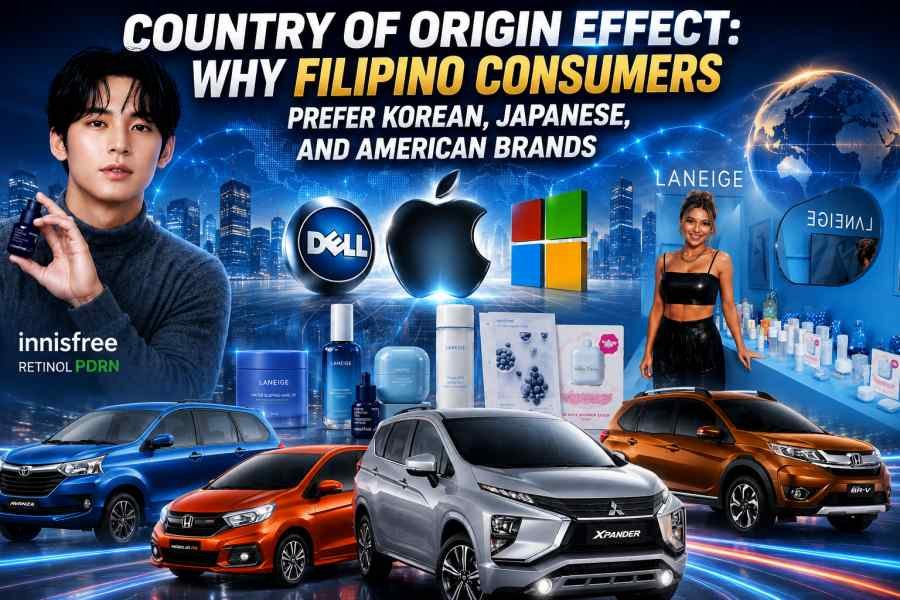
Walk through any mall in the Philippines and you will notice something interesting. Consumers often associate products with the countries they come from. Japanese cars are perceived as reliable. Korean skincare products are considered trendy and effective. American technology brands are viewed as innovative and aspirational.
Imagine a Filipino consumer shopping for a smartphone. Even before comparing specifications, the buyer may already have preconceived notions about brands from South Korea, the United States, or China. Similarly, when purchasing a vehicle, many consumers instinctively trust Japanese brands because of their long-standing reputation for durability and quality.
In a world where products are manufactured through global supply chains and sold across borders, one might assume that a product’s country of origin no longer matters. Yet research and consumer behavior continue to suggest otherwise. The “Made in” label remains a powerful influence on how consumers perceive quality, trustworthiness, prestige, and value.
For Filipino consumers, country image continues to shape purchasing decisions across industries ranging from automobiles and electronics to fashion, cosmetics, food products, and even tourism destinations.
Understanding the Country-of-Origin Effect
Marketing scholars refer to this phenomenon as the Country-of-Origin (COO) Effect. It describes how consumers use a product’s country of origin as a cue when evaluating its quality and desirability.
Consumers often lack complete information about a product. Instead, they rely on mental shortcuts. One of these shortcuts is country reputation. When consumers see that a product comes from a country known for excellence in a particular industry, they often transfer that positive perception to the product itself.
For example:
- Germany is associated with engineering excellence.
- Switzerland is known for precision and luxury watches.
- Japan is recognized for reliability and craftsmanship.
- South Korea is associated with innovation, beauty products, and pop culture.
- The United States is linked to technology, lifestyle brands, and entrepreneurship.
- France and Italy are often connected with luxury, fashion, and premium products.
These associations are not always accurate for every brand or product, but they influence consumer perceptions nonetheless.
Consider coffee. Many consumers automatically associate Italian coffee culture with premium espresso experiences. Likewise, Swiss chocolates are often perceived as superior even before consumers taste them. These perceptions illustrate how country image can shape expectations and influence purchasing decisions.

Why Korean Brands Continue to Win Filipino Consumers [ Country-of-Origin Effect ]
Few countries have strengthened their image among Filipinos as successfully as South Korea.
Over the past two decades, South Korea has transformed itself from a manufacturing powerhouse into a global cultural phenomenon. K-pop groups fill concert arenas. Korean dramas dominate streaming platforms. Korean cuisine enjoys growing popularity. Together, these cultural exports have created a favorable image that extends far beyond entertainment.
As a result, Filipino consumers increasingly associate Korean products with style, innovation, and quality.
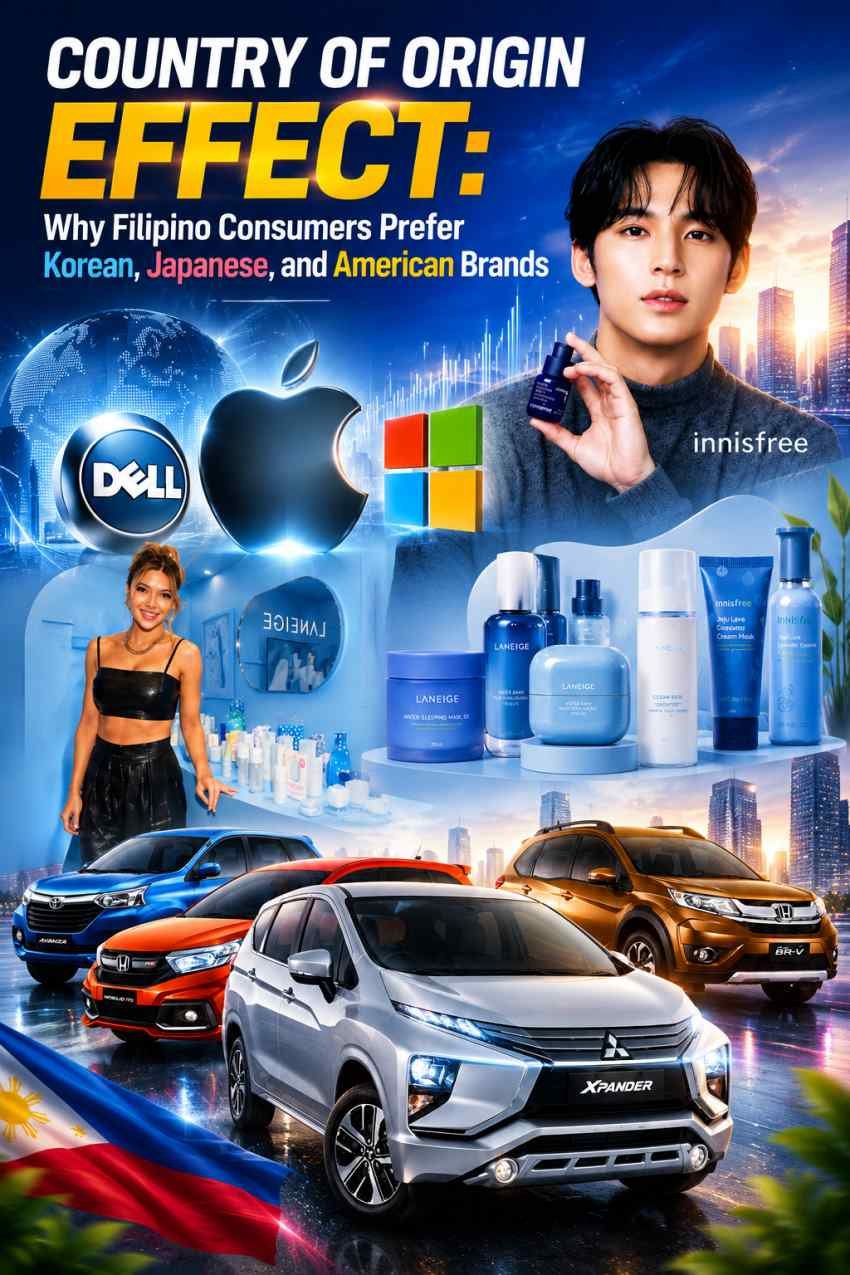
Brands such as Samsung and LG have established strong positions in electronics. Meanwhile, Korean skincare brands have become household names among Filipino consumers. Products from Laneige, Innisfree, Nature Republic, and other Korean beauty companies enjoy strong demand due to their association with Korean beauty standards and skincare expertise.
A Filipino consumer purchasing Korean skincare products may not necessarily understand every ingredient in the formulation. However, the perception that Korea is a leader in beauty and skincare often serves as a powerful source of trust.
This demonstrates an important marketing principle: consumers frequently buy into a country’s reputation as much as they buy the product itself.

Japan’s Enduring Reputation for Reliability [ Country-of-Origin Effect ]
For many Filipinos, Japan remains the gold standard for quality and dependability.
Japanese automobiles have dominated Philippine roads for decades. Brands such as Toyota, Honda, Mitsubishi, and Nissan have built strong reputations based on durability, fuel efficiency, and low maintenance costs. Families often pass down stories of vehicles that remain operational even after many years of use, reinforcing consumer confidence in Japanese engineering.
The same reputation extends to electronics and retail products. Sony, Panasonic, and other Japanese brands have long been associated with quality manufacturing. More recently, Japanese retail chains and lifestyle brands have also gained popularity among Filipino consumers.
Take Uniqlo as an example. The brand’s success in the Philippines is not solely due to its clothing designs. Many consumers associate Japanese products with quality, simplicity, and functionality. These positive perceptions strengthen consumer confidence and contribute to repeat purchases.
Japan’s country image illustrates how decades of consistent product performance can create a powerful competitive advantage that extends across industries and generations.
The Enduring Appeal of American Brands [ Country-of-Origin Effect ]
The United States enjoys a unique place in the minds of Filipino consumers.
Historical ties, educational influences, media exposure, and cultural familiarity have contributed to positive perceptions of American brands. Products from the United States are often associated with innovation, prestige, and global leadership.
Technology provides one of the clearest examples. Apple products continue to command premium prices despite numerous alternatives in the marketplace. Consumers are often attracted not only to the technology itself but also to the prestige and lifestyle associated with the brand.
Similarly, brands such as Nike and Starbucks benefit from strong emotional connections with consumers. They represent more than products; they symbolize achievement, modern lifestyles, and global relevance.
For many Filipinos, owning an American brand may also convey a sense of status and aspiration. This highlights the role of symbolic consumption, where products communicate identity and social meaning beyond their functional benefits.
Filipino Consumers Are Becoming More Discerning
While country image remains influential, Filipino consumers are becoming increasingly sophisticated in their decision-making.
Recent studies suggest that Filipino consumers are more empowered, value-driven, and selective than ever before. Easy access to information through digital platforms allows consumers to compare prices, read reviews, and evaluate alternatives before making purchasing decisions.
This means that country image alone is no longer enough.
For example, while Korean skincare products remain popular, Filipino consumers increasingly examine ingredients, effectiveness, and value for money. Likewise, Japanese vehicles continue to enjoy strong reputations, but buyers now compare safety features, fuel efficiency, and after-sales service before making a purchase.
Economic realities also play a role. Rising living costs have encouraged consumers to become more careful and strategic in their spending. Trust, authenticity, quality, and value are becoming increasingly important considerations.
As a result, consumers today are balancing country image with practical decision-making.
Country-of-Origin Effect
The Rise of Filipino Brands
Interestingly, growing consumer sophistication is creating opportunities for local brands.
Filipino consumers are increasingly willing to support homegrown products that offer quality, authenticity, and competitive value. The success of local food brands, specialty coffee shops, fashion labels, and lifestyle products demonstrates that local businesses can compete effectively against international brands.
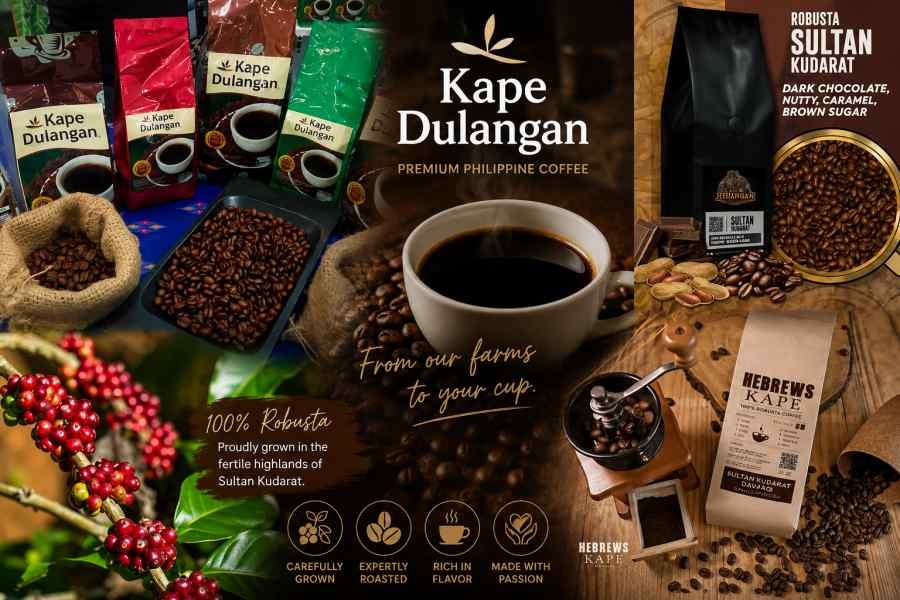
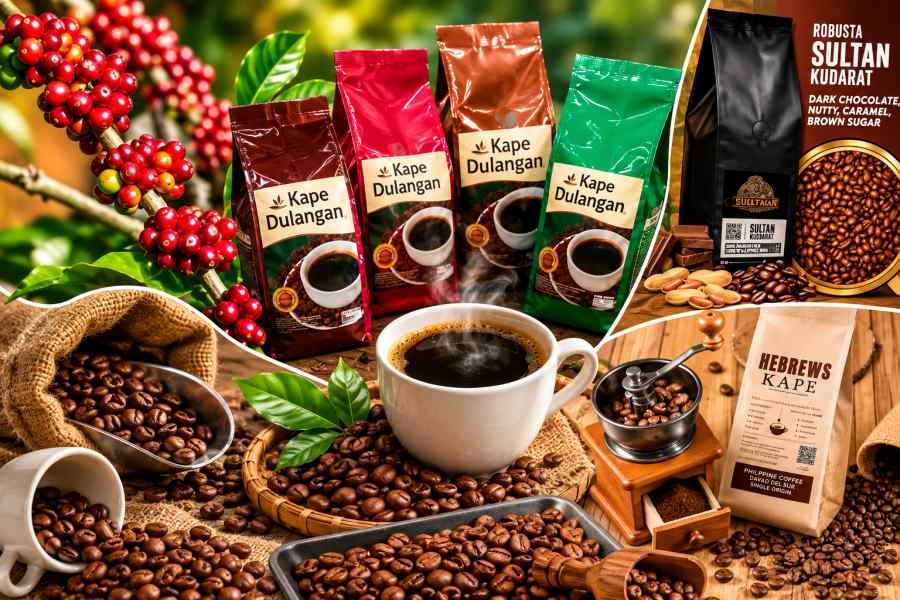
The rise of Philippine specialty coffee is a good example. Consumers who once automatically preferred imported coffee brands are now discovering the quality of locally grown coffee from Benguet, Bukidnon, Sultan Kudarat, and Mount Apo.
Similarly, Filipino entrepreneurs in food, fashion, furniture, and handicrafts are finding success by highlighting local craftsmanship, sustainability, and cultural identity.
This trend suggests that while country image remains important, a compelling brand story and consistent product quality can help local brands overcome traditional biases toward foreign products.
Country-of-Origin Effect
What This Means for Philippine Businesses
The continued importance of country image presents both challenges and opportunities for Philippine businesses.
On one hand, local brands often compete against countries that already enjoy strong reputations in specific industries. Korean cosmetics, Japanese automobiles, and American technology products benefit from established consumer perceptions.
On the other hand, local companies can learn from these success stories.
Successful countries have built strong reputations by consistently delivering quality products over time. Philippine brands can do the same by focusing on quality assurance, innovation, customer experience, and authentic storytelling.
Businesses should also embrace what makes them uniquely Filipino. Whether it is craftsmanship, creativity, hospitality, sustainability, or cultural heritage, these attributes can become valuable differentiators in both domestic and international markets.
Rather than competing solely on price, Philippine businesses should focus on building trust and creating meaningful connections with consumers.
Conclusion
Despite globalization and increasingly interconnected markets, country image continues to influence how Filipino consumers evaluate products and brands.
The perception that Japan produces reliable products, South Korea creates fashionable and innovative goods, and the United States leads in technology and lifestyle branding remains deeply embedded in consumer thinking. These perceptions continue to affect consumer trust, purchase intentions, and brand preferences.
At the same time, today’s Filipino consumers are more informed and discerning than ever before. While country image can attract attention and build initial trust, long-term success ultimately depends on delivering quality, value, and meaningful customer experiences.
For marketers, entrepreneurs, and business leaders, the lesson is clear: consumers do not simply buy products. They buy the stories, reputations, and identities that products represent. In a highly competitive marketplace, where a product comes from still matters—but what it consistently delivers matters even more.
Country-of-Origin Effect
References
- Dotong, E. D. M., & Čvirik, M. (2025). Exploring Consumer Ethnocentrism and Country-of-Origin Effects Among Filipino Gen Z. https://ceeconference.vse.cz/proceedings-2025/dotong-cvirik/
- Dentsu Philippines. (2025). Consumer and Media Trends Report: The Power of Choice. https://www.dentsu.com/sg/en/insights/2025-consumer-and-media-trends-report-the-power-of-choice
- Dentsu Philippines. (2025). Filipino Consumers Are More Empowered and Values-Driven Than Ever Before. https://www.dentsu.com/sg/en/our-news/dentsu-philippines-2025-consumer-and-media-trends-report-filipino-consumers-are-more-empowered-and-values-driven-than-ever-before
- PwC Philippines. (2025). Voice of the Consumer Report 2025. https://www.pwc.com/ph/en/news/2025/pwc-2025-voice-of-the-consumer-report.html
- PwC Global. (2025). Voice of the Consumer Survey 2025. https://www.pwc.com/gx/en/issues/c-suite-insights/voice-of-the-consumer-survey.html
- Nagy, S. (2019). The Impact of Country of Origin in Mobile Phone Choice of Generation Y and Z. https://arxiv.org/abs/1901.00793
- Philippine Daily Inquirer. (2025). Philippine Consumers Embracing Minimalism and Authenticity. https://business.inquirer.net/529810/ph-consumers-embracing-minimalism-authenticity
More Stories
- Before Your June Electric Bill Arrives: 14 Questions Consumers Are Asking
- REDSON CONSTRUCTION Builds More Than Structures—It Builds Leaders
- RULES AFTER 60 What Matters Most Changes
- Shein and Temu: Rethinking Global Marketing
- mWell Wearables and My Health Journey
- World Ocean Day in Bago City: Negros Power Plants Mangroves
- Negros Power Helps Create Safer Classrooms in 23 Schools
- Asian Alcohol Corporation Reconnects Through Teamwork
- Negros Power Lowers Electricity Rates in May 2026