[ June Electric Bill ]
Table of Contents
Before Your June Electric Bill Arrives: 14 Questions Consumers Are Asking
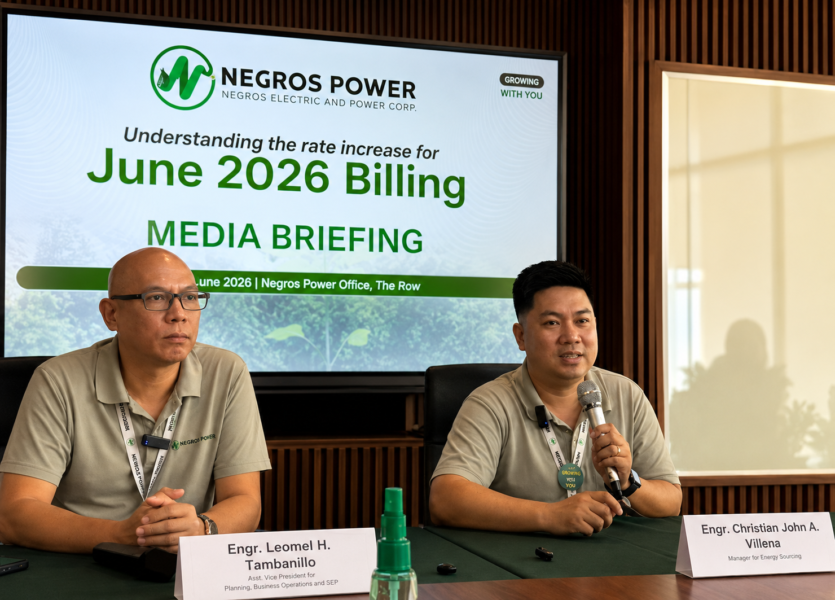
NOTE: The information in this article comes from a media briefing conducted by Negros Power to explain the factors behind the June 2026 electricity rate adjustment. Present during the briefing were Engr. Leomel H. Tambanillo, Assistant Vice President for Planning, Business Operations and SEP, and Engr. Christian John A. Villena, Manager for Energy Sourcing, who discussed the series of power plant outages, Yellow and Red Alert declarations, electricity supply shortages, Wholesale Electricity Spot Market (WESM) prices, and their impact on power rates. As of this writing, many consumers have not yet received their June electricity bills. To help readers better understand the issues that may affect their upcoming bills, Fabulous Asian Lifestyle organized the key points from the briefing into a consumer-friendly question-and-answer format. The infographics accompanying this article were independently created by Fabulous Asian Lifestyle based on information presented during the briefing and are intended to simplify and clarify the concepts discussed. They are not official Negros Power materials.
Will My June Electric Bill Be Higher Than Last Month?
Most likely, yes.
According to figures presented during the briefing, the average residential electricity rate increased from ₱11.38 per kilowatt-hour in the previous billing period to ₱13.84 per kilowatt-hour for the June 2026 billing period.
That represents an increase of approximately ₱2.46 per kilowatt-hour.
The actual increase on your bill will depend on how much electricity your household consumed during the billing period.
How Much More Will I Pay? [ June Electric Bill ]
A simple example may help.
If a household consumed 200 kilowatt-hours (kWh) during the month:
- Previous bill rate: ₱11.38/kWh
- June rate: ₱13.84/kWh
- Difference: ₱2.46/kWh
For a 200-kWh household, the increase could amount to approximately:
200 kWh × ₱2.46 = ₱492
For households consuming 300 kWh, the increase could be around ₱738.
For households consuming 400 kWh, the increase could exceed ₱980.
The actual amount will vary depending on consumption and other bill components, but these examples help illustrate the impact.
Why Is My Bill Going Up? [ June Electric Bill ]
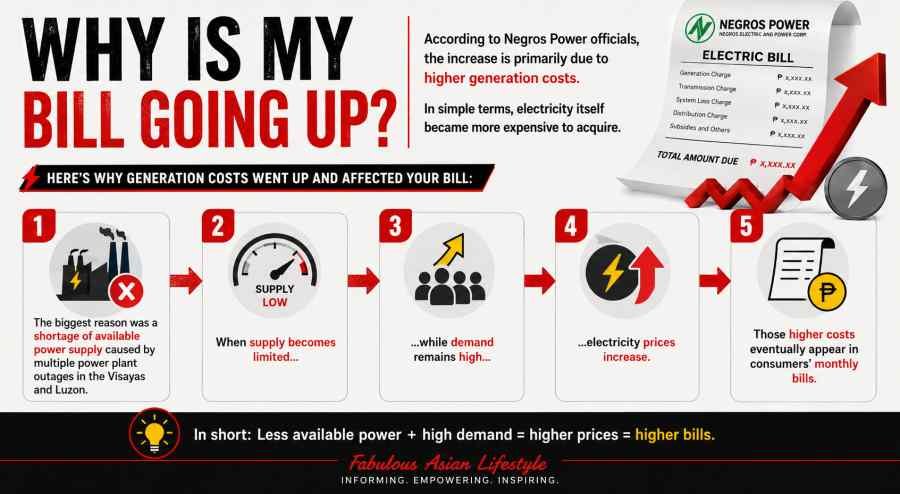
According to Negros Power officials, the increase is primarily due to higher generation costs.
In simple terms, electricity itself became more expensive to acquire.
The biggest reason was a shortage of available power supply caused by multiple power plant outages in the Visayas and Luzon.
When supply becomes limited while demand remains high, electricity prices increase.
Those higher costs eventually appear in consumers’ monthly bills.
If My Consumption Stayed The Same, Why Might My Bill Still Increase? [ June Electric Bill ]
Many consumers assume that a higher bill automatically means they used more electricity.
That is not necessarily true.
Even if your household consumed the same amount of electricity as last month, the cost of producing and purchasing that electricity increased significantly.
Think of it like buying fuel.
Even if you drive the same distance every week, you spend more if fuel prices increase.
The same principle applies to electricity.
Is This Increase Coming From Negros Power?
This is one of the first questions many consumers will ask.
According to the briefing, the biggest contributor to the increase was not distribution charges but generation costs.
Officials said that approximately 62 percent of the increase was attributed to higher generation charges brought about by supply shortages and higher market prices.
Understanding this distinction is important because it explains where the increase originated.
What Happened Beginning May 12?
According to Engr. Villena, the situation began on May 12 when several major generating units in the Visayas went offline.
Among them were Visayas Units 1 and 2, each with a capacity of 169 megawatts, along with another generating unit with a capacity of 150 megawatts.
Together, these outages removed approximately 488 megawatts of generating capacity from the Visayas Grid.
The situation worsened the following day when multiple power plants in Luzon also experienced outages or operated below their normal capacities.
Combined, these events removed more than 1,700 megawatts of capacity from the power system.
Why Did Power Plant Outages In Luzon Affect Consumers In Negros? [ June Electric Bill ]
Because the Visayas Grid does not operate independently.
The Visayas receives support from Luzon through the interconnected national grid.
When Luzon loses generation capacity, less electricity becomes available to support the Visayas.
As a result, outages in Luzon can directly affect electricity supply and pricing in Negros and the rest of the Visayas.
What Are Yellow Alerts And Red Alerts?
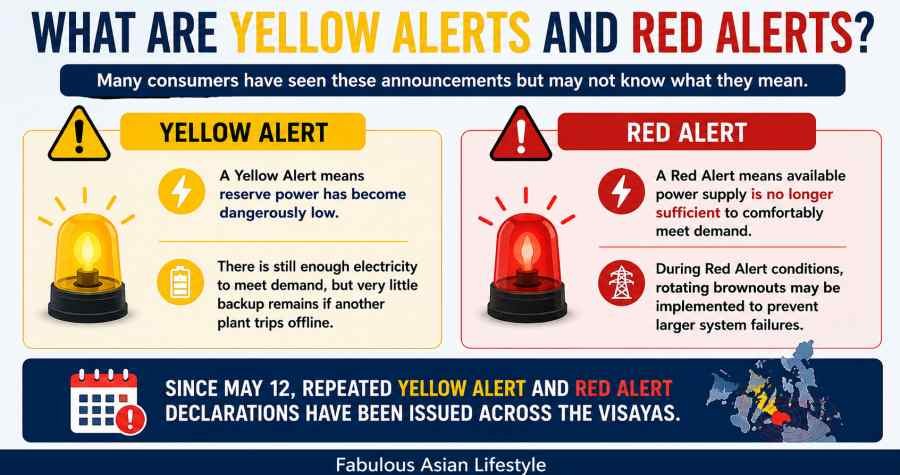
Many consumers have seen these announcements but may not know what they mean.
A Yellow Alert means reserve power has become dangerously low.
There is still enough electricity to meet demand, but very little backup remains if another plant trips offline.
A Red Alert means available power supply is no longer sufficient to comfortably meet demand.
During Red Alert conditions, rotating brownouts may be implemented to prevent larger system failures.
Since May 12, repeated Yellow Alert and Red Alert declarations have been issued across the Visayas.
Why Were There Brownouts And Higher Prices At The Same Time?
This may be one of the most confusing questions consumers have.
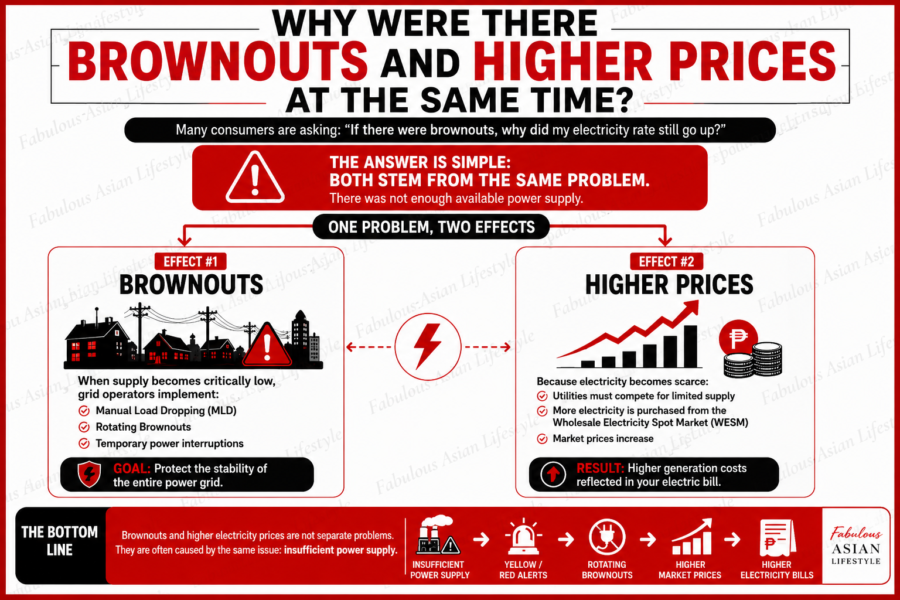
If there were brownouts, why were electricity prices also increasing?
The answer is simple.
Both stem from the same problem: insufficient power supply.
When supply becomes critically low, grid operators may implement rotating brownouts to protect the grid.
At the same time, because electricity becomes scarce, prices rise.
One shortage creates two consequences:
- Higher electricity prices
- Increased risk of brownouts
What Is WESM And Why Should Consumers Care?
WESM stands for the Wholesale Electricity Spot Market.
It is essentially the marketplace where electricity is bought and sold when additional supply is needed.
When supply is abundant, prices remain relatively stable.
When supply becomes scarce, prices rise sharply.
According to figures presented during the briefing, average WESM prices increased from around ₱5.00 per kilowatt-hour to approximately ₱10.21 per kilowatt-hour, more than doubling during the affected period.
At certain times, prices reportedly reached as high as ₱26.00 per kilowatt-hour.
These higher market prices contributed significantly to the June rate increase.
Did The Mindanao Earthquake Affect The Situation? [ June Electric Bill ]
Yes.
The Visayas also receives support from Mindanao through the Mindanao-Visayas Interconnection Project.
According to officials, a recent earthquake affected some facilities in Mindanao and reduced the amount of electricity that could be transferred to the Visayas.
While the impact on the June billing period may be limited, officials said it could affect future billing cycles if supply conditions remain constrained.
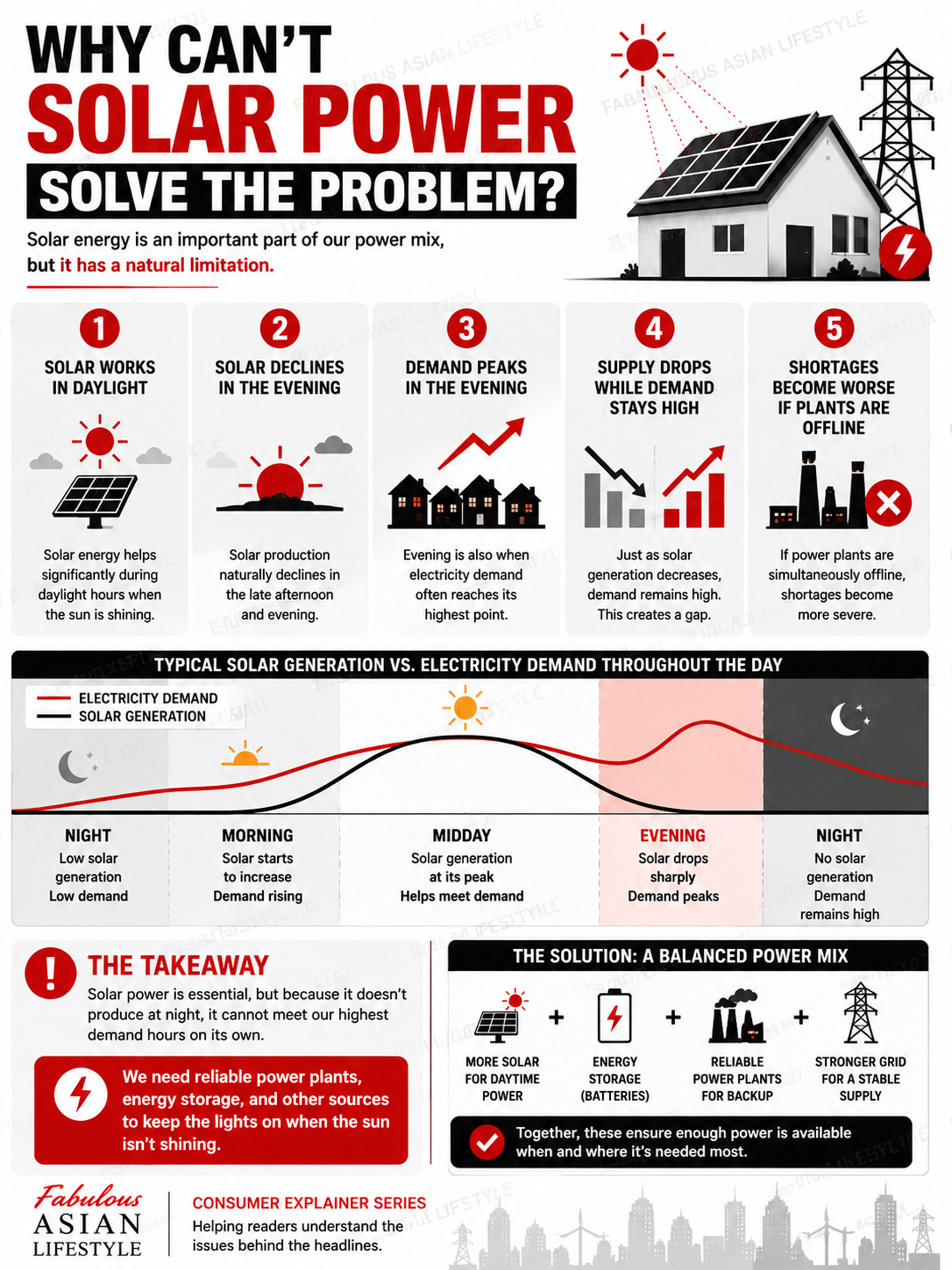
Why Can’t Solar Power Solve The Problem?
Solar energy helps significantly during daylight hours.
However, solar production declines in the late afternoon and evening.
Unfortunately, evening is also when electricity demand often reaches its peak.
This means that just as solar generation decreases, demand remains high.
If power plants are simultaneously offline, shortages become more severe.
Could Electricity Rates Increase Again In July?
This was one of the most important points discussed during the briefing.
According to Engr. Villena, the June billing period covered electricity purchases from April 26 to May 25.
The major outages only began on May 12, meaning the June bill reflects only part of the period affected by supply shortages.
The concern is that from May 26 up to the present, the supply situation has remained problematic, with continuing Yellow Alerts, Red Alerts, plant outages, and even new complications involving Mindanao.
Because the next billing cycle includes more days affected by supply shortages, officials warned that July rates could be affected even more significantly if conditions do not improve.
How Much Could Rates Increase In July?
Officials emphasized that these are still projections and not final figures.
However, during the briefing, estimates discussed suggested that rates could increase by another ₱3.00 to ₱4.00 per kilowatt-hour if the current supply situation persists and major generating facilities remain unavailable.
Again, these are projections, not confirmed rates.
Much depends on how quickly major power plants return to operation and whether grid conditions improve before the next billing cycle closes.
Is There Any Good News?
Yes.
Officials said the situation should improve once major generating facilities currently under maintenance or repair return to service.
Several large generating units in the Visayas are expected to return eventually, restoring hundreds of megawatts of capacity to the grid.
When supply improves, Yellow and Red Alerts should become less frequent, market prices should stabilize, and pressure on electricity rates should ease.
What Should Consumers Understand Before Their June Bill Arrives?
Consumers do not need to become power industry experts to understand what is happening.
They simply need to know that the increase being discussed today did not begin with the bill that will soon arrive.
It began weeks earlier when multiple power plants went offline, reserve power became critically low, Yellow and Red Alerts were declared, and electricity became more expensive to obtain.
Consumers may not welcome higher electricity costs, but understanding the reason behind them helps separate local utility issues from broader supply challenges affecting the entire Visayas region.
The bigger question is not simply why June bills may be higher.
The bigger question is whether enough generation capacity can be restored and added to the grid to prevent the same situation from happening again in the months ahead.

More Stories
- REDSON CONSTRUCTION Builds More Than Structures—It Builds Leaders
- RULES AFTER 60 What Matters Most Changes
- Shein and Temu: Rethinking Global Marketing
- mWell Wearables and My Health Journey
- World Ocean Day in Bago City: Negros Power Plants Mangroves
- Negros Power Helps Create Safer Classrooms in 23 Schools
- Asian Alcohol Corporation Reconnects Through Teamwork
- Negros Power Lowers Electricity Rates in May 2026
- Choose Yourself: Reflections on Aging, Peace, and Purpose