
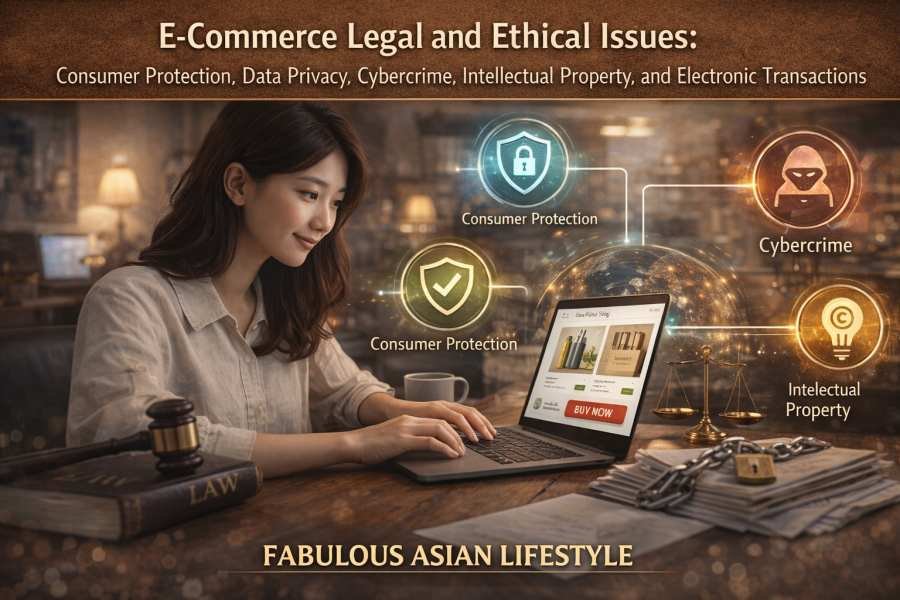
E-Commerce Legal and Ethical Issues : Laws, Privacy & Cybercrime
Table of Contents
E-Commerce Legal and Ethical Issues: Consumer Protection, Data Privacy, Cybercrime, Intellectual Property, and Electronic Transactions
Introduction to Legal and Ethical Issues in E-Commerce
The rapid growth of digital commerce has transformed how businesses and consumers interact. Online marketplaces allow transactions to occur instantly across geographic boundaries, enabling businesses to reach customers beyond traditional physical stores. However, the expansion of digital trade also raises important legal and ethical issues in e-commerce, including consumer protection, data privacy, cybercrime, intellectual property rights, and the legal validity of electronic transactions.
Governments around the world have introduced regulatory frameworks to ensure that digital commerce operates within a secure and trustworthy environment. These regulations focus on protecting consumers, safeguarding personal data, preventing cybercrime, protecting intellectual property, and ensuring the enforceability of online transactions.
In the Philippines, several laws and regulatory institutions govern legal and ethical issues in e-commerce, including the Internet Transactions Act of 2023, the Data Privacy Act, the Cybercrime Prevention Act, the Intellectual Property Code, and the Electronic Commerce Act.
Together, these laws form the legal backbone of e-commerce regulation in the Philippines.
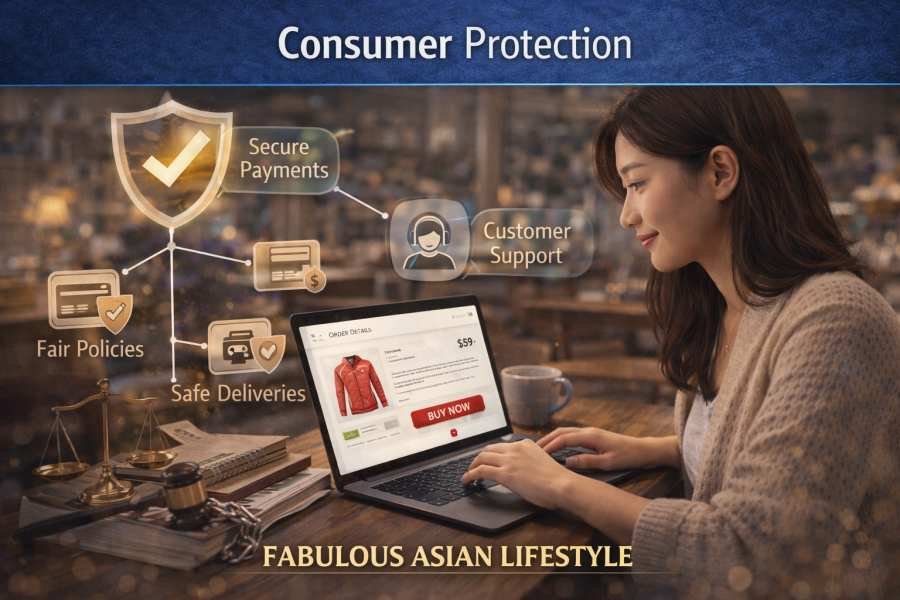
Consumer Protection [ E-Commerce Legal and Ethical Issues]
Understanding Consumer Protection Laws in Online Transactions
Consumer protection is one of the most important legal issues in e-commerce. Unlike traditional retail environments where consumers can inspect products physically, online transactions rely heavily on digital information, product descriptions, and seller credibility.
This creates risks such as:
- fraudulent sellers
- counterfeit products
- misleading product descriptions
- delayed or non-delivery of goods
- lack of refund mechanisms
Research indicates that online consumers are more vulnerable to fraud and information asymmetry compared with traditional retail markets, emphasizing the need for stronger regulatory safeguards (Syanturi et al., 2024).
https://www.researchgate.net/publication/399161774
In the Philippines, consumer protection in online marketplaces is strengthened by the Internet Transactions Act of 2023 (Republic Act No. 11967). This law regulates online sellers, digital platforms, and marketplaces to ensure transparency and accountability (Department of Trade and Industry, 2024).
https://ecommerce.dti.gov.ph/related-laws-policy-issuance/
The law also established the E-Commerce Bureau under the Department of Trade and Industry (DTI) to monitor digital commercial activities and enforce consumer protection standards.
Example
If a consumer purchases a smartphone from an unfamiliar online seller and receives a counterfeit product, the buyer may file a complaint with the Department of Trade and Industry (DTI). Platforms that fail to regulate fraudulent sellers may also be held liable under the law.
Such consumer protection mechanisms strengthen public trust in digital commerce ecosystems.
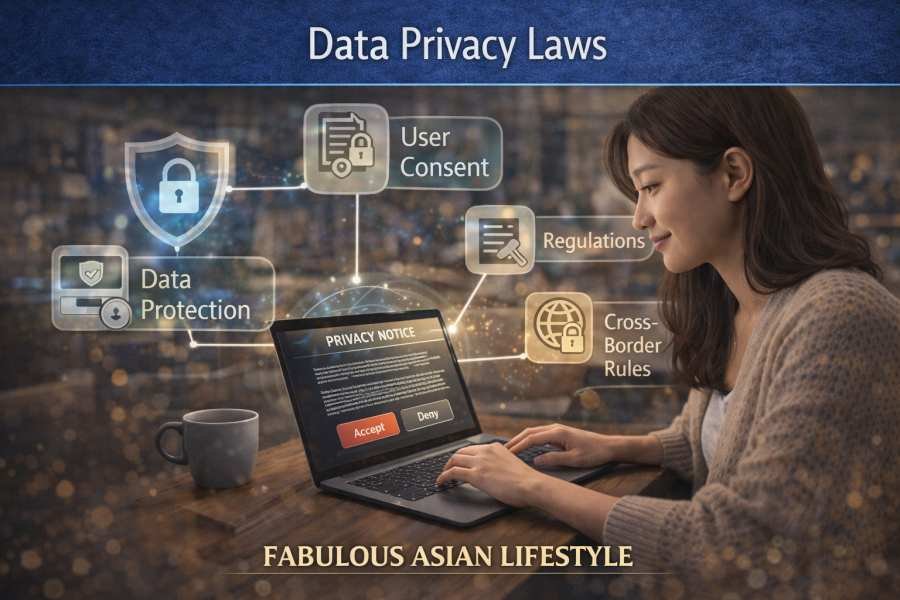
Data Privacy Laws [ E-Commerce Legal and Ethical Issues ]
Personal Data Protection in Online Platforms
Another major component of legal and ethical issues in e-commerce is the protection of personal data. Online transactions require consumers to provide sensitive information such as:
names and addresses
credit card details
phone numbers
purchase histories
Because digital platforms collect and process large volumes of personal data, there are increasing concerns about data breaches, identity theft, and unauthorized data sharing.
Studies show that strong data protection frameworks are essential to maintain consumer confidence in digital commerce systems (Morić, 2024).
https://www.mdpi.com/2624-800X/4/3/34
In the Philippines, personal data protection is governed by the Data Privacy Act of 2012 (Republic Act No. 10173). The law regulates how businesses collect, store, process, and share personal data.
The National Privacy Commission (NPC) oversees compliance and provides guidelines for responsible data processing (National Privacy Commission, 2024).
https://privacy.gov.ph
Example
When consumers create accounts on e-commerce platforms such as Lazada or Shopee, the platform must ensure that personal data is securely stored and used only for legitimate purposes.
Businesses that misuse or fail to secure consumer data may face penalties under the Data Privacy Act.

Cybercrime [ E-Commerce Legal and Ethical Issues ]
Cybersecurity Risks in Digital Commerce
Cybercrime represents one of the most serious legal challenges in e-commerce. Cybercriminals exploit vulnerabilities in online platforms to commit crimes such as:
- identity theft
- payment fraud
- phishing attacks
- hacking of e-commerce systems
As digital commerce grows, cybercrime risks also increase. Experts emphasize the need for strong cybersecurity measures and legal frameworks to protect online transactions (Rahman et al., 2025).
https://www.researchgate.net/publication/389675412
In the Philippines, cybercrime activities are regulated by the Cybercrime Prevention Act of 2012 (Republic Act No. 10175).
This law criminalizes hacking, identity theft, online fraud, cyber extortion, and other digital crimes.
Example
A common cybercrime scenario involves phishing emails that imitate legitimate online stores. Consumers who click fraudulent links may unknowingly provide credit card details to criminals.
Businesses must implement protective measures such as:
- secure payment gateways
- encryption technology
- multi-factor authentication
These safeguards help reduce cybercrime risks in e-commerce systems.

Intellectual Property Rights [ E-Commerce Legal and Ethical Issues ]
Protecting Brands and Digital Content Online
Intellectual property protection is another key component of legal and ethical issues in e-commerce. Intellectual property includes:
- trademarks
- copyrights
- patents
- brand names
- digital content
Online marketplaces sometimes allow counterfeit products or unauthorized digital content to circulate, which harms legitimate businesses.
In the Philippines, intellectual property rights are governed by the Intellectual Property Code of the Philippines (Republic Act No. 8293).
This law protects trademarks, copyrights, and patents from unauthorized use (Intellectual Property Office of the Philippines, 2024).
https://www.ipophil.gov.ph
Recent policy discussions highlight the role of digital platforms in combating counterfeit goods and protecting brand owners in online marketplaces (ACCRALAW, 2024).
https://accralaw.com/protecting-brands-in-cyberspace-and-e-commerce-transactions/
Example
If a seller lists counterfeit luxury handbags on an online marketplace, the listing may be removed and the seller may face legal liability for trademark infringement.
Protecting intellectual property ensures fair competition in online marketplaces.

Electronic Transaction Laws [ E-Commerce Legal and Ethical Issues ]
Legal Recognition of Online Contracts
Electronic transaction laws ensure that digital agreements and electronic records have legal validity. These laws enable businesses and consumers to conduct transactions online with legal protection.
In the Philippines, the Electronic Commerce Act of 2000 (Republic Act No. 8792) recognizes electronic documents, electronic signatures, and digital contracts as legally binding.
The law provides the legal foundation for online commercial transactions (DTI E-Commerce Office, 2024).
https://ecommerce.dti.gov.ph/related-laws-policy-issuance/
More recently, the Internet Transactions Act of 2023 strengthened the regulatory framework governing digital commerce (Nagashima, 2024).
https://www.nagashima.com/en/publications/publication20240702-1/
Example
When a consumer agrees to purchase a product online and clicks “I Agree” to the terms and conditions, that action forms a legally binding electronic contract.
This legal recognition ensures that digital transactions remain enforceable under Philippine law.

Ethical Considerations [ E-Commerce Legal and Ethical Issues ]
Beyond legal compliance, ethical practices are essential in digital commerce. Ethical e-commerce practices include:
- transparent product descriptions
- fair pricing strategies
- responsible handling of consumer data
- respect for intellectual property
Businesses that follow ethical standards are more likely to build consumer trust and long-term brand loyalty.
For example, ethical online retailers clearly disclose shipping costs, product specifications, and return policies so that consumers can make informed purchasing decisions.

Conclusion
The rapid expansion of digital commerce has created both opportunities and challenges. Understanding the legal and ethical issues in e-commerce is essential for businesses, policymakers, and consumers.
Consumer protection laws safeguard buyers from fraudulent practices, while data privacy regulations protect personal information. Cybercrime legislation addresses digital security threats, and intellectual property laws protect businesses from counterfeit goods and unauthorized content.
Electronic transaction laws ensure that online agreements are legally enforceable, allowing digital commerce to operate with legitimacy and security.
As e-commerce continues to grow globally, strong legal frameworks and ethical business practices will remain crucial in maintaining trust in the digital marketplace.
References
- ACCRALAW. (2024). Protecting brands in cyberspace and e-commerce transactions.
https://accralaw.com/protecting-brands-in-cyberspace-and-e-commerce-transactions/ - Department of Trade and Industry. (2024). Related laws and policy issuance for e-commerce.
https://ecommerce.dti.gov.ph/related-laws-policy-issuance/ - Intellectual Property Office of the Philippines. (2024). Intellectual property protection in digital commerce.
https://www.ipophil.gov.ph - Morić, Z. (2024). Protection of personal data in the context of e-commerce.
https://www.mdpi.com/2624-800X/4/3/34 - Nagashima, O. (2024). Regulating e-commerce: The Internet Transactions Act of 2023.
https://www.nagashima.com/en/publications/publication20240702-1/ - National Privacy Commission. (2024). Compendium of data privacy guidelines.
https://privacy.gov.ph - Rahman, M. et al. (2025). Protection against digital crimes in e-commerce transactions.
https://www.researchgate.net/publication/389675412 - Syanturi, H., Janah, I., & Zunaidi, A. (2024). Legal protection of consumers in e-commerce transactions.
https://www.researchgate.net/publication/399161774
More Stories
- Travel Blogger Philippines: The Happy Trip Journey and Legacy
- ₱630M Power Boost for Bacolod | Negros Power
- Evolving Trends in E-Commerce: Key Insights
- Casa Blanca SM Branch Bacolod: Dinner with Friends
- Galacia Mask Bacolod: The Story of a MassKara-Inspired Artwork
- KUALA LUMPUR TOURIST SPOTS
- DINUGUAN WITH PUTO | QUAN DELICACIES
- BELMONT HOTEL MANILA, SAVOY HOTEL MANILA | #SafeStay Campaign
- GINATAANG HALO-HALO | BINIGNIT | Quan Delicacies
- BICOL EXPRESS: CREAMY, SPICY AND FLAVORFUL | Quan Delicacies
- DINUGUAN RECIPE ( BLOOD STEW )












ARTICLE 1: Iloilo Culinary Tourism Guide
Question 1: Platform features
If I were making a website/app for Iloilo food tourism, I’d add:
Map with live locations – so tourists don’t get lost looking for Leah’s Tinuom in Cabatuan or Netong’s in La Paz. Include jeepney/tricycle directions too since some spots are hard to reach.
Pre-ordering – Roberto’s Queen Siopao always has long lines. Let people order through the app and just pick up. Same for batchoy houses during breakfast rush.
Short background stories – like how batchoy started in the 1930s from leftover pork parts. Tourists appreciate knowing this stuff, not just “here’s the menu.”
Reviews focused on authenticity – did they use real native chicken for tinuom? Is the batchoy still cooked the traditional way? This matters more than just “tastes good.”
Delivery for souvenirs – Madge Café coffee or frozen batchoy broth that tourists can ship home. They always crave it after leaving Iloilo anyway.
Question 2: E-commerce for local food businesses
Local businesses can try:
Frozen meal kits – Leah’s Tinuom and Netong’s can sell frozen packs with instructions. OFWs and balikbayans buy these a lot.
Facebook Live selling – show how they wrap tinuom in banana leaves or make Queen Siopao. People buy more when they see the process.
Subscription boxes – monthly boxes with coffee from Madge, siopao, biscocho, etc. Recurring income for the business.
Supplying to Manila restaurants – instead of just retail, sell bulk to restaurants in Manila who want “authentic Ilonggo” dishes.
Cooking classes on Zoom – charge tourists to learn Pancit Molo or batchoy cooking before they even visit, so they’re more excited to come.
ARTICLE 2: Holy Week in Negros
Question 1: Ethical presentation of crowded destinations
Travel platforms should stop pretending these places are peaceful during Holy Week. Based on the article:
Show real crowd levels – like “Lakawon: currently high volume, expect boat waits.” Don’t hide that it gets packed.
Use honest descriptions – for Campuestohan, say it’s “high-energy” during Holy Week, not a “quiet retreat.” The author said it felt like a “theme park rush,” so platforms shouldn’t lie about that.
Add photos of actual Holy Week crowds – not just empty beach marketing shots. Let people see the difference between off-peak and peak season.
Suggest alternatives automatically – when someone views Lakawon, show “Want less crowds? Try Danjugan Island (needs reservation) or Hinoba-an instead.”
Flexible cancellation – let people rebook without fees if they arrive and it’s too crowded. The author talked about that “subtle disappointment” when expectations aren’t met.
Question 2: Legal and ethical issues of misleading promotions
Legal problems:
False advertising – under Consumer Act, calling Campuestohan a “peaceful retreat” during Holy Week when it’s actually noisy and crowded is deceptive. DTI can fine companies for this.
Breach of contract – if the booking confirmation says “quiet getaway” but you get the author’s experience at Mambukal where “pools fill up early and trails get busy,” customers can demand refunds.
Safety liability – overcrowding at pools and trails can cause accidents. Platforms that keep pushing bookings without warning about capacity might get sued if something happens.
Ethical problems:
Exploiting religious travelers – Holy Week is supposed to be for reflection. Promoting party vibes as “retreats” just to get bookings is wrong.
Damaging the environment – the article said even Mambukal has limits. Too many visitors destroy the place that attracts them.
Wasting people’s money and time – the author described arriving “hopeful” and leaving disappointed. Platforms that cause this repeatedly lose trust.
Link 1:
1. 1. Online Platform Features for Tourists
To transform the guide into a functional online platform, I would prioritize these features:
• Interactive Gastronomy Map: A GPS-enabled map that categorizes food by district (e.g., La Paz for Batchoy, Molo for Pancit Molo, Villa for Seafood). It should show “heritage trails” that users can walk.
2. E-Commerce for Local Food Businesses
Local businesses can move beyond walk-in customers through:
• “Batchoy Kits” for Shipping: Packaging dehydrated broth bases, specialty noodles, and chicharon in “cook-at-home” kits sold via an e-commerce storefront.
3. Platforms: TikTok/Instagram Reels for visual “ASMR” (the sound of slurping batchoy, the steam of siopao); Facebook for community-building and long-form heritage stories.
Link 2.
1. 1. Ethical Presentation of Overcrowded Locations
Travel platforms have a responsibility to manage expectations to avoid “overtourism” backlash.
• Disclosure of Peak Capacity: Platforms should use a “Crowd Forecast” label (e.g., “Expected High Volume”) during Holy Week for places like Lakawon or Campuestohan.
2. 2. Legal and Ethical Issues of Misleading “Peaceful” Marketing Legal Risks: Under the Consumer Act of the Philippines, businesses could face complaints for “False, Misleading, or Deceptive Sales Promotion.”
3. Responsible Promotion of Alternative Destinations
To sustain growth in Sipalay, Don Salvador Benedicto (DSB), and Danjugan without ruining them:
• Capped Booking Systems: E-commerce platforms should integrate with local LGU systems to strictly enforce carrying capacities (e.g., Danjugan’s “Advance Choice” model).
1. Iloilo Culinary Tourism Platform Features
If the Iloilo Culinary Tourism Guide were turned into an online platform, it should include features like interactive maps, booking systems, reviews, and delivery options for convenience. Tourists can easily find popular food spots, reserve tables, and read authentic feedback from other users. Adding digital payments and cultural guides would also improve the overall travel and dining experience.
2. E-commerce for Iloilo Food Businesses
Local food businesses in Iloilo can expand their reach by offering online ordering, delivery services, and social media marketing. They can also sell packaged versions of their dishes, such as ready-to-cook meals, to customers outside the city. Partnering with travel platforms and using digital promotions can help attract more tourists and increase sales.
1. Ethical Presentation of Crowded Destinations (Holy Week)
E-commerce travel platforms should present destinations like Lakawon Island, Campuestohan Highland Resort, and Mambukal Mountain Resort honestly by clearly stating expected crowd levels during Holy Week. They should include real-time updates, peak season warnings, and estimated visitor volumes to avoid misleading tourists. This ensures transparency while still allowing platforms to promote bookings responsibly.
2. Legal and Ethical Issues in Misleading Promotions
If a booking platform promotes these destinations as peaceful retreats without mentioning overcrowding, it may lead to false advertising and customer dissatisfaction. For example, tourists expecting a quiet experience in Lakawon Island may feel misled when faced with large crowds. Businesses can address this by providing accurate descriptions, disclaimers, and alternative travel dates while still maintaining trust and sales.
1. An Iloilo Culinary Tourism platform should include features that make travel and food exploration convenient and interactive. It can have an interactive map with nearby food spots and suggested routes, a booking system for restaurants and food tours, and a reviews and ratings section to guide tourists. Users should be able to search or filter by specific dishes like batchoy or kansi, while delivery and e-commerce options can allow them to order local delicacies. An itinerary builder based on budget and time, along with multimedia content such as videos and food stories, would further enhance the experience.
2. Local food businesses in Iloilo can use e-commerce to expand beyond walk-in customers by offering online ordering and delivery through apps or their own websites. They can sell packaged products like pasalubong items and frozen meals, and use social media for marketing and direct selling. By sharing the stories behind their dishes, they can strengthen their brand and cultural identity. Accepting pre-orders and reservations, as well as joining online marketplaces or tourism platforms, can also help them reach a wider audience and increase sales.