Emerging Trends in E-Commerce
Table of Contents
Evolving Trends in E-Commerce: AI, Social Commerce, Mobile Shopping, and the Future of Digital Retail
Introduction to Emerging Trends in E-Commerce
The digital economy continues to evolve rapidly, and emerging trends in e-commerce are reshaping how businesses interact with consumers and how online marketplaces operate. The growth of internet access, mobile technology, digital payments, and artificial intelligence has accelerated the transformation of traditional retail into a global digital marketplace.
Recent industry data indicates that global e-commerce sales are projected to reach approximately $6.3 trillion in 2024 and continue growing in the coming years, highlighting the increasing importance of digital commerce in the global economy (Forbes Advisor, 2026).
In addition, more than 2.77 billion people worldwide now shop online, representing nearly one-third of the global population (Global Commerce Navigators, 2025).
As consumer behavior evolves, businesses must adapt to new technologies and innovations shaping the future of online retail. Among the most significant emerging trends in e-commerce are artificial intelligence-driven personalization, mobile commerce, social commerce, voice commerce, and cross-border digital trade.

Evolving Trends in E-Commerce : Artificial Intelligence and Personalization in E-Commerce
AI-Driven Shopping Experiences
Artificial intelligence (AI) has become one of the most transformative emerging trends in e-commerce. AI technologies enable online retailers to analyze consumer behavior, personalize recommendations, and automate customer interactions.
Modern e-commerce platforms increasingly use generative AI tools and conversational search technologies to help consumers find products more efficiently (Publicis Sapient, 2026).
Consumer surveys indicate that 43% of shoppers expect companies to use AI to improve the online shopping experience, particularly through personalized recommendations and product discovery tools.
Example
Online platforms such as Amazon and Netflix use AI algorithms to analyze past purchases and browsing patterns. These algorithms recommend products that match a user’s interests, increasing the likelihood of purchase.
AI chatbots also assist customers by answering questions, guiding purchases, and resolving complaints, reducing the need for human customer service agents.
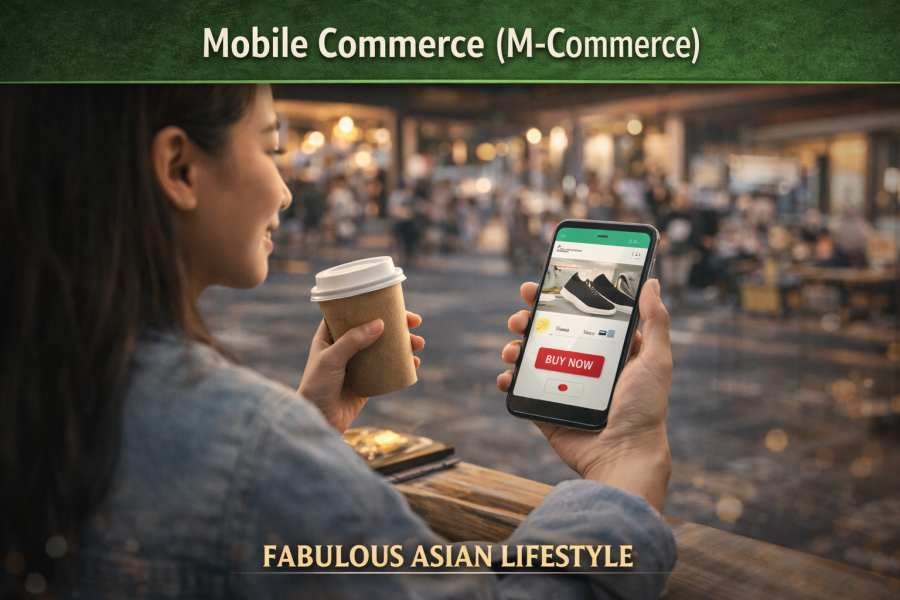
Evolving Trends in E-Commerce : Mobile Commerce (M-Commerce)
The Rise of Smartphone-Based Shopping
Another important development among emerging trends in e-commerce is the growth of mobile commerce, commonly referred to as m-commerce.
Today, smartphones have become the primary tool for online shopping. Studies show that more than 70% of e-commerce purchases are now made through mobile devices, highlighting the dominance of mobile platforms in digital retail (Global Commerce Navigators, 2025).
Mobile commerce allows consumers to browse products, compare prices, read reviews, and complete purchases anytime and anywhere.
Example
Apps such as Shopee, Lazada, and Amazon allow users to receive push notifications about discounts, flash sales, and product recommendations. These features encourage impulse purchases and increase consumer engagement.
Businesses increasingly design their websites using mobile-first strategies, ensuring that digital stores are optimized for smartphones.

Evolving Trends in E-Commerce : Social Commerce and Influencer Marketing
Social Media as a Shopping Platform
Social commerce has emerged as one of the fastest-growing e-commerce trends. Social commerce refers to the practice of selling products directly through social media platforms such as Facebook, Instagram, TikTok, and YouTube.
Research suggests that one in four online shoppers now purchases products through social media platforms, highlighting the growing influence of social commerce in the digital marketplace (Hostinger, 2025).
Global social commerce revenue is projected to exceed $1 trillion by 2028, reflecting strong consumer engagement with social media shopping experiences.
Example
Influencers on TikTok and Instagram frequently promote products through short videos and live streams. Viewers can purchase products directly from embedded shopping links without leaving the platform.
This integration of entertainment and retail has transformed social media into a powerful marketing and sales channel.

Evolving Trends in E-Commerce : Voice Commerce and Conversational Shopping
Shopping Through Voice and AI Assistants
Another emerging development is voice commerce, which allows consumers to purchase products using voice commands through smart devices.
Voice-enabled assistants such as Amazon Alexa, Google Assistant, and Apple Siri allow users to search for products and complete purchases without typing.
Research indicates that 37% of global shoppers have already used voice commands to make online purchases, demonstrating the growing adoption of voice commerce technologies (DHL, 2025).
Example
A consumer can say, “Alexa, order laundry detergent,” and the device will automatically place the order using previously stored payment details.
Voice commerce simplifies the shopping process and creates a more convenient consumer experience.

Evolving Trends in E-Commerce: Cross-Border E-Commerce and Global Digital Trade
The Expansion of International Online Markets
Cross-border e-commerce is another important trend shaping the future of digital commerce. Online platforms allow businesses to sell products internationally without establishing physical stores in foreign markets.
Global online marketplaces such as Amazon, Alibaba, and eBay connect buyers and sellers across multiple countries, expanding market opportunities for businesses of all sizes.
Research suggests that international online trade will continue to grow as logistics systems improve and digital payment platforms become more accessible (Payments CMI, 2025).
Example
A small handicraft business in the Philippines can sell products to customers in the United States or Europe through platforms such as Etsy or Amazon.
Cross-border e-commerce allows small and medium enterprises to participate in global trade more easily than ever before.
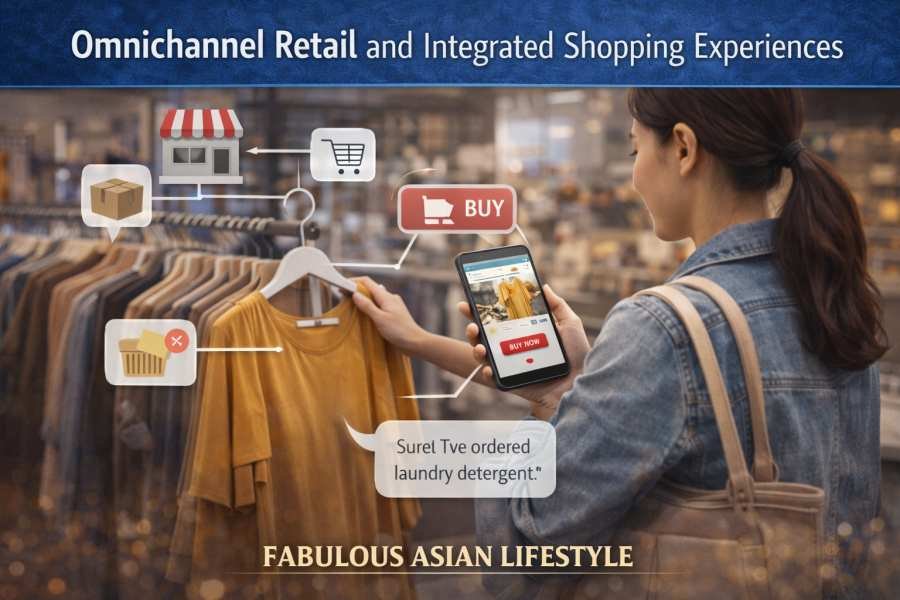
Evolving Trends in E-Commerce : Omnichannel Retail and Integrated Shopping Experiences
Blending Online and Offline Retail
Another key emerging trend in e-commerce is the development of omnichannel retail strategies, which integrate physical stores with digital platforms.
Modern consumers often switch between multiple channels during the purchasing process. For example, a shopper may research a product online, visit a physical store to examine it, and then complete the purchase through a mobile app.
Experts emphasize that businesses must provide seamless and consistent experiences across digital and physical channels to remain competitive in the modern retail environment (Publicis Sapient, 2026).
Example
Retail companies such as Walmart and Target allow customers to order products online and pick them up in physical stores, combining the convenience of e-commerce with traditional retail services.

Evolving Trends in E-Commerce : Sustainability and Ethical E-Commerce
Environmentally Responsible Online Retail
Sustainability has also become an important factor influencing emerging trends in e-commerce. Consumers increasingly expect businesses to adopt environmentally responsible practices such as:
- eco-friendly packaging
- carbon-neutral delivery systems
- ethical sourcing of products
Consumer research indicates that modern shoppers are placing greater emphasis on sustainability and responsible consumption when making purchasing decisions (McKinsey & Company, 2025).
Example
Many online retailers now provide carbon-neutral shipping options or use recyclable packaging materials to reduce environmental impact.

Conclusion
The rapid expansion of digital technology continues to shape emerging trends in e-commerce, transforming how businesses and consumers interact in the global marketplace. Artificial intelligence, mobile commerce, social commerce, voice shopping, and cross-border digital trade are redefining the structure of online retail.
At the same time, businesses must adapt to changing consumer expectations, including personalized shopping experiences, seamless omnichannel services, and sustainable business practices.
As the digital economy continues to evolve, companies that understand and respond to these emerging trends will be better positioned to compete in the increasingly dynamic world of online commerce.
References
- Forbes Advisor. (2026). E-commerce statistics and global market growth.
https://www.forbes.com/advisor/business/ecommerce-statistics/ - Global Commerce Navigators. (2025). International e-commerce trends report.
https://globalcommercenavigators.org/international-ecommerce-current-trends-2025/ - Hostinger. (2025). Social commerce statistics and trends.
https://www.hostinger.com/tutorials/social-commerce - Publicis Sapient. (2026). Future e-commerce trends and AI-driven personalization.
https://www.publicissapient.com/resources/blog/future-ecommerce-trends - Payments CMI. (2025). Global e-commerce market insights and growth trends.
https://paymentscmi.com/insights/india-ecommerce-market-growth-trends/ - DHL. (2025). Global e-commerce trends report.
https://group.dhl.com/en/media-relations/press-releases/2025/dhl-e-commerce-trends-report-2025.html - McKinsey & Company. (2025). State of the consumer trends report.
https://www.mckinsey.com/industries/consumer-packaged-goods/our-insights/state-of-consumer
More Stories
- VIGAN TOURIST SPOTS | THINGS TO DO
- TAIWAN TOURIST SPOTS | THINGS TO DO
- MAMBUKAL MOUNTAIN RESORT TRAVEL GUIDE
- PAMPANGA TOURIST SPOTS | THINGS TO DO
- BICOL EXPRESS RECIPE : A Filipino Dish to Try
- Casa Blanca SM Branch Bacolod: Dinner with Friends
- Galacia Mask Bacolod: The Story of a MassKara-Inspired Artwork
- E-Commerce Technology, Infrastructure, and Operations
- Global Business Environment and International Success
- MoMs Across Philippines–Negros Chapter Convenes in Handumanan
- Dried Fish and Low-Carb Living
- Spicy Keto Chicken Feet Recipe : High-Collagen, Low-Carb