Retirement in the Philippines
Table of Contents
Retirement in the Philippines: Poor by Choice? Stop Judging!
As I was browsing through social media, I came across a post about the best businesses to start after retirement.
“Hmmm,” I told myself. “This might be an interesting topic for The Fabulous Asian Lifestyle.”
But before I could even open the article, the comments caught my attention.
Some were helpful, thoughtful, and genuinely encouraging. But quite a number were judgmental, insensitive, and delivered with the confidence of people who apparently have life figured out from beginning to end.
“Why didn’t you save when you were younger?”
“Retirement means resting. You should have worked hard before.”
“Come on, just travel around the world!”
And some went further, questioning people’s past decisions and insulting those who were considering starting a business or continuing to work after retirement.
Goodness gracious!
I almost forgot that I was reading about retirement and thought I had stumbled into a convention of self-appointed experts on how everybody should live.
So, let me make my position clear from the beginning.
I AM NOT CONDEMNING PEOPLE WHO ADVOCATE SAVING, FINANCIAL DISCIPLINE, AND RESPONSIBLE RETIREMENT PLANNING. I AM CHALLENGING THOSE WHO HAVE THE PRIVILEGE, POWER, OR RESPONSIBILITY TO UNDERSTAND PEOPLE’S CIRCUMSTANCES—YET CHOOSE TO JUDGE INSTEAD OF SHOWING COMPASSION.
To those who have comfortable salaries, secure employment, successful businesses, substantial savings, or dependable retirement benefits, I am happy for you. Truly.
But please, have the heart.
I am not asking you to feel guilty for what you have achieved. I am asking you not to use your achievements to humiliate people who have less.
Because, my dear readers,
not everybody who is poor is lazy, not everybody who is struggling is irresponsible, and not every misery in life is the consequence of a bad personal decision.
Sometimes, people make mistakes. But sometimes, they get sick. Sometimes, they lose their jobs. Sometimes, their businesses collapse. Sometimes, they spend their entire lives supporting their families and still reach old age without enough money to live comfortably.
And sometimes, the misery people experience is deeply connected to the economic and social systems in which they live.
That is the reality I want us to confront.
Retirement in the Philippines: What Does a Lifetime of Work Actually Buy?
Let us begin with the numbers, because this conversation deserves more than opinions.
The Philippine Statistics Authority’s 2025 Official Poverty Statistics, released in August 2026, estimated that approximately 11.08 million Filipinos were living below the poverty threshold in 2025. Poverty incidence among the population was 9.7%.
That means millions of Filipinos had incomes insufficient to meet their minimum basic food and non-food needs, according to the official poverty measure.
Does this prove that every poor Filipino is hardworking? No.
Does it prove that every poor Filipino is a victim of the system? No.
But it certainly challenges the simplistic assumption that poverty can be explained by telling people to make better decisions.
I want us to look beyond the comments section and examine the circumstances in which ordinary Filipinos earn, spend, save, and grow old.
Consider the Department of Finance’s report on the SSS Pension Reform Program. It reported an average monthly SSS retirement pension of approximately ₱4,923 before the 2025 reform, with a projected average of approximately ₱6,548 after all three scheduled increases through 2027.
These are historical and projected averages, not the amount every pensioner receives. Actual benefits vary according to contribution records and applicable rules.
The pension reform is a welcome step. The government deserves recognition for introducing increases that can help pensioners manage rising expenses.
But let us ask the question that matters to a retiree trying to make ends meet: How far can that monthly income actually go?
Food. Electricity. Water. Transportation. Maintenance medicines. Medical checkups. Perhaps rent. Perhaps financial support for a child or grandchild.
And what if the retiree has no house of their own?
What if the spouse also needs medication?
What if a family emergency arrives?
I am not saying that every pensioner is poor or that every pension is inadequate. I am saying that we must look honestly at the gap between retirement income and the actual cost of living.
You cannot simply tell people to enjoy retirement without asking whether they can afford to live through it.

One Hospitalization Can Devour a Year’s Worth of Pension [ Retirement in the Philippines ]
This is where the discussion becomes especially painful for me.
The Philippine Institute for Development Studies (PIDS), a government research institution, reported an average inpatient-care cost of ₱82,335, including hospital bills, medicines, and laboratory tests.
Now, compare that figure with the projected average monthly SSS retirement pension of ₱6,548 after the full pension reform.
₱82,335 divided by ₱6,548 is approximately 12.6 months.
Let that sink in.
A hospitalization costing the reported average is equivalent to more than a year of that projected monthly pension.
And that is before the retiree pays for food, electricity, transportation, housing, or any other daily expense.
Of course, actual hospital bills vary according to the illness, hospital, treatment, length of stay, insurance coverage, and available assistance. This comparison is illustrative, not a claim that every admission costs ₱82,335.
But it exposes the magnitude of the risk.
The Philippine Statistics Authority’s 2024 National Health Accounts reported that household out-of-pocket payments accounted for 42.7% of the country’s current health expenditure in 2024. Government schemes and compulsory contributory healthcare financing accounted for 44.7%.
Think about that.
Households were shouldering a substantial share of healthcare costs directly.
Now imagine an elderly Filipino who has spent decades working and saving. One medical emergency arrives, and the savings accumulated over years begin disappearing.
Would you tell that person, “You should have saved more”?
Perhaps the person did save. Perhaps they lived frugally for decades. Perhaps they sacrificed vacations, new clothes, and other comforts to provide for their family.
But illness does not ask permission before arriving. And no amount of financial discipline can guarantee that every medical emergency will be affordable.
I BELIEVE IN SAVING. BUT I REFUSE TO BELIEVE THAT EVERY PERSON WHO CANNOT AFFORD A MEDICAL EMERGENCY HAS FAILED AT LIFE.
We need personal responsibility, yes. We also need healthcare that people can actually access, insurance that meaningfully reduces their financial burden, and government assistance that reaches those who need it.
This is not an argument against saving. It is an argument against treating savings as a magical shield against every hardship.
The Minimum-Wage Worker: Save From Where, Exactly? [ Retirement in the Philippines ]
Whenever I read comments telling people to save more, I cannot help wondering whether the people giving this advice have considered the mathematics of a low-income household.
Let us take a hypothetical worker who earns ₱15,000 a month.
Suppose the worker contributes to a household budget that includes food, transportation, utilities, housing, school expenses, and medicine. Suppose there are children to support and parents who occasionally need financial assistance.
At the end of the month, what is left?
Perhaps something can be saved. Perhaps nothing can.
And if an emergency occurs, even a modest amount of savings can disappear.
The ₱15,000 figure is an illustration, not a claim about the average Filipino salary. Actual wages differ by region, occupation, working hours, and employment arrangement. The point is that the ability to save depends partly on the relationship between income and necessary expenses.
The PSA’s labor-market statistics provide another important piece of context. Its December 2025 Labor Force Survey estimated that 2.26 million Filipinos were unemployed, while 3.93 million employed people wanted additional working hours or another job.
Those numbers describe different labor-market situations. An unemployed person is not the same as an underemployed worker. But both figures demonstrate that having the opportunity to earn enough money is not something we can simply assume.
And that is precisely why I find blanket judgments so unfair.
Some people spend their younger years earning enough to survive but not enough to build substantial savings. Others support extended families, pay for medical expenses, or experience unemployment at the worst possible time.
We should encourage saving whenever possible. But we must also recognize that financial discipline cannot manufacture surplus income where there is none.
Before telling a minimum-wage worker to prepare for retirement, perhaps we should ask whether that worker’s present income allows meaningful preparation in the first place.
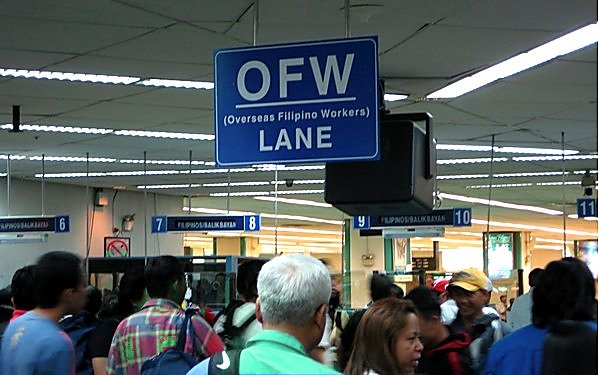
OFWs: They Earned Abroad, But Will They Retire in Security? [ Retirement in the Philippines ]
This part of the conversation is especially important to me.
Our overseas Filipino workers leave their homes, spouses, children, and parents to earn a living in foreign countries. Many work in demanding environments, endure loneliness, and spend years sending money home to support their families.
They help finance education, housing, household expenses, and businesses. Their remittances support millions of Filipino households and contribute to the national economy.
According to the PSA’s 2025 Survey on Overseas Filipinos, an estimated 2.05 million OFWs worked abroad between April and September 2025. Their total remittances during that period reached approximately ₱240.73 billion, including cash sent, cash brought home, and remittances in kind.
These are extraordinary contributions from people who often sacrifice their own comfort for the people they love.
But I want to ask something that goes beyond remittances.
What happens when these workers grow old?
What happens when they can no longer work abroad? What happens when their contracts end, their health deteriorates, or their savings have been used to support their families?
Will they return to a country where they can access dependable healthcare, understand their retirement entitlements, and find practical assistance if they need it?
Or will they return to the same financial uncertainty they spent decades trying to escape?
I am not suggesting that all OFWs return home without savings. Many successfully prepare for retirement, acquire property, establish businesses, and secure their future.
But not every OFW has the same outcome.
That is why I want the government to establish a more coordinated retirement preparation and reintegration service for OFWs. It should help workers review their SSS contributions, understand their pension entitlements, plan for healthcare, and access suitable livelihood or business support before and after returning home.
We should not celebrate OFWs only when their remittances arrive. We should also care about what happens to them when their working years are over.
Their sacrifices should count for more than the money they send home.
Stop Pretending That Everyone Has the Same Opportunities
Here is what I really want people to understand.
Not everybody started life with the same advantages.
Some grew up in families that could pay for education, provide a home, and help their children establish careers or businesses.
Others began their adult lives carrying family responsibilities before they even had the chance to build their own future.
Some secured stable jobs with good salaries and benefits. Others spent years in insecure employment or informal work.
Some had access to investments, financial advice, and networks that helped them build wealth. Others had to borrow money to start a small business or rely on whatever work was available.
And then there are those who experienced circumstances nobody could have anticipated: serious illness, a spouse’s death, unemployment, business failure, or the financial burden of caring for a family member.
Yes, personal choices matter. I will never deny that.
But I will also never accept the idea that every person who struggles must have made the wrong choices.
A person can work hard and still earn too little.
A person can save carefully and still face a medical emergency that consumes those savings.
A person can establish a business and still lose money because of circumstances beyond their control.
And a person can spend an entire working life supporting a family, only to reach retirement with very little left for themselves.
Not every hardship is self-inflicted. Not every poor person is lazy. And not every financially successful person understands what it takes to survive without financial security.
This is why I believe we need to stop moralizing poverty and start discussing the conditions that make financial security possible—or difficult—to achieve.
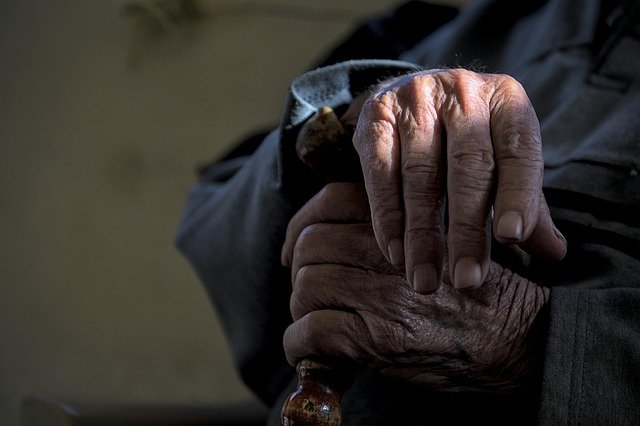
Retirement Should Be a Right to Dignity, Not a Luxury
When I think about retirement, I do not imagine only cruises, expensive restaurants, and trips around the world.
Of course, if you can afford those things, wonderful! Enjoy them.
But I also think about the retired teacher who wants to tutor because the pension is insufficient.
I think about the former accountant who wants to offer consulting services.
I think about the senior citizen who wants to open a small store because additional income would make life easier.
And I think about the elderly couple who simply want to buy their medicines, eat properly, and live without constantly worrying about the next bill.
These are different circumstances, but they share one essential need: dignity.
Working after retirement is not automatically a sign of failure. Sometimes, it is a choice. Sometimes, it is a passion. Sometimes, it is survival.
We should respect people who choose to remain productive, while also protecting those who can no longer work and need assistance.
A person should not be forced to keep working because their retirement income cannot cover basic necessities. Nor should someone who wants to continue working be shamed for doing so.
Retirement should offer people greater freedom over how they spend their time—not trap them between insufficient income and the rising cost of living.
And this is where my personal frustration becomes a call for public action.
I do not want this article to end with people simply feeling sad about the plight of retirees. I want it to start a conversation about what the government can actually do.
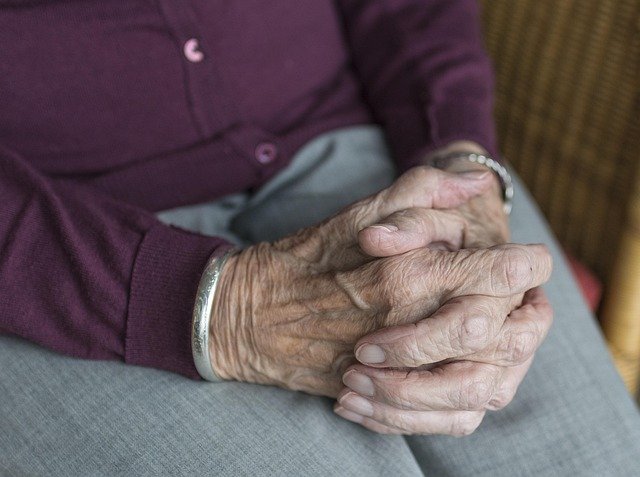
My Advocacy: The Dignified Aging Philippines Program [ Retirement in the Philippines ]
I am proposing a national initiative called the Dignified Aging Philippines Program—a coordinated government program designed to help Filipino workers, retirees, and returning OFWs grow old with greater financial security, accessible healthcare, and dignity.
This is a proposal, not an existing government program. It would build upon and strengthen existing institutions and services, including the SSS, PhilHealth, DSWD, the Department of Migrant Workers, OWWA, and local government senior citizens’ offices.
Here is what I want it to accomplish.
1. Augment pensions for low-income retirees.
I want the government to conduct regular, transparent assessments of whether SSS pensions can cover essential living expenses.
The existing SSS Pension Reform Program provides scheduled increases for pensioners. The government should continue assessing pension adequacy, considering inflation, healthcare expenses, and the cost of basic necessities.
I propose a targeted pension augmentation fund for qualified low-income retirees whose pension and other income fall below a clearly established minimum standard.
The benefit should have transparent eligibility requirements and a sustainable funding plan. It should complement existing pension arrangements rather than compromise their long-term financial stability.
A pension should not merely arrive in a bank account. It should provide a meaningful foundation for living with dignity.
2. Guarantee more accessible healthcare for senior citizens.
I want a coordinated healthcare package that strengthens PhilHealth coverage, improves access to essential medicines and diagnostic services, and provides additional assistance for qualified low-income seniors facing major hospitalization expenses.
The program should prioritize preventive care, regular checkups, chronic disease management, rehabilitation, and accessible primary healthcare.
It should also publish clear information about covered services, out-of-pocket expenses, eligibility, and where seniors can seek assistance.
No senior citizen should have to postpone necessary treatment simply because the family cannot afford the bill.
3. Protect returning OFWs through retirement preparation and reintegration.
I want the government to coordinate retirement planning services for OFWs before they return home.
This should include assistance in reviewing SSS contributions, understanding pension entitlements, planning for healthcare, and identifying appropriate livelihood opportunities.
Returning OFWs who meet the program’s eligibility requirements should have access to business mentoring, skills development, employment referrals, and practical financial guidance.
We must recognize that an OFW’s contribution to the country does not end when the overseas contract ends.
4. Strengthen the social pension for indigent seniors.
The government should regularly assess the adequacy of the existing DSWD Social Pension Program, which provides assistance to qualified indigent senior citizens.
I propose reviewing benefit levels, coverage, eligibility requirements, and delivery schedules based on the cost of basic necessities and available public funding.
Local governments should help identify eligible seniors and make applications more accessible, especially for people who are frail, disabled, or unable to travel easily.
The goal is simple: assistance should reach those who need it without unnecessary administrative barriers.
5. Create dignified livelihood opportunities for older Filipinos.
I want the government to develop a senior livelihood and flexible employment initiative for people who want or need to continue earning.
Possible opportunities include part-time work, consulting, tutoring, mentoring, community enterprises, digital skills training, and small-business development.
Seniors who want to start a business should receive practical training, market assessment, mentoring, and access to appropriate financing programs with safeguards against excessive debt.
The government should also encourage employers to recognize the skills and experience of older workers.
The objective is not to force seniors to remain productive. It is to give them the freedom to choose.
6. Establish a one-stop senior citizens’ assistance system.
I want older Filipinos and their families to have one accessible point of contact for information about pensions, social pension eligibility, PhilHealth benefits, medicine assistance, hospitalization support, livelihood programs, and other available services.
Local governments should provide clear information, community outreach, accessible complaint channels, and assistance for seniors who cannot easily visit government offices.
People should not have to navigate a maze of agencies simply to discover what benefits they qualify for.
7. Make the program transparent and accountable.
Any new initiative must have a clear implementation plan, identified funding sources, defined eligibility requirements, independent auditing, and measurable outcomes.
The government should report how many people receive assistance, how quickly benefits are delivered, and whether access to healthcare and basic necessities improves.
I am not asking for unlimited benefits without regard to the national budget. I am asking for a serious commitment to dignified aging, supported by evidence, responsible funding, and transparent implementation.
Because a program is only as good as the help it actually delivers.
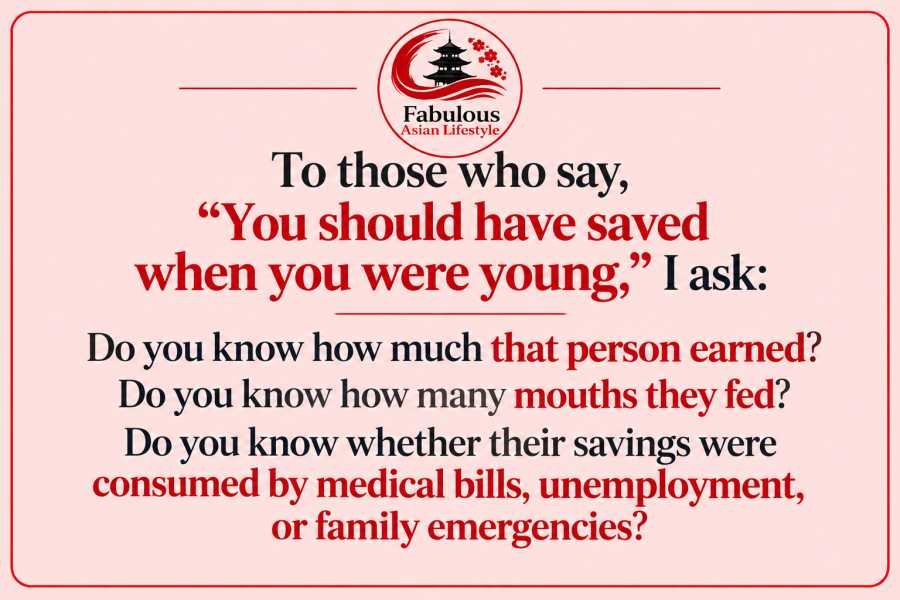
KAYA, WAG KAYONG MANGHUSGA! [ Retirement in the Philippines ]
Now, let me return to those comments that started this entire reflection.
To those who say, “You should have saved when you were young,” I ask: Do you know how much that person earned? Do you know how many mouths they fed? Do you know whether their savings were consumed by medical bills, unemployment, or family emergencies?
To those who say, “Just start a business,” have you considered whether that retiree has enough capital to risk? Have you considered what would happen if the business failed?
And to those who say, “Retirement is supposed to be enjoyed,” I agree. Absolutely!
But how can a person enjoy retirement when they are worried about their next meal, their next prescription, or their next hospital bill?
Kaya, sa mga mahilig manghusga, wag kayong manghusga! Kala ninyo magagaling kayong lahat!
Hindi lahat ng mahirap ay tamad. Hindi lahat ng walang ipon ay iresponsable. Hindi lahat ng naghihirap ay bunga ng maling desisyon.
Sometimes, people make mistakes. But sometimes, they get sick. Sometimes, they lose their jobs. Sometimes, they spend their lives supporting their families and still struggle to make ends meet.
And many times, the misery people experience is shaped not only by individual choices but also by the systems in which they live.
That is why I want a government that does more than tell people to save for retirement.
I want a government that helps make retirement possible.
I want pensions that offer meaningful support, healthcare that people can access, better protection for returning OFWs, and livelihood opportunities for older Filipinos who want to continue working.
And I want a society that stops humiliating people simply because they have less money.
To those in government and positions of responsibility, please, have the heart. Turn policies into protection, budgets into meaningful services, and promises into measurable results.
To those who are fortunate enough to enjoy financial security, be grateful. Celebrate what you have worked for. But never allow your comfort to blind you to another person’s suffering.
Because one day, if we are fortunate enough to live long lives, we, too, will grow old.
And when that day comes, I hope we will live in a country where dignity is not determined by the size of our pension, where healthcare is accessible, and where nobody is ridiculed for needing to earn a living at an age when they should have the freedom to rest.
MY ADVOCACY IS SIMPLE: LET US BUILD A PHILIPPINES THAT DOES NOT ABANDON ITS PEOPLE WHEN THEY GROW OLD.
A country that remembers the sacrifices of its workers. A government that protects the dignity of its senior citizens. A society that offers solutions instead of insults.
This is Jojo Vito, for The Fabulous Asian Lifestyle.
And if there is one message I want people to take away from this article, it is this:
HINDI LAHAT NG MAHIRAP AY TAMAD. HINDI LAHAT NG NAGHIHIRAP AY MAY KASALANAN. AT HINDI LAHAT NG MAY PERA AY ALAM ANG PINAGDADAANAN NG MGA WALANG PERA.
Bago kayo manghusga, unawain muna ninyo. Bago kayo magsermon, tingnan muna ninyo ang realidad. At bago ninyo sabihing kasalanan nila ang kanilang kahirapan, tanungin muna ninyo kung naging patas ba talaga ang mundong kanilang ginagalawan.
KAYA WAG KAYONG MANGHUSGA. KALA NINYO MAGAGALING KAYONG LAHAT!
Sometimes, what people need is not another lecture about how they should have lived their lives.
Sometimes, what they need is a government that works, a system that protects them, and fellow human beings who still have the heart to care.
Because a truly fabulous nation is not one that merely celebrates the success of its wealthiest citizens.
IT IS ONE THAT NEVER FORGETS THE DIGNITY OF ITS MOST VULNERABLE PEOPLE.
And that, for me, is what a truly fabulous life—and a truly humane Philippines—should look like.