

Global Business Environment
Table of Contents
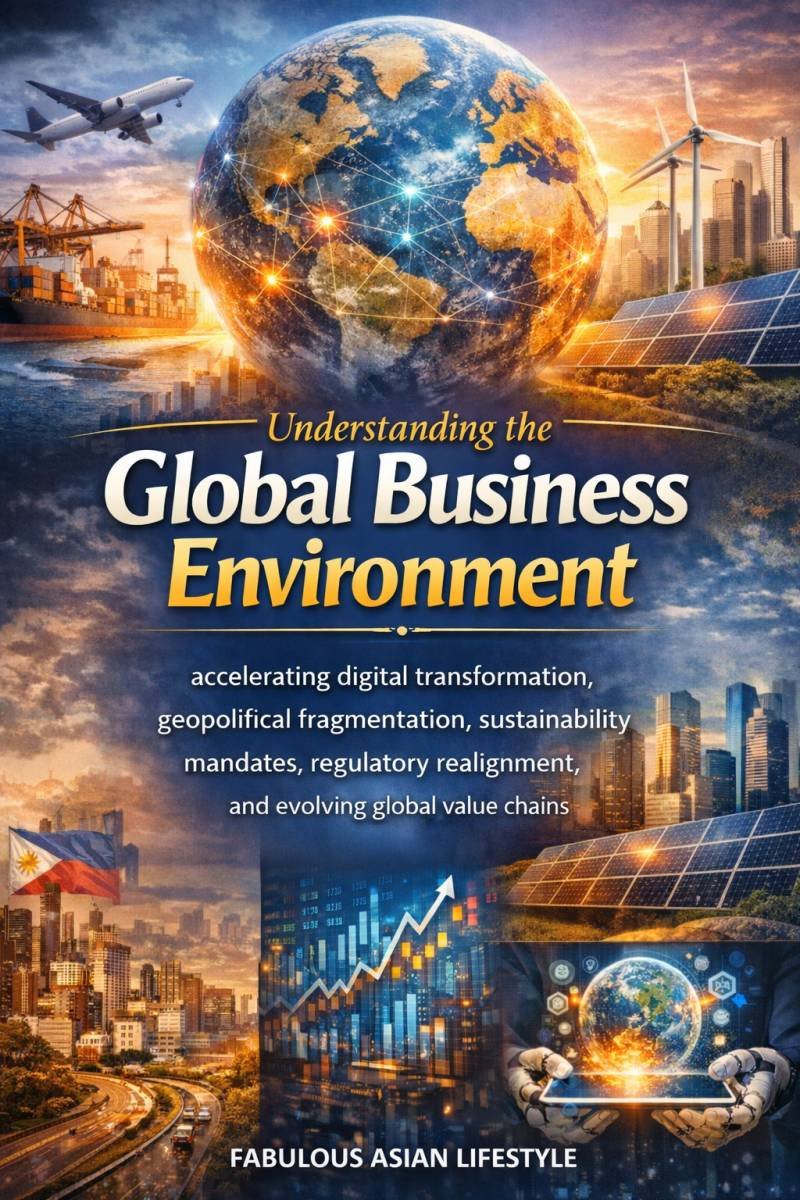
Understanding the Global Business Environment
1. Introduction: Defining the Global Business Environment
The global business environment refers to the interconnected system of cross-border economic, political, technological, socio-cultural, legal, and environmental forces that shape firm behavior, market structures, and national competitiveness.
Unlike earlier eras of globalization characterized primarily by trade liberalization, the 2021–2026 period is marked by:
- Geoeconomic fragmentation
- Strategic industrial policy resurgence
- Artificial Intelligence (AI) integration
- Environmental, Social, and Governance (ESG) compliance mandates
- Supply chain regionalization
The Global Risks Reports (2023–2026) published by the World Economic Forum emphasize that geopolitical tensions, economic fragmentation, climate risk, and technological disruption are now primary determinants of global business stability.
🔗 World Economic Forum – Global Risks Reports:
https://www.weforum.org/reports/

2. Macroeconomic Forces Shaping the Global Business Environment
2.1 International Monetary Policy and Growth Dynamics
The International Monetary Fund (IMF) — International Monetary Fund — has documented slower but stabilizing global growth trajectories following pandemic recovery and inflationary pressures (World Economic Outlook 2024–2025). International Monetary Fund
Key trends include:
- Tightened monetary policies
- Persistent inflation in emerging markets
- Exchange rate volatility
- Capital flow realignments
🔗 IMF World Economic Outlook:
https://www.imf.org/en/Publications/WEO
These macroeconomic conditions directly influence multinational capital allocation, sovereign risk premiums, and cross-border investment decisions.
2.2 Global Trade and Supply Chain Reconfiguration
The 2021–2026 era has seen:
- Nearshoring
- Friend-shoring
- Diversification of sourcing networks
- Regional trade bloc strengthening
The World Bank has emphasized that supply chain resilience has replaced cost-minimization as a dominant strategic paradigm (World Development Reports 2023–2025).
🔗 World Bank Reports:
https://www.worldbank.org/en/publication

3. Technological Disruption and Digital Transformation
The period between 2022 and 2026 has been defined by accelerated technological disruption, reshaping firm-level operations, national competitiveness, and global value chains. Digital transformation is no longer limited to process digitization; it represents structural redesign of business models, decision architectures, and institutional frameworks.
Technological capability now functions as a strategic differentiator across industries, influencing productivity, capital efficiency, and long-term resilience.
3.1 Artificial Intelligence (AI – Artificial Intelligence)
Artificial Intelligence (AI) refers to machine-based systems capable of performing tasks traditionally requiring human cognitive functions, including learning, reasoning, pattern recognition, and predictive analytics. AI operates through machine learning algorithms, neural networks, and advanced data modeling systems that improve performance through iterative data exposure.
Between 2022 and 2026, AI transitioned from pilot experimentation to enterprise-wide strategic infrastructure. Rather than isolated use cases, leading firms integrated AI into core operational systems.
Sectoral Integration of AI
Banking
AI systems now power credit scoring models, fraud detection algorithms, anti-money laundering compliance, and algorithmic risk assessment. Predictive analytics enhance loan portfolio management and liquidity forecasting.
Retail
Retailers employ AI-driven demand forecasting, personalized marketing engines, recommendation algorithms, and dynamic pricing models. Customer behavior analytics optimize inventory and improve conversion rates.
Manufacturing
Smart manufacturing incorporates AI-enabled predictive maintenance, robotics automation, and quality control systems. Machine learning reduces downtime and enhances precision.
Telecommunications
Telecom operators use AI for network optimization, churn prediction, customer service chatbots, and traffic load balancing. These applications improve service reliability and reduce operational cost.
Logistics
AI enhances route optimization, supply chain forecasting, warehouse automation, and real-time tracking analytics. These capabilities strengthen resilience amid global supply disruptions.
Strategic Implications of AI Integration
AI integration enhances:
- Operational efficiency through automation
- Predictive forecasting accuracy
- Customer behavior modeling
- Risk detection and fraud mitigation
- Real-time decision augmentation
However, AI adoption also introduces governance challenges, including algorithmic bias, data privacy concerns, cybersecurity vulnerabilities, and workforce displacement. As a result, AI governance frameworks increasingly operate at board and regulatory levels.
AI is no longer a competitive advantage by itself; it is rapidly becoming a competitive necessity.
3.2 Information and Communications Technology (ICT)
Information and Communications Technology (ICT) encompasses digital infrastructure systems enabling connectivity, data transmission, cloud computing, cybersecurity, and digital platform integration. ICT infrastructure determines a nation’s capacity to participate in the digital global economy.
In the contemporary environment, competitiveness is increasingly measured by:
- Broadband penetration and speed
- Cloud computing integration
- Data center capacity
- Cybersecurity resilience
- 5G and next-generation connectivity deployment
Countries with advanced ICT ecosystems demonstrate higher productivity growth, innovation diffusion, and digital entrepreneurship expansion.
ICT as a Determinant of National Competitiveness
Robust ICT infrastructure supports:
- Cross-border digital services trade
- Remote workforce integration
- Fintech ecosystem expansion
- E-commerce scalability
- Digital public service modernization
In global competitiveness rankings, digital readiness has become as critical as physical infrastructure and capital access.
Emerging Markets and ICT: The Philippine Context
Emerging markets such as the Philippines leverage ICT development to compete in global services industries, particularly Business Process Outsourcing (BPO) and IT-enabled services. High English proficiency, digital literacy, and expanding fiber connectivity have strengthened its positioning in knowledge-based exports.
However, infrastructure gaps in rural broadband access and cybersecurity capacity remain areas requiring sustained investment. National digital transformation strategies increasingly emphasize:
- Public-private ICT partnerships
- Data privacy regulation modernization
- Cyber resilience frameworks
- Digital skills development programs
The intersection of AI capability and ICT infrastructure ultimately determines whether firms and nations can fully capitalize on digital transformation opportunities.

4. ESG (Environmental, Social, and Governance) as a Strategic Imperative [ Global Business Environment ]
The period between 2021 and 2026 marked a structural transformation in how Environmental, Social, and Governance (ESG) frameworks are positioned within global corporate strategy. What began as voluntary sustainability reporting has evolved into a central determinant of capital allocation, regulatory compliance, and institutional legitimacy. ESG is no longer peripheral to strategy — it is embedded in enterprise risk management, investment decisions, and board governance.
4.1 ESG – Environmental, Social, and Governance
ESG refers to an integrated governance framework through which corporations incorporate non-financial performance indicators into strategic planning and operational execution. It reflects a shift from shareholder primacy toward broader stakeholder accountability.
The three pillars encompass:
Environmental Sustainability
This dimension evaluates a firm’s environmental impact and climate-related risk exposure. Core components include:
- Carbon emissions measurement and reduction strategies
- Renewable energy adoption
- Resource efficiency and waste management
- Climate risk disclosure and scenario analysis
Environmental integration has become especially critical amid global commitments to decarbonization and net-zero targets. Firms increasingly face regulatory requirements to disclose climate-related financial risks under evolving global standards.
Social Responsibility
The social dimension examines corporate relationships with employees, communities, customers, and supply chain partners. Key indicators include:
- Labor standards and workforce diversity
- Occupational safety and employee welfare
- Human rights compliance across supply chains
- Community investment and social impact programs
Heightened global attention to labor practices, inclusive growth, and stakeholder capitalism has elevated social metrics as core indicators of institutional legitimacy and long-term resilience.
Ethical Governance Practices
Governance addresses board accountability, transparency, executive compensation alignment, anti-corruption systems, and risk oversight mechanisms.
Critical governance factors include:
- Independent board composition
- Transparent financial and sustainability reporting
- Internal audit and compliance systems
- Executive incentive alignment with long-term value creation
Strong governance structures reduce agency risk, enhance investor confidence, and support sustainable growth trajectories.
OECD and Global Institutional Alignment
The Organisation for Economic Co-operation and Development emphasizes ESG disclosure standardization and regulatory harmonization as essential to ensuring efficient and sustainable capital flows. According to OECD Economic Surveys (2026), fragmented sustainability reporting frameworks create capital market inefficiencies, while harmonized disclosure enhances investor comparability and reduces information asymmetry.
🔗 OECD Economic Surveys:
https://www.oecd.org/economic-surveys/
Global institutions advocate for:
- Standardized climate disclosure frameworks
- Cross-border reporting alignment
- Integration of sustainability risks into financial supervision
- Transparent ESG metrics tied to financial performance
- The OECD’s position reflects a broader institutional consensus that sustainable finance requires coherent regulatory ecosystems rather than isolated corporate initiatives.
Structural Shifts Between 2021 and 2026
1. Expansion of Mandatory Climate Disclosures
Between 2021 and 2026, numerous jurisdictions introduced mandatory climate-related financial disclosures. Firms are increasingly required to report:
- Scope 1, 2, and in some cases Scope 3 emissions
- Climate risk exposure scenarios
- Transition and adaptation strategies
This regulatory expansion shifts ESG reporting from voluntary signaling to legally enforceable compliance.
2. Growth of Sustainable Finance Instruments
The sustainable finance market experienced substantial expansion during this period, including:
- Green bonds
- Sustainability-linked loans
- ESG-indexed equity funds
- Climate transition financing instruments
Institutional investors increasingly incorporate ESG screening into portfolio construction. As a result, firms demonstrating credible sustainability strategies gain enhanced access to capital markets.
3. ESG Performance and Cost of Capital
Empirical studies during 2021–2026 suggest a correlation between strong ESG performance and reduced capital costs. Mechanisms include:
- Lower perceived regulatory and litigation risk
- Enhanced credit ratings
- Greater institutional investor participation
- Improved long-term earnings stability
Conversely, firms with weak ESG governance face reputational penalties, divestment risks, and higher financing costs.

5. Geopolitical Risk and Institutional Fragmentation [ Global Business Environment ]
5.1 ADB – Asian Development Bank
The Asian Development Bank (ADB) reports that regulatory reform and digital governance modernization are central to Southeast Asian competitiveness (2024–2025 reports).
🔗 Asian Development Bank Reports:
https://www.adb.org/publications
Geopolitical developments influencing global business include:
- Trade protectionism
- Strategic technology restrictions
- Energy transition policies
- Regional security conflicts
Firms increasingly incorporate geopolitical scenario planning into board-level risk governance.

6. The Philippine Business Environment in the Global Context
The Philippines occupies a distinctive position within the global economic system as a high-growth, consumption-driven emerging market with expanding regional integration. Its strategic relevance is shaped by structural demographic advantages, service-sector competitiveness, accelerating digitalization, and ongoing institutional reforms. However, persistent infrastructure constraints and regulatory complexity continue to moderate its growth trajectory.
6.1 Strong Services Exports
The Philippine economy is structurally anchored in services, particularly in Business Process Outsourcing (BPO), information technology-enabled services (IT-BPM), remittances, tourism, and increasingly, knowledge-based digital services.
The country has developed comparative advantage in:
- Customer support and back-office operations
- Healthcare information management
- Financial services outsourcing
- Creative and digital content services
Services exports contribute significantly to foreign exchange stability and domestic consumption. The global shift toward remote work and digital outsourcing has reinforced the Philippines’ position as a competitive service hub within Asia. However, automation and Artificial Intelligence adoption present both productivity opportunities and labor displacement risks, requiring workforce upskilling and technological adaptation.
6.2 Young Demographic Profile
Demographically, the Philippines benefits from a relatively young population compared to many aging Asian economies. This demographic dividend creates:
- A large labor force pipeline
- Expanding domestic consumer markets
- Rising middle-class consumption
A young workforce supports the growth of technology adoption, entrepreneurship, and digital commerce. However, the demographic advantage is conditional upon effective education systems, skills training, and employment generation. Without structural job creation, demographic strength can transform into underemployment pressure.
6.3 Expanding Digital Economy
The Philippine digital economy has grown rapidly through e-commerce expansion, fintech platforms, digital payments adoption, and online entrepreneurship. Mobile penetration and social media usage are among the highest in Southeast Asia, supporting rapid digital platform diffusion.
Growth drivers include:
- Digital banking and fintech ecosystems
- Online retail and logistics infrastructure
- Gig economy participation
- Digital content creation and influencer-driven commerce
The digital economy enhances financial inclusion and regional market access. However, it also necessitates stronger cybersecurity frameworks, data privacy enforcement, and digital governance modernization.
6.4 Regulatory Modernization Efforts
The Philippine government has undertaken reforms aimed at improving investment attractiveness and regulatory competitiveness. These include:
- Corporate tax reforms
- Liberalization of foreign ownership restrictions in selected sectors
- Infrastructure investment programs
- Digitalization of government services
Such reforms aim to align the country with global investment standards and regional ASEAN benchmarks. Regulatory modernization enhances investor confidence, though bureaucratic complexity and procedural inefficiencies remain areas for improvement.
6.5 Growth Momentum and Structural Constraints
According to OECD projections (2026), the Philippines continues to rank among ASEAN’s faster-growing economies, supported by domestic consumption, remittance inflows, and services exports. Macroeconomic fundamentals — including manageable debt levels and resilient banking systems — reinforce economic stability.
However, structural constraints persist:
- Infrastructure gaps in transportation, energy, and logistics
- Urban congestion affecting productivity
- Regulatory complexity and compliance burdens
- Exposure to climate-related risks
Infrastructure deficits increase operational costs and reduce supply chain efficiency. Regulatory fragmentation can delay investment approvals and increase transaction costs. Moreover, climate vulnerability adds risk premiums to long-term infrastructure planning and agricultural productivity.

7. Strategic Capabilities Required in 2026 [ Global Business Environment ]
By 2026, sustained competitiveness is no longer determined solely by market share, capital intensity, or brand dominance. Instead, firm performance increasingly depends on institutional adaptability, technological integration, governance maturity, and systemic risk intelligence. Contemporary corporate analysis (2021–2026) identifies five essential firm-level competencies that differentiate structurally resilient enterprises from strategically exposed organizations.
7.1 Digital Agility
Digital agility has evolved from basic digitization into full-spectrum digital architecture integration. Firms must embed Artificial Intelligence (AI), cloud computing, advanced analytics, and automation into core operating systems rather than treating them as peripheral enhancements.
This competency includes:
- AI-driven predictive analytics for demand forecasting and risk modeling
- Cloud-based enterprise systems enabling scalability and interoperability
- Integrated customer, financial, and operational data ecosystems
- Cybersecurity infrastructure embedded within corporate governance
Digital agility is organizational, not merely technological. It requires workforce upskilling, redesign of decision hierarchies, and alignment between digital investment and strategic objectives. Firms that institutionalize algorithm-supported decision systems gain speed, precision, and cost efficiency advantages.
7.2 Institutional Navigation
The contemporary global business landscape is defined by regulatory fragmentation, trade nationalism, and policy realignment. Institutional navigation refers to a firm’s ability to operate across multiple jurisdictions while maintaining compliance integrity and strategic flexibility.
Key dimensions include:
- Multi-jurisdictional regulatory compliance systems
- Monitoring of trade policy shifts and tariff exposures
- Cross-border tax planning sophistication
- Alignment with international accounting, sustainability, and digital governance standards
Institutional navigation has shifted from a reactive legal function to a proactive strategic capability. Board-level oversight is increasingly necessary to anticipate regulatory changes in carbon disclosure, data privacy, digital taxation, and financial transparency.
7.3 ESG Governance
Environmental, Social, and Governance (ESG) frameworks now function as capital allocation determinants rather than mere reputational tools. Investors, regulators, and stakeholders demand transparent sustainability integration.
Core elements include:
- Integration of ESG metrics into enterprise performance indicators
- Climate-related financial risk disclosures
- Ethical supply chain auditing mechanisms
- Governance accountability structures tied to sustainability outcomes
By 2026, firms that embed ESG within financial strategy improve investor confidence, reduce capital costs, and strengthen institutional legitimacy. ESG governance represents structural value preservation rather than external compliance.
7.4 Supply Chain Intelligence
Global disruptions between 2020 and 2024 revealed structural fragilities in extended supply networks. In response, firms must shift from efficiency-maximization to resilience engineering.
Supply chain intelligence encompasses:
- End-to-end digital visibility systems
- AI-enabled inventory and logistics optimization
- Multi-sourcing and geographic diversification strategies
- Climate and geopolitical stress-testing of supplier networks
The strategic objective is adaptive elasticity — balancing lean operational efficiency with redundancy buffers that absorb shocks. Real-time visibility transforms supply chains from reactive systems into predictive ecosystems.
7.5 Geopolitical Scenario Planning
Geopolitical volatility has become a permanent structural variable in global commerce. Firms must institutionalize scenario-based planning at the board level.
Advanced practices include:
- Geopolitical risk simulations integrated into strategic planning
- Diversified regional investment portfolios
- Dynamic capital reallocation mechanisms
- Currency and commodity volatility modeling
Rather than reacting to crises, firms capable of modeling multiple future scenarios develop anticipatory strategies. This competency enhances organizational endurance, shareholder value protection, and long-term capital stability.

Conclusion
The global business environment is structurally more complex, technologically driven, and geopolitically sensitive than previous globalization phases. Sustainable competitiveness requires integration of macroeconomic literacy, digital capability, institutional adaptability, and ESG governance.
The Philippine experience illustrates how emerging markets can leverage demographic advantage, digital integration, and corporate governance reform to remain competitive in a volatile global landscape.
Global Business Environment
References
- International Monetary Fund (IMF). World Economic Outlook (2024–2025).
https://www.imf.org/en/Publications/WEO - Organisation for Economic Co-operation and Development (OECD). OECD Economic Surveys: Philippines 2026.
https://www.oecd.org/economic-surveys/ - World Economic Forum (WEF). Global Risks Reports (2023–2026).
https://www.weforum.org/reports/ - Asian Development Bank (ADB). Philippines Economic and Reform Reports (2024–2025).
https://www.adb.org/publications - World Bank. World Development Reports (2023–2025).
https://www.worldbank.org/en/publication
More Stories
- MoMs Across Philippines–Negros Chapter Convenes in Handumanan
- Dried Fish and Low-Carb Living
- Spicy Keto Chicken Feet Recipe : High-Collagen, Low-Carb
- Creamy Parmesan Crunch Salad Recipe | Health Benefits
- Dried Mushrooms Health Benefits, Healing Properties
- Negros Power Rate Reduction for February 2026
- Motivation to Travel: Understanding What Drives People to Explore
- Primelectric Looks to the Future of Power Distribution at U.S. Technology Conference
- Crispy Chicken High-Protein Low-Carb Salad Recipe











5. Philippine Business Environment in Global Context
Considering demographic advantage, digital expansion, services export strength, and infrastructure constraints, to what extent can the Philippines sustain long-term competitive positioning within ASEAN amid AI-driven automation, climate vulnerability, and evolving global capital flows?
If the Philippines would only invest properly on its youthful population especially in terms of their education and skill development, with this demographic advantage, I believe the country could sustain long-term competitiveness. These would ensure that the workforce will become competent and highly proficient for their future jobs, particularly in the face of AI-driven automation.
Digital expansion offers significant opportunities for growth in e-commerce and fintech, further enhancing competitiveness. However, infrastructure constraints and climate vulnerability pose substantial risks. Overcoming these challenges requires targeted investments in infrastructure and climate resilience. AI-driven automation presents both a challenge and an opportunity; the Philippines must focus on upskilling its workforce to adapt to technological advancements. Additionally, by improving its business environment and governance, the country can attract evolving global capital flows, positioning itself as a favorable investment destination. Through these strategic measures, the Philippines can maintain its competitive edge in the region while fostering sustainable economic growth.
Multinational Enterprise should continue adapting an adaptation on most resilient frameworks that navigates challenges to maintain strategies to operational continuity in time of unpredicted uncertainties in globally. Geopolitics had impacted many ways on supply chain, economically along with global risk of disruptions. Thus it is very significant to have an agile leadership working on strong governance and demands a collaborative approach to risk segmentation turning challenges into opportunities for growth and competitive advantage, ability to act decisively, securing potential resources and foster a culture of risk awareness with balance that ensures long-term success in a volatile world. In recent times most global enterprise had shifted it focus to federated model that balances global efficiency with local compliance on a more dynamic approach and preparedness towards integrating geopolitical insights into strategic decision-making, breaking down silos, and fostering a culture of risk awareness that ensure their organizations anticipate and adapt to disruptions with confidence and agility.
Montemayor, Hannah (LCC-B)
The Philippines competitive edge in the current global context is very crucial, as different factors plays different roles in the outcome: demographic advantage, digital expansion, and export strength lead the businesses and investors into the country for potential investments that can save them cost yet offer good quality of product or service. Constraints in infrastructure may progress or hinder an initiated business proposal, as the infrastructure may require more space than what is available. This goes along with the legal documentation processes upon acquiring a building or property. The Philippines do have the chance to align its progress with other countries, once a standard process of accessibility, good governance and proactive approach is in place, Philippines may have an edge in Business, Tourism and Agriculture.
Jay V Dela Cruz Ointina
After the COVID-19 pandemic, monetary tightening, exchange-rate volatility, and supply-chain regionalization have significantly influenced how multinational corporations allocate capital in emerging ASEAN economies. Higher global interest rates increase the cost of borrowing, making firms more selective and cautious about foreign investments. At the same time, unstable exchange rates create financial uncertainty, encouraging companies to diversify their investments across several ASEAN countries to reduce currency risk. In addition, the shift toward regionalized supply chains, such as the “China + 1” strategy, has pushed firms to relocate or expand production in countries like Vietnam, Indonesia, and Thailand to improve supply-chain resilience. As a result, investment decisions are no longer based solely on cost advantages such as cheap labor or natural resources. Instead, multinational firms increasingly prioritize economic stability, geopolitical considerations, and supply-chain reliability. These developments suggest that while traditional theories of international investment and comparative advantage remain relevant, they are evolving to include factors related to risk management and strategic diversification.
Technological Disruption (AI & ICT)
The integration of Artificial Intelligence (AI) and advanced ICT infrastructure is redefining national competitiveness by enabling countries to increase productivity, innovation, and efficiency across industries. For example, Singapore’s Smart Nation initiative uses AI and digital infrastructure to improve public services, logistics, and business operations, strengthening its global competitiveness. Emerging markets should recalibrate industrial policy by investing in digital infrastructure, supporting local R&D, and enhancing technology education to avoid dependency on foreign technology. By doing so, they can foster innovation-led growth, develop domestic tech capabilities, and remain competitive in the global economy.
Example in my current industry, which is real estate that analyze market trends, manage property listings, and offer virtual tours. AI-powered helps predict property demand and optimize pricing, while digital platforms allow clients to view properties online. This integration improves efficiency, attracts investors, and strengthens competitiveness in both local and international markets.
1. Macroeconomic & Trade Changes
After the pandemic, higher interest rates, unstable currencies, and changes in supply chains are making companies careful about where they invest in ASEAN. They now prefer countries with stable economies, predictable money systems, and strong regional connections. Cost is still important, but companies also think about how safe and reliable their investments are.
2. Technology and AI
AI and better internet/tech systems are changing what makes a country competitive. Countries that invest in digital tools, local research, and skills training are more likely to grow. Emerging markets need to build these capacities so they don’t rely too much on foreign tech and can develop their own innovations.
3. ESG (Environmental, Social, Governance)
Using ESG principles from 2021–2026 isn’t just about following rules anymore—it’s becoming part of how businesses succeed. Companies that do well on ESG tend to have higher value, lower borrowing costs, and are more prepared for risks. How much this matters depends on the country’s laws and investor expectations.
4. Geopolitical Risks
Companies now have to plan for political and trade risks, like trade wars, stricter rules, and tech restrictions. This means they need flexible supply chains, diverse investments, and governance systems that can quickly adjust to new challenges.
5. The Philippines in ASEAN
The Philippines has advantages like a young population, growing digital economy, and strong service exports. To stay competitive, it needs to improve roads, ports, and energy systems, prepare for climate risks, and adapt to automation and AI changes in the global market.
Therese Marie Minguez MBA
1. Post-pandemic global conditions—especially monetary tightening, exchange rate volatility, and supply chain regionalization—are reshaping how multinational corporations (MNCs) allocate capital in emerging ASEAN economies. Together, these forces are shifting investment from a pure cost-efficiency model toward a risk-resilient, regionally embedded strategy, which partially modifies but does not fully replace traditional theories of international investment and comparative advantage.
Prince Adriane Umali. Our country should focus on its advantage to sustain its long-term competitive position within ASEAN. One advantage that comes to mind is that having a young and growing labor force. Among other Asian countries, Philippines is considered to have a young population that we can benefit from. Also, as we all know, us Filipinos are considered to be a good English-speaking people among the Asian countries. This alone is a critical factor behind the expansion of BPO industries in our country. To add more, upgrading the skillset of the labor force helps the economy to grow. Utilization of the AI is also an advantage. We should not fear that AI can takeover us instead, our country can use this to further enhance and improve the growth of the economy. Because of this, investor can trust us to handle and put their money into good use that both of us can benefit.
The combination of Artificial Intelligence (AI) with cutting-edge Information and Communication Technology (ICT) infrastructure has greatly changed how competitive countries are in the global economy. In the past, things like natural resources, labor prices, industrial capacity, and physical infrastructure were important for being competitive. But the digital revolution has changed the focus to things like technological capabilities, innovation systems, and digital infrastructure. Countries that efficiently develop and use AI technology backed by robust ICT systems are better able to boost productivity, streamline processes, and keep their edge in international markets.
AI depends a lot on ICT infrastructure including fast internet, cloud computing, data centers, and modern computer systems. These technologies let businesses in all fields handle huge amounts of data, make decisions automatically, and improve their operations. AI is used in manufacturing to make production more efficient through automation and predictive maintenance. In the service industry, AI is used for data analysis, customer insights, and managing operations. Because of this, countries with strong digital ecosystems can better incorporate AI into their economies, which boosts innovation and economic growth.
Even if there are these chances, emerging markets have a lot of trouble using AI. One big worry is that we depend too much on developed economies and multinational tech businesses that control important AI resources like advanced semiconductors, digital platforms, and cloud infrastructure. Relying too much on foreign technologies could stifle innovation at home and make it harder for local businesses to make money from AI.
To deal with these problems, developing countries need to change their industrial policies to encourage innovation and technological independence. Governments should put money into digital infrastructure, make research and development programs better, and encourage universities, businesses, and tech startups to work together. Also, it is important to promote AI-driven industries by teaching and training people in digital skills.
In conclusion, AI and modern ICT infrastructure are changing what it means for a country to be competitive by putting more emphasis on technology and new ideas. Emerging markets need to make smart investments in digital infrastructure, human capital, and innovation ecosystems if they want to have long-term economic growth that is based on innovation and not on technology dependence.
After COVID-19, central banks such as the U.S. Federal Reserve and European Central Bank raised interest rates to control inflation. These higher returns in developed markets pulled investment capital away from emerging economies, creating currency pressure in countries like the Philippines, Vietnam, and Indonesia. As a result, multinational firms increasingly base investment decisions on risk-adjusted supply chains rather than purely cost efficiency. These developments challenge traditional economic theories such as David Ricardo’s Comparative Advantage, which assumes countries specialize mainly based on production costs. Today, multinational decisions also consider geopolitical risk, trade alliances, industrial policy, and supply-chain resilience. So global investment is shifting from efficiency-driven globalization toward resilience-driven globalization.
Remelyn A. Herada
Multinational enterprises should redesign corporate governance and strategic planning by integrating geopolitical risk directly into decision-making processes. This can be done by establishing board-level oversight for geopolitical and regulatory risks, creating dedicated teams to monitor global political and trade developments, and incorporating geopolitical scenario modeling into regular strategic planning. Companies should also stress-test investments against possible events such as trade restrictions, sanctions, or regulatory changes. In addition, firms need to diversify supply chains, strengthen compliance systems for technology and data regulations, and empower regional operations to adapt to different political environments. By institutionalizing these practices, multinational enterprises can make more resilient and flexible strategies in a world increasingly shaped by regulatory fragmentation, trade nationalism, and strategic technology restrictions.
Mirasol Marcelo
The Philippines can stay competitive in ASEAN thanks to its young workforce, growing digital economy, and strong service sector, especially the BPO industry, which attract foreign investment and support economic growth. However, challenges like limited infrastructure, climate risks, and the need for better technology adoption must be addressed. From a Global Enterprise Management perspective, focusing on human capital development, improving infrastructure, and strengthening digital capabilities will help the country adapt to global market changes and sustain long-term competitiveness.
Elizabeth Lamprea
Very informative article. It clearly explains the major forces shaping today’s global business environment, particularly the roles of AI, digital infrastructure, and ESG governance. The discussion about the Philippines is quite insightful. The country’s young and English-proficient workforce continues to support its strong position in the global services sector, which is why multinational firms like Concentrix and Teleperformance maintain large BPO operations there. At the same time, the adoption of digital finance platforms such as GCash and Maya shows how the country’s digital economy is expanding. However, sustaining long-term competitiveness within ASEAN will depend on how effectively the Philippines addresses structural constraints. Infrastructure gaps and connectivity issues compared with neighbors like Vietnam and Thailand remain challenges, while climate risks—illustrated by disasters such as the frequent typhoons, floods, and earthquakes continue to affect economic stability. I think the long-term key is strengthening ICT infrastructure, cybersecurity, and digital skills—while also investing more in training programs and more education-focused curricula that develop critical thinking, adaptability, and strong people skills. As AI gradually transforms traditional outsourcing work, these investments can help the Philippines continue to capitalize on its strongest advantage: its human capital.
Marivic Baring
1. Macroeconomic & Trade Reconfiguration
Post-pandemic monetary tightening, exchange rate volatility, and supply chain regionalization have pushed multinational firms to prioritize stability and risk diversification when allocating capital. Many companies are shifting production and investment toward ASEAN economies to reduce supply chain concentration and geopolitical risk. This trend expands traditional comparative advantage theory, as investment decisions are now influenced not only by cost efficiency but also by supply chain resilience, macroeconomic stability, and regional integration.
2. Technological Disruption (AI & ICT)
The adoption of AI and advanced ICT infrastructure has become a key determinant of national competitiveness. Countries with strong digital infrastructure and skilled human capital gain advantages in productivity, innovation, and global market integration. For emerging markets, industrial policy should focus on digital infrastructure, technology skills development, and support for local innovation ecosystems to avoid long-term dependence on foreign technologies.
3. ESG as Strategic Imperative
From 2021 to 2026, ESG integration reflects both regulatory pressure and a broader shift toward sustainable business practices. Firms adopting ESG frameworks often experience improved risk management, stronger investor confidence, and better long-term strategic positioning. However, the impact varies across markets, as regulatory enforcement and governance quality influence how ESG affects firm valuation and cost of capital.
4. Geopolitical Risk & Institutional Fragmentation
Increasing geopolitical tensions and regulatory fragmentation require multinational enterprises to integrate geopolitical risk analysis into strategic planning. Companies must diversify supply chains, monitor regulatory changes, and incorporate scenario planning into corporate governance. This approach helps firms adapt to trade restrictions, political risks, and shifting international regulations.
5. Philippine Business Environment in Global Context
The Philippines remains competitive in ASEAN due to its young workforce, strong English proficiency, and growing digital services sector, particularly in outsourcing. However, long-term competitiveness depends on improving infrastructure, strengthening digital capabilities, and addressing climate risks. Strategic investment in technology and skills development will be essential for sustaining growth in an AI-driven global economy.
The increasing complexity of geopolitical risks and regulatory fragmentation requires multinational enterprises to redesign their corporate governance structures and strategic planning processes. As global markets become more uncertain due to trade nationalism, regulatory differences, and political dynamics. Companies must adopt governance systems that allow faster and more localized decision making.
From my professional experience, the company I work for expanded significantly from approximately 200+ stores in 2010 to more than 1,300 stores by 2026. This rapid expansion required a shift from a highly centralized management structure to a more decentralized operational model. Previously, a single operations head oversaw most of the company’s stores. However, as the business scaled, this structure became inefficient in addressing regional differences and operational risks.
In the context of the Philippines, regulatory requirements and business environments often vary across regions due to differences in local government policies, enforcement practices, and relationships with local stakeholders. Recognizing this institutional fragmentation, the company reorganized its structure by appointing multiple operations leaders responsible for specific territories. This governance redesign allowed each regional leader to better understand local regulatory conditions, market dynamics, and operational risks.
This decentralized governance approach improved strategic planning and operational execution in several ways. First, decision-making became faster because regional leaders could respond immediately to local regulatory or operational challenges without waiting for centralized approval. Second, risk management improved because regional leaders were better positioned to anticipate and address compliance issues or operational disruptions within their territories. Finally, strategic implementation became clearer, as each territory could adapt corporate strategies to local market conditions while remaining aligned with the company’s overall mission and vision.
From a strategic management perspective, this approach reflects a broader trend in multinational enterprises toward organizational flexibility and localized governance structures. By empowering regional leaders while maintaining centralized strategic alignment, companies can better navigate geopolitical uncertainty and regulatory fragmentation. In this way, corporate governance becomes a critical tool for transforming geopolitical risk from a threat into a manageable strategic factor.
Carie Jean A. Urbino
MBA 106 – Global Enterprise Management
Macroeconomic & Trade Reconfiguration
After the pandemic, many central banks especially the US Federal Reserve raised interest rates to control inflation. This affected emerging ASEAN economies because global investors moved their money to countries offering higher and safer returns. For example, when US interest rates increased, currencies like the Philippine peso and Indonesian rupiah experienced pressure, making imports more expensive and creating economic uncertainty.
At the same time, companies began restructuring their supply chains. During the pandemic, many firms realized the risk of relying heavily on one country for manufacturing. Because of this, the “China+1” strategy became more common. Several multinational companies started expanding production in Vietnam and Thailand. For instance, major electronics suppliers that support companies like Apple increased manufacturing operations in Vietnam.
These developments show that multinational investment decisions are no longer based only on cost advantages such as cheap labor. Today, companies also prioritize supply chain resilience, geopolitical stability, and long-term risk management. This shifts traditional international investment theories toward a more strategic approach where stability and diversification are just as important as comparative advantage.
Rojean “RJ” Bermudez. The integration of Artificial Intelligence (AI) and advanced ICT infrastructure influences national competitiveness from labor and resources to data, digital networks, and innovation. In the telecom industry such as PLDT and Smart, these companies are no longer just connectivity providers; they use AI to manage networks, analyze data, and create digital innovations.
Moreover, emerging markets must avoid dependency on foreign technology by investing in local digital infrastructure, promoting open network systems, strengthening data governance, and developing AI skills to support innovation growth.
Marjorie N. Velez
5. Philippine Business Environment in Global Context
Considering demographic advantage, digital expansion, services export strength, and infrastructure constraints, to what extent can the Philippines sustain long-term competitive positioning within ASEAN amid AI-driven automation, climate vulnerability, and evolving global capital flows?
Answer:
The Philippines can stay competitive in the Association of Southeast Asian Nations (ASEAN) if it manages its strengths and weaknesses properly. The country has many young people, which means it will have a strong workforce in the future. Its digital economy is also growing, and it earns a lot from service exports like call centers and IT services. These strengths help the Philippines stay active in the global market. However, new technologies like AI may replace some simple and repetitive jobs, so workers need better digital and technical skills. Poor infrastructure, such as heavy traffic, expensive electricity, and weak transport systems, can also slow down businesses and reduce investor interest. In addition, the country often faces typhoons and other natural disasters that can damage the economy. As investors look for countries that are stable, modern, and prepared for climate risks, the Philippines must improve education, infrastructure, and disaster response. If it continues to improve and adjust to changes, it can maintain its strong position in ASEAN in the long run.
ALYSSA C. PAULMA
The integration of artificial intelligence with advanced information and communication technology (ICT) infrastructure is fundamentally altering the competitive dynamics among nations, shifting the source of competitive advantage away from low-cost labor and towards digital skills, data-centric ecosystems, and innovative capabilities. The utilization of AI, in conjunction with strong digital infrastructure, enables the refinement of supply chains, boosts productivity, and increases the value of exports.
Fitzjames Rigby AI and ICT infrastructure are transforming national competitiveness. Emerging markets must embrace these technologies to stay competitive but avoid becoming overly dependent on foreign tech. Governments need to focus on innovation-driven policies to develop homegrown capabilities, while also ensuring technology independence to foster long-term growth and avoid external control.
Jollena Mahilum
Question: Philippine Business Environment in Global Context
Considering demographic advantage, digital expansion, services export strength, and infrastructure constraints, to what extent can the Philippines sustain long-term competitive positioning within ASEAN amid AI driven automation, climate vulnerability, and evolving global capital flows?
Answer:
As Philippines continues to rank among ASEAN’s faster-growing economies, supported by domestic consumption, remittance inflows, and services exports, Philippines must shift toward higher-value services, leverage digital adoption to bypass traditional infrastructure limitations, and actively manage climate risks, transforming its role from a low-cost service provider to a regional AI and digital innovation hub.
Thru research/reading with the article, and with the help of AI, I have tailored my answer align with my current job as maritime training center personnel.
I will take question # 5 “Considering demographic advantage, digital expansion, services export strength, and infrastructure constraints, to what extent can the Philippines sustain long-term competitive positioning within ASEAN amid AI-driven automation, climate vulnerability, and evolving global capital flows?”
By 2026, the country (Philippines)is no longer just a “BPO hub”; it is a “Digital Service Fortress” navigating the transition from labor-intensive to intelligence-intensive growth. (gemini.google.com)
In the context of a Maritime Training Center (MTC), this profile explains why the Philippines remains the “Global Crewing Capital” while highlighting the urgent need for a structural pivot.
For the Trainees:
– “knowledge-based digital services” are the new frontier
– The “Young Demographic Profile” is the Philippines’ greatest physical asset in 2026
– The “Fintech Ecosystem” mentioned in 6.3 has revolutionized seafarer life
– Government reforms (6.4) have finally reached the maritime sector in 2026
– The “Infrastructure Gaps” (6.5) remain the primary hurdle for MTCs (Maritime Training Centers)
In the whole articles, the impact on a maritime Training centers in 2026 is a total is a fundamental change of approach.
The MTC is no longer just a “school” that issues certificates; it has become a high-tech, data-driven, and ESG-compliant node in a global logistics chain.