
Table of Contents
Regional Price Cap Saves Negros Consumers From a Bigger September Power Rate Hike
Electricity consumers of Negros Power will see a slight decrease in their September 2026 residential rate, following the recalculation of Wholesale Electricity Spot Market (WESM) charges under the Regional Secondary Price Cap (SPC).
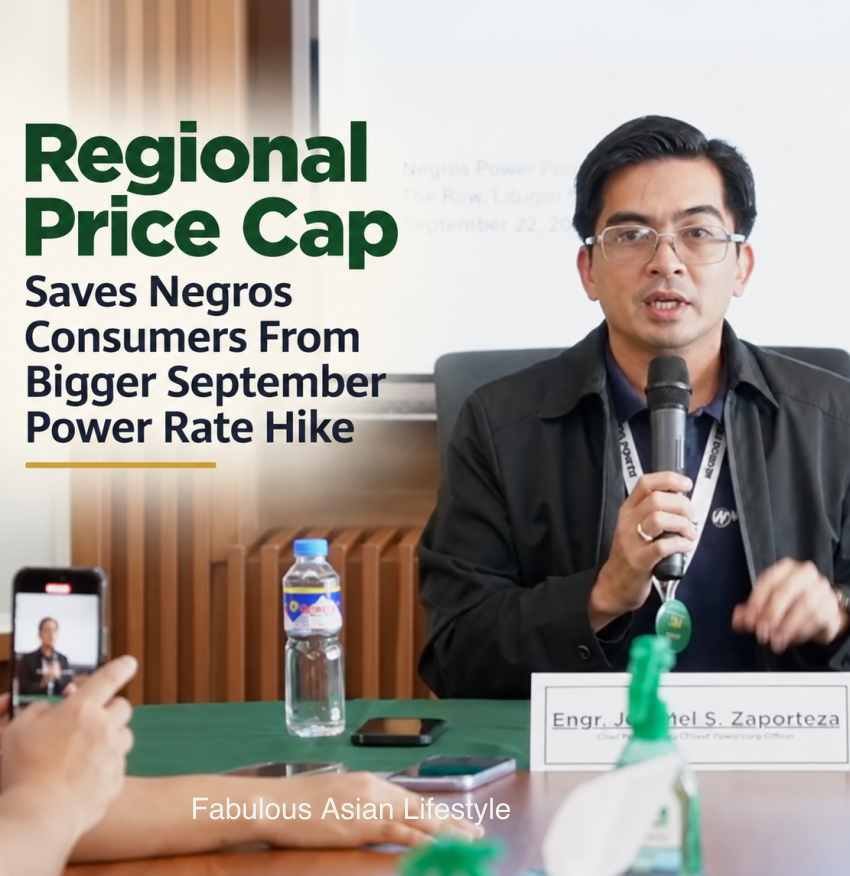
Negros Electric and Power Corp. (Negros Power) Vice President and Chief Operating Officer Engr. Joe-Mel S. Zaporteza announced the adjustment during a press briefing at the company’s Bacolod office on Tuesday, September 22, 2026.
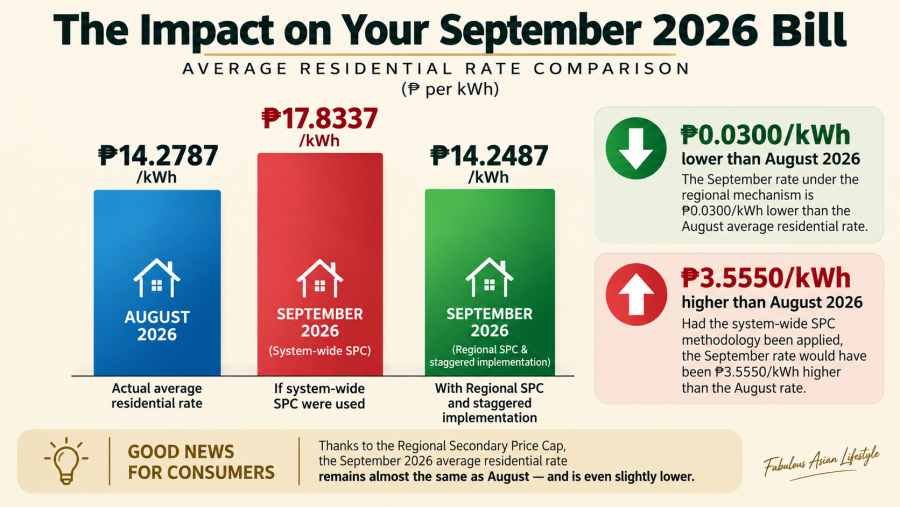
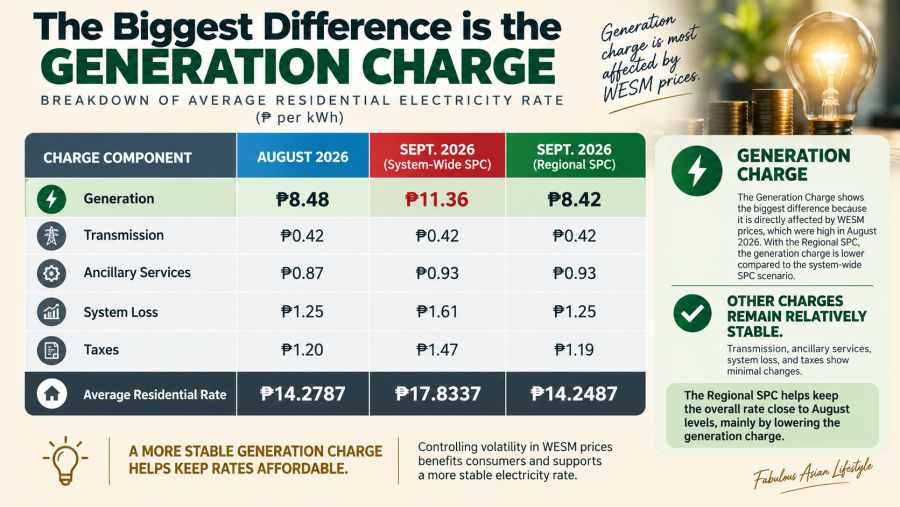
The residential electricity rate for September is ₱14.2487 per kilowatt-hour (kWh), slightly lower than the ₱14.2787/kWh recorded in August.
This means a reduction of about ₱0.03 per kWh.
At first glance, the decrease may appear small. However, Zaporteza explained that the rate would have been considerably higher without the Regional Secondary Price Cap implemented by the Energy Regulatory Commission (ERC).
Without the intervention, the September rate would have reached approximately ₱17.8337/kWh—about ₱3.55/kWh higher than the August rate.
What is the Regional Secondary Price Cap?
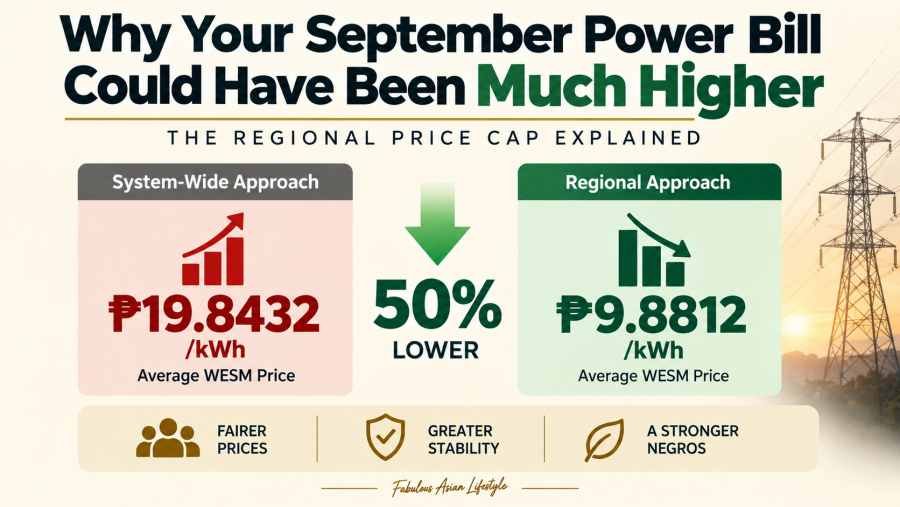
The Regional Secondary Price Cap is a mechanism used to limit exceptionally high prices in the Wholesale Electricity Spot Market, or WESM.
WESM is the market where electricity is traded when power requirements cannot be fully covered by contracted power supplies.
The ERC directed the Independent Electricity Market Operator of the Philippines (IEMOP) to recalculate the August 2026 WESM charges using the Regional SPC, particularly in response to high electricity prices experienced in the Visayas and Mindanao.
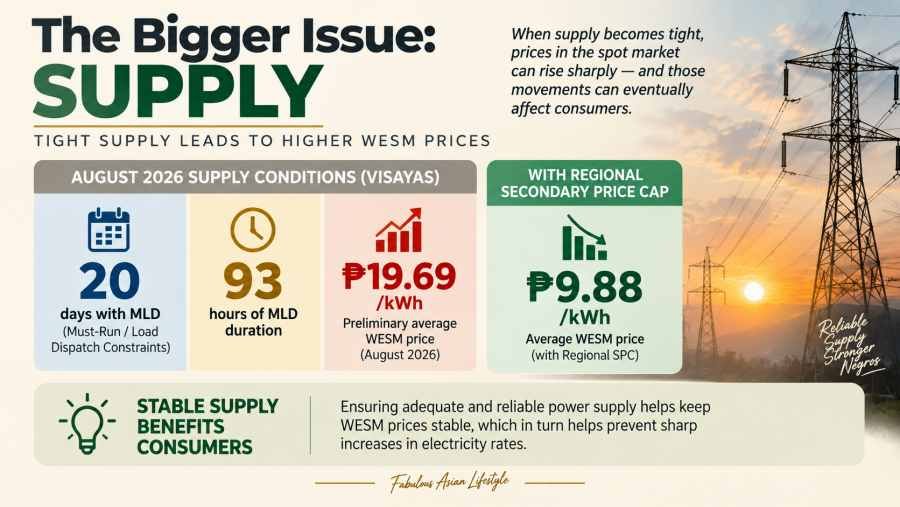
The recalculation significantly lowered the average August WESM price in the Visayas from ₱18.59/kWh to ₱8.47/kWh, equivalent to about a 54-percent reduction in the WESM component.
In Mindanao, the average WESM price was reduced from ₱19.56/kWh to ₱8.69/kWh, or about 56 percent.
But the 54% does NOT mean a 54% reduction in your electricity bill
This is an important distinction for consumers.
The 54-percent reduction applies to the affected WESM price, not to the customer’s entire electricity bill.
A consumer’s bill consists of several components. Power may also come from Power Supply Agreements (PSAs), whose prices are based on contracts approved by the ERC.
Therefore, the effect of the Regional SPC on the final household bill is much smaller than 54 percent.
Why did the adjustment appear in September bills?
The recalculated WESM charges for August were incorporated into the September customer bills covering the August 16 to September 16 billing period.
This means the Regional SPC adjustment is already reflected in the rate consumers are seeing this month.
Zaporteza also explained that WESM prices can still move up or down in the coming months, depending largely on electricity supply conditions.
What does this mean for consumers?
For an ordinary household, the most important point is simple:
The Regional Secondary Price Cap helped prevent a much larger increase in electricity rates.
Instead of the September residential rate reaching approximately ₱17.83/kWh, the rate was ₱14.2487/kWh.
Consumers should therefore distinguish between the WESM price adjustment and the final electricity rate on their bill.
The Regional SPC does not guarantee that electricity rates will always go down. WESM prices remain dependent on market and supply conditions, while other portions of the electricity bill are governed by existing contracts and regulatory charges.
For consumers, the practical takeaway is that the price cap served as a buffer against the unusually high WESM prices recorded in August, helping keep the September retail electricity rate lower than it otherwise would have been.
More Stories
- PEPOA Conference in Bacolod Opens Dialogue on the Future of Philippine Power Distribution
- Mister Cosmopolitan 2026 is John Eriq Bonifacio | Philippines
- Negros Power Second-Year Milestone: Stronger Grid, Bigger Vision for Central Negros
- Roots of Hope Program: Negros Power Strengthens Farmers’ Livelihoods
- Bacolod SMILCE: A Bold Private-Sector Movement to Put Bacolod on the Global MICE Map
- Negros Occidental Sends ₱2 Million Aid to Earthquake-Hit Sarangani
- August 2026 Electricity Rates Rise: Negros Power Residential Rate Reaches ₱14.2787/kWh
- Negros Power Marks 2nd Year with Environmental Cleanup Drive in Murcia
- Negros Power Celebrates 2nd Anniversary with Blood Donation Drive That Saves Lives
- Katrina Llegado Wins Miss Supranational 2026










1. For me, the best methods in identifying these risks would be the PESTEL analysis, monitoring the market trend, and conducting risk assessment or ORC method. Factors or areas that needs to be identified, prioritize and considered are the electricity prices, supply reliability, and regulatory compliance, particularly WESM price fluctuations, generation shortages, demand growth, and government regulations. After identifying these areas, they should be assessed on their likelihood, financial impact, effect on the reliability on supply and complication with the regulations.
2. It reveals that external factors, such as WESM price fluctuations, generation shortages, and regulatory changes, can significantly affect electricity costs, financial stability, and member-consumer-owners. It also shows that organizations should not rely solely on government intervention to manage these risks and adopt a proactive risk management approach by identifying potential threats, assessing their likelihood and financial impact, and preparing mitigation strategies before they happen.
3. I would shift from reacting to electricity price shocks toward a proactive, long-term strategy through the following measures:
a. Power Supply Aggregation – Collaborate with other distribution utilities to strengthen bargaining power and secure cheaper, more reliable electricity through competitive procurement.
b. Price Forecasting and Risk Assessment – Analyze historical WESM prices, supply-demand trends, and market conditions to anticipate potential price shocks and develop mitigation strategies, even for unprecedented events.
c. Embedded Generation – Explore renewable energy, particularly small-scale hydropower, considering Negros Oriental’s mountainous terrain and abundant water sources. This could reduce WESM dependence and improve reliability, subject to feasibility assessments.
d. Operational Efficiency and Strategic Monitoring – Reduce system losses, improve demand forecasting, strengthen infrastructure planning, and regularly evaluate risks and performance.
Ultimately, these strategies aim to build a resilient and financially sustainable cooperative capable of providing affordable and reliable electricity despite market and regulatory uncertainties.
1) As a strategic planner, I would begin by identifying the major external forces that can influence the organization’s operations, financial performance, and stakeholders. In the case of the electricity industry, these include WESM prices, electricity supply conditions, government and ERC regulations, power supply agreements, regional market conditions, and changes in consumer demand.
After identifying these forces, I would prioritize them based on their potential impact, likelihood of occurrence, and the organization’s ability to control or influence them. By continuously monitoring these high-impact factors, management can anticipate changes rather than simply respond after they occur.
2) The situation demonstrates that organizations operating in volatile environments must be prepared for risks that are outside their direct control. Strategic risk management is therefore important because it allows an organization to identify potential threats early, assess their possible consequences, and develop appropriate responses before they become major problems.
To strengthen resilience, an organization should develop scenario planning, contingency plans, financial buffers, diversified power supply arrangements, and effective risk-monitoring systems. The objective is not to eliminate every risk, which may be impossible, but to ensure that the organization has sufficient flexibility, resources, and alternative strategies to absorb shocks and continue providing reliable services.
3) If I were part of the strategic planning team, I would encourage the organization to move from simply responding to price increases toward a more proactive and forward-looking approach. Rather than waiting for WESM prices to rise before taking action, the organization should regularly monitor market trends, power supply conditions, regulatory changes, and regional electricity demand. These factors should be considered in long-term planning. The organization should also consider diversifying its power supply sources, securing reliable long-term supply agreements, improving energy efficiency, exploring suitable renewable energy opportunities, strengthening demand forecasting, maintaining adequate financial reserves, and maintaining good coordination with regulators and other stakeholders. In this way, the organization will be better prepared to deal with unexpected changes in the electricity market.
1. As a strategic planner, I should evaluate them based on their potential impact and unpredictability. I must focus primarily on high-volatility, high-impact factors, like sudden spot market price spikes or regulatory changes, while treating stable elements as routine operations. Ultimately, this allows the organization to build resilience through smart hedging and early warning systems rather than trying to control the uncontrollable.
2. This situation shows that organizations must treat external market shocks as inevitable rather than rare surprises. Effective risk management builds organizational resilience by maintaining contract buffers and scenario planning to absorb sudden cost spikes before they harm stakeholders.
3. To build lasting resilience beyond temporary price caps, I would suggest my team to shift from a reactive stance to a proactive long-term strategy. This requires optimizing power supply portfolios to minimize spot market exposure, investing in demand-side management to handle peak grid conditions, and using dynamic scenario modeling to prepare for future regulatory changes.
1. As a strategic planner, I would prioritize WESM prices, power supply conditions, and government regulations because they have the biggest impact on electricity costs and operations. I would also consider contracts and regional market conditions since they affect price stability and overall market performance. This helps the organization make better decisions and prepare for changes.
2. This situation shows that organizations need good risk management and resilience because unexpected events can affect costs and operations. To prepare, they should monitor market trends, manage risks, secure reliable supply contracts, have backup plans, and follow government regulations.
3. If I were part of the strategic planning team, I would focus on long-term solutions instead of short-term fixes. I would diversify power sources, secure long-term contracts, improve energy efficiency, monitor market and policy changes, and create contingency plans. These steps help reduce the impact of changing WESM prices and keep the organization stable during uncertain conditions.
1. I would prioritize WESM prices, power supply conditions, government regulations, contracts, and regional market conditions based on their potential impact and likelihood of change. The highest priority should be given to factors that can significantly affect electricity costs, operations and customers. By continuously monitorung these external forces, the organization can prepare strategies and respond more effectively to future risks and oppurtunites.
2. This situation shows the importance of strategic risk and resilience because external events, such as increase in WESM prices, can significantly affect the organization and its customers. Before such risks occur, the organization should identify potential risk, monitor market and regulatory changes, diversify power supply sources, maintain financial reserves, prepare contingency plans and improve operational efficiency.
3. I would focus on long-term preparation rather than simply reacting to price increases. The organization should diversify its power supply sources, strengthen long-term supply contracts, monitor WESM prices and regulatory changes, maintain finacial reserves, and prepare contigency plans possible supply or price shocks.
1. – As a strategic planner, I would identify external forces by looking at what can affect the organization’s costs, operations, and customers. I would prioritize them based on their impact, urgency, and likelihood. I would also monitor trends early, so the organization can prepare before a problem becomes a crisis.
2. – If I were part of the strategic planning team, I would focus on preparing for uncertainty instead of simply reacting to price increases. I would diversify power sources, strengthen long-term supply contracts, invest in renewable energy and technology, maintain financial reserves, and regularly monitor market and regulatory changes. Most importantly, I would create different contingency plans for different scenarios, so the organization can continue providing reliable and affordable electricity even when conditions suddenly change.
3. – If I were part of the strategic planning team, I would focus on preparing for uncertainty instead of simply reacting to price increases. I would diversify power sources, strengthen long-term supply contracts, invest in renewable energy and technology, maintain financial reserves, and regularly monitor market and regulatory changes. Most importantly, I would create different contingency plans for different scenarios, so the organization can continue providing reliable and affordable electricity even when conditions suddenly change.
1. A planner must consider how the external forces affect or impact the electricity rates, the uncertainty and volatility of each forces. 2. External forces in the market can cause financial volatility and the effect can cripple an organization. Preventive and proactive strategies must be considered when planning to mitigate the impact. 3.The goal is to lessen the organization’s exposure to market price volatility. Measures include engaging in long-term supply contracts with locked-in rates or incorporating embedded generation facilities into the distribution lines.
1. To mitigate exposure to volatile electricity market prices driven by supply and demand, an electric distribution utility should secure its baseload requirements through Power Supply Agreements (PSAs), which provide greater price stability and predictability based on agreed contractual terms. Maintaining a diversified generation mix from sources such as geothermal, coal, wind, hydro, and diesel is also advantageous, as each source has different costs and operating characteristics. A balanced combination of PSAs and diverse generation sources can reduce dependence on the Wholesale Electricity Spot Market (WESM), minimize exposure to market price fluctuations, and help ensure a more stable, reliable, and cost-effective electricity supply for consumers.
2. The Regional Secondary Price Cap (RSPC) is a regulatory mechanism introduced by the Energy Regulatory Commission (ERC) to mitigate the impact of sustained high electricity prices in a particular region. When market prices reach the prescribed threshold and the conditions for the RSPC are triggered, a lower price cap is applied, thereby limiting the distribution utility’s exposure to excessive market prices. However, reliance on this mechanism can be reduced through appropriate risk-mitigation strategies, such as entering into Power Supply Agreements (PSAs) and developing or contracting embedded generation, particularly from generation sources with lower fuel and operating costs. Since embedded generation is connected directly to the distribution utility’s network, it can reduce dependence on electricity purchased from the Wholesale Electricity Spot Market (WESM) and may also avoid certain transmission-related costs. With sufficient contracted and cost-effective embedded generation, the distribution utility’s exposure to high market prices can be substantially reduced, consequently decreasing its reliance on the protection provided by the RSPC.
3. For me, the most effective strategy is to secure Power Supply Agreements (PSAs) with fixed or predictable pricing mechanisms and to develop embedded generation facilities that are directly connected to the distribution network. This approach provides greater price stability and reduces the distribution utility’s dependence on the Wholesale Electricity Spot Market (WESM). Consequently, external factors such as market price volatility and fluctuations in supply and demand will have a significantly lower impact on the electricity costs of the distribution utility and, ultimately, on the rates passed on to consumers.
1. The external factors that can significantly affect the costs and operations should be identified first by the organization. The weight of the impact of each factor that effects the organization and its level of control over them should be given the greatest priority. Factors like regular monitoring, environmental scanning and analysis helps organizations anticipate future changes.
2. Strategic risk management is very important because it allows organizations to prepare and get ready before risks become actual problems. Organizational resilience means being prepared to continue providing reliable service even when external conditions become highly unfavorable. Strategies should include strengthening long term supply contracts, maintaining good financial aspects and buffers, proper wesm monitoring, and putting in place a good contingency plan for sudden price or supply changes.
3. I would suggest that the organization should forecast a goal that should simply not prevent the next rate increase but should be able to dance through storms and adapt and remain financially and operationally stable despite changes in the power market. Long term strategy focused on flexibility and preparedness should include maintaining a balanced power supply plan for different markets and regulatory conditions, investing in data and forecasting capabilities, exploring other renewable energy opportunities and constantly reviewing supply contracts.
As an engineer in the NORECO II Corporate Planning Department, I am well aware of the current situation and challenges we are facing right now, particularly concerning power rates and the ongoing energy crisis. Therefore, my answers to these questions will be presented from the perspective of NORECO II.
1. I would focus on factors that directly affect electricity rates and operations, such as power supply conditions that of course affects WESM prices, existing government regulations, power contracts, present market conditions, and even ongoing global crisis. These should be regularly monitored to anticipate changes that may affect energy costs. NORECO II should also use CSP for power supply planning to secure competitive, reliable, and affordable long-term power sources and reduce dependence on volatile spot-market prices.
2. NORECO II should secure long-term power contracts through CSP, diversify its power sources, maintain financial reserves, monitor WESM prices, and prepare contingency plans for price increases and supply disruptions. One option is to develop embedded generation plants connected directly to NORECO II’s distribution system. These can provide additional local supply and reduce dependence on costly WESM purchases, particularly during periods of high market prices or supply shortages, which are happening right now.
3. NORECO II should not rely solely on the Regional SPC to protect consumers from high electricity prices. It should adopt a long-term power supply strategy through CSP-based procurement, embedded generation, renewable energy projects, and competitive power supply contracts. NORECO II should also improve distribution efficiency and reduce system losses to minimize unnecessary costs. By combining CSP, diversified power sources, continuous WESM monitoring, and proactive power supply planning, NORECO II can reduce exposure to volatile market prices and create opportunities for more stable and potentially lower electricity rates for its consumers.
1. As a strategic planner, I would identify external forces by examining which factors have the greatest influence on electricity costs, supply reliability, and consumers. Based on the article, the most important factors are WESM price volatility, power supply conditions, regulatory actions such as the Regional SPC, and existing power supply contracts.
I would prioritize them based on impact and likelihood. WESM prices and supply shortages would be high priority because they can immediately increase electricity rates, while regulatory intervention can either reduce or increase the impact of these market changes. Therefore, the organization should continuously monitor these factors and use them as early warning signals to plan supply, manage costs, and prepare for possible price increases.
The organization cannot control WESM prices or regulatory decisions, but it can anticipate their impact and prepare appropriate strategies before they affect operations and consumers.
2. The situation shows that external market shocks can quickly create significant financial impacts. The difference between ₱14.2487/kWh and the potential ₱17.8337/kWh demonstrates how strongly WESM price increases can affect both the organization and consumers.
From a strategic perspective, the organization should prepare before the risk occurs, rather than depend on regulatory measures such as the Regional SPC. This means reducing excessive exposure to WESM price fluctuations, securing reliable power supply contracts, monitoring supply and demand conditions, and preparing alternative actions when market prices reach critical levels.
Strategic resilience is the organization’s ability to anticipate price and supply risks, minimize their impact, and continue providing reliable service despite unexpected market conditions.
3. The situation shows that the organization should not rely on the Regional SPC as a long-term solution, because it only provides temporary protection when WESM prices become unusually high. The organization needs to address the underlying risk of changing market prices and supply conditions.
A long-term strategy should focus on reducing dependence on the spot market, securing stable and diversified power supply contracts, improving demand forecasting, and continuously monitoring WESM prices and supply conditions. This would allow the organization to prepare earlier, rather than responding only after electricity prices increase.
The organization should also set clear thresholds for action. For example, when WESM prices or spot-market exposure reach a certain level, management can immediately implement alternative supply arrangements or cost-control measures.
Moving from reaction to strategy means anticipating possible market changes and having plans already in place, allowing the organization to manage price shocks while maintaining reliable and reasonably stable electricity costs for consumers.
1. As planners, we should rank and prioritize these forces according to their potential impact, level of urgency and the cooperatives ability to respond and adapt effectively.
2. These are essential because the organization can be affected by external forces that are beyond its direct control and should consider a diversified power supply sources.
3. Develop a diversified, resilient and sustainable power supply strategy that ensures reliable, affordable and stable electricity.
1. I would prioritize based on the impact, likelihood of change, and level of risk to the organization. The highest priority must be given to factors that can strongly and quickly affect electricity costs, such as WESM prices and supply shortages. Regular monitoring and contingency plans can then help the organization respond to changes effectively.
2. The strategic risk management is essential because external shocks can suddenly increase costs and affect consumers. Organizations should prepare by diversifying power sources, maintaining financial reserves, monitoring market risks, and creating contingency plans. This strengthens resilience and allows the organization to respond quickly when unexpected risks occur.
3.The organization should focus on long-term resilience rather than short-term reactions by diversifying power sources, securing stable contracts, investing in renewable energy, monitoring market changes, and preparing contingency plans. This helps reduce risks, control costs, and remain adaptable despite uncertainty.
1. Supply and demand affect WESM prices. Prioritize
a. Regulatory
b. Supply
c. Grid/ NGCP
e. Contract of the Generating Plant to WESM/ DUs.
2. External shocks can sharply raise costs, so risk management and resilience are essential to protect both the utility and consumers.
a. Reduce WESM exposure
b. Secure long-term contracts (PSAs)
c. Strategic map for Electricity Supply and fuels.
3. To move beyond reacting, the focus should shift from short-term fixes to built-in resilience.
a. Build a generating plant with lower fuel costs. Nuclear power Plant
b. Portfolio approach: balance long-term contracts (PSAs) + limited WESM exposure