Autophagy, Fasting on Low-Carb
Table of Contents
Unlocking Autophagy and Fasting on Low-Carb: Essential Cellular Renewal for Health
Autophagy and fasting form a powerful duo, where fasting triggers autophagy—your cells’ self-eating recycling process—to break down damaged parts for fuel and repair. On low-carb diets, this combo clears cellular debris, boosts fat burning, and fights inflammation without malnutrition risks.
Disclaimer: This article offers general information only. Autophagy and fasting pose risks, particularly for those with diabetes, liver conditions, or other health issues. Consult your doctor before adopting low-carb diets, fasting, or significant changes to ensure safety and customization.
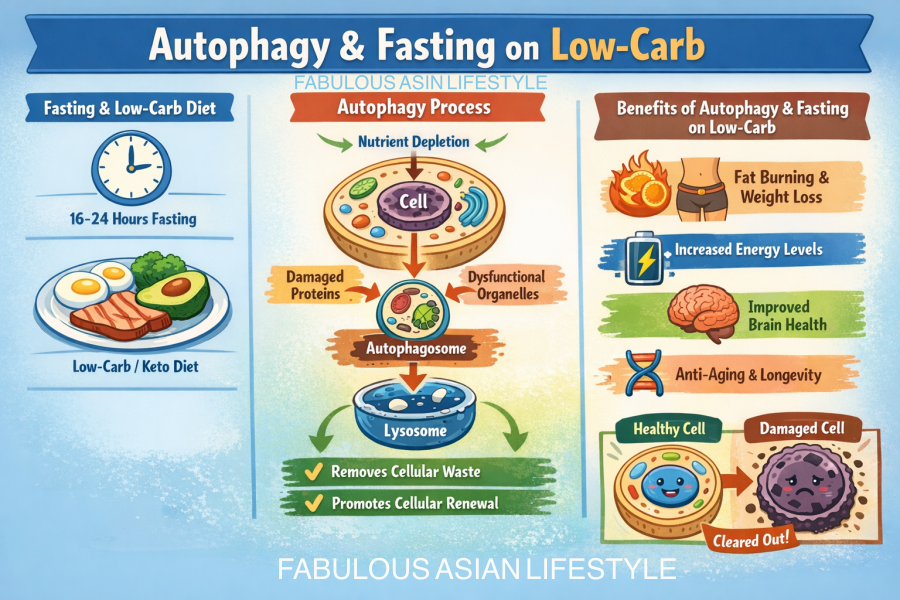
What Is Autophagy?
Autophagy, translating to “self-eating,” is a vital cellular mechanism using lysosomes to degrade and recycle dysfunctional proteins, organelles, and pathogens, maintaining energy balance and homeostasis. During nutrient stress like fasting, cells activate this “cleanup crew” to survive efficiently—your body doesn’t starve but literally eats its own damaged components for energy, preserving vital tissues.
Why Autophagy and Fasting Are Essential
Autophagy prevents toxic buildup from aging, stress, and poor diet, which drives chronic diseases. Fasting (12+ hours) inhibits growth pathways like mTOR, ramping up autophagy for repair—crucial on low-carb where insulin drops mimic this state. Beneficial effects include enhanced fat metabolism, reduced oxidative stress, stronger immunity, and longevity; cells recycle junk into usable fuel, optimizing nutrient use.

Key Benefits for Specific Health Conditions
Autophagy and fasting shine for metabolic and inflammatory conditions, positively impacting:
- Type 2 Diabetes: Improves insulin sensitivity, lowers blood sugar via beta-cell repair; fasting reduces HbA1c.
- Obesity: Accelerates fat breakdown (lipophagy), aiding weight loss without muscle loss.
- Non-Alcoholic Fatty Liver Disease (elevated liver enzymes like SGPT): Clears lipid droplets, reduces inflammation.
- Neurodegeneration (Alzheimer’s, Parkinson’s): Removes protein aggregates like amyloid-beta.
- Cancer Prevention: Eliminates precancerous cells; fasting starves tumors while protecting healthy ones.
- Cardiovascular Disease: Lowers cholesterol plaques, improves endothelial function.
Studies confirm fasting-induced autophagy mitigates these via AMPK activation.
Low-Carb Diets: Amplifying Autophagy and Fasting
Low-carb (under 50g carbs/day) induces ketosis, sustaining autophagy through low insulin and high ketones, synergizing with fasting for deeper repair. This counters low-carb pitfalls like inflammation or imbalances, enhancing diabetes control.
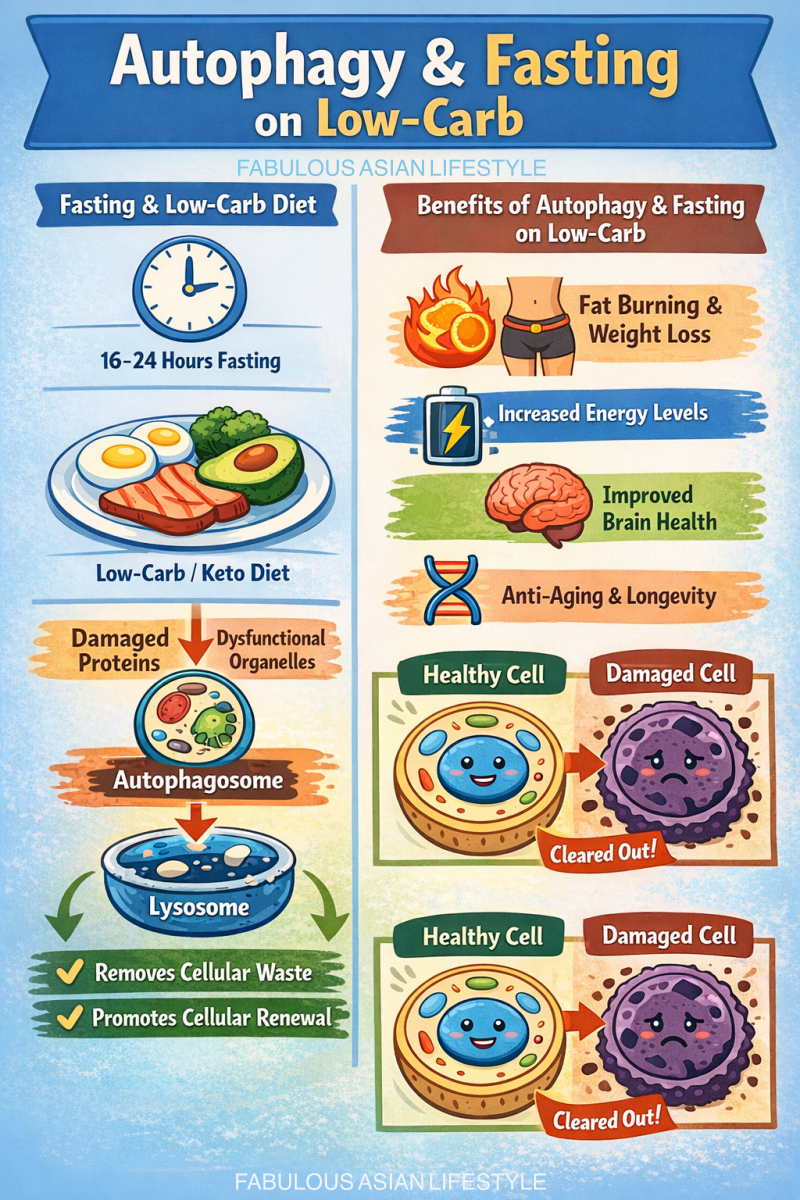
Practical Ways to Trigger Autophagy with Fasting on Low-Carb
Triggering autophagy means giving your cells the nudge to start their “self-eating” cleanup—easy on low-carb since you’re already in fat-burning mode. Fast 3-5 days a week using simple 16-hour windows (like skipping breakfast) for ongoing benefits; during these fasts, your body doesn’t starve—it smartly feeds on its own worn-out cell parts and stored fat for energy, keeping you fueled and healthy.
Here’s how to do it step-by-step, newbie-friendly:
- Intermittent Fasting (Easiest Entry): Fast for 16 hours, then eat in an 8-hour window (e.g., eat noon-8pm, fast 8pm-noon next day)—do this 3-5 days weekly. For stronger effects, try 18-24 hour fasts 1-2 times a week (one full day off food). Start with overnight low-carb fasts: Dinner at 6pm, breakfast at 10am. This lowers insulin, kickstarting autophagy without hunger pangs as ketones take over.
- Exercise for Extra Boost: Do 30-60 minutes of high-intensity interval training (like sprint-walk cycles) or weight lifting 3 times a week, ideally fasted (e.g., morning before eating). Movement stresses cells positively, teaming up with fasting to recycle junk faster—think squats or jumping jacks.
- Caloric Restriction (Smart Cutting): Eat 20% fewer calories than usual on low-carb days (use an app to calculate), but load up on high-fat, high-protein foods like eggs, salmon, and nuts. This mild shortage signals cells to ramp up autophagy without feeling deprived.
- Ketone Boosters (Quick Energy Hack): Take 1-2 tablespoons of medium-chain triglyceride oil (like coconut-derived MCT oil) daily, stirred into coffee. It raises ketones fast, mimicking deeper fasting to sustain autophagy all day.
- Polyphenols (Natural Activators): Sip 2-3 cups of black coffee or green tea, or drizzle olive oil on salads—these plant compounds flip switches (like sirtuins) for repair proteins, enhancing low-carb autophagy effortlessly.

Pro Tips for Success:
- Hydrate Smart: Drink 3-4 liters of water daily; add electrolytes (salt, potassium from avocado) to avoid headaches—key on low-carb.
- Break Fasts Gently: End with bone broth, half avocado, or eggs to ease digestion and keep ketosis.
- Sleep is Prime Time: Aim 7-9 hours nightly—autophagy peaks during deep sleep.
- Track Easy: Use the Zero app (free) for timers and reminders; log energy to see the “fueled by cleanup” buzz.
You’ll feel energized, not drained, as autophagy provides steady internal fuel.
| Trigger | Protocol on Low-Carb | Autophagy Boost | Weekly Frequency |
|---|---|---|---|
| Fasting | 16-hour window | High | 3-5 days |
| Low-Carb Diet | <50g carbs/day | Moderate-High | Daily |
| Exercise | Fasted high-intensity | Synergistic | 3x |
| Medium-Chain Oil | 1 tbsp AM | Sustained | Daily |
Real-World Benefits and Outcomes
Expect sharper focus, stable energy, less inflammation, and better blood markers in 2-4 weeks. For conditions like diabetes or fatty liver, autophagy optimizes healing while low-carb prevents imbalances.

References
- Lee, J., et al. (2021). An overview of the perspective of cellular autophagy. Frontiers in Cell and Developmental Biology. https://pmc.ncbi.nlm.nih.gov/articles/PMC8291096/
- Mihaylova, M. M., & Sabatini, D. M. (2013). Autophagy: A critical regulator of cellular metabolism and homeostasis. Molecules and Cells. https://pmc.ncbi.nlm.nih.gov/articles/PMC3887921/
- Mizushima, N., et al. (2010). Autophagy: Cellular and molecular mechanisms. Journal of Clinical Investigation. https://pmc.ncbi.nlm.nih.gov/articles/PMC2990190/
- Cleveland Clinic. (2025). Autophagy: Definition, process, fasting & signs. https://my.clevelandclinic.org/health/articles/24058
- Osmosis. (2025). Autophagy: Health benefits, role in cancer. https://www.osmosis.org/answers/
- Healthline. (2023). Autophagy: Definition, diet, fasting, benefits. https://www.healthline.com/health/
- Stewart, W. K., & Fleming, L. W. (1973). Features of a successful therapeutic fast of 382 days’ duration. Postgraduate Medical Journal. https://www.ncbi.nlm.nih.gov/pmc/articles/PMC2645630/
Other stories
- 24 THINGS TO DO IN CHIANG MAI | TOURIST SPOTS
- 25 THINGS TO DO IN CAMBODIA | TOURIST SPOTS
- THINGS TO DO IN TOKYO | TOURIST SPOTS
- MACAU TOURIST SPOTS | 20 Attractions You Shouldn’t Miss
- Live Selling Brilliance: Transforming the E-commerce Landscape in the Philippines
- Yakimix Buffet restaurant , SM City Bacolod : A Review
- Iloilo Business Park Launches the “Dinagyang For All” Celebration
- Balanced Protein-Focused Low-Carb | My Diet
- Low-Carb Living : How Carbs, Protein, and Fats Really Work
- Low-Carb Journey: A Personal Story and an Evidence-Based Guide
- Low‑Carb Lifestyle | What is It, What To Eat
- Fasting and Low-Carb Diet
- Type 2 Diabetes, Weight Loss in Low-Carb
- Miss Cosmo 2025 Crowns USA ; Philippines, First Runner-Up