Table of Contents
Fasting
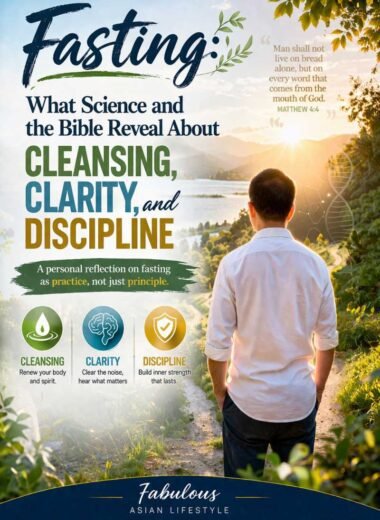
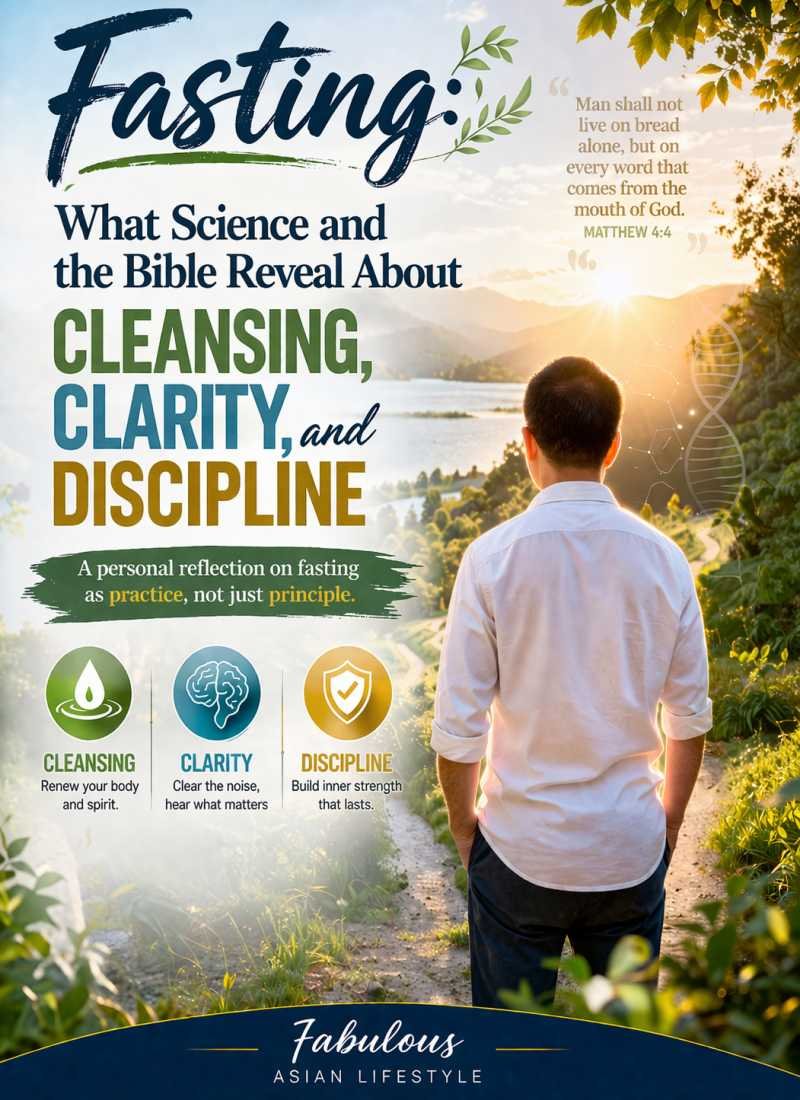
Fasting: What Science and the Bible Reveal About Cleansing, Clarity, and Discipline
A personal reflection on fasting as practice, not just principle
This Is Not About Religion—But It Cannot Ignore Its Roots
I’ve fasted many times over the years.
Not just once or twice, but repeatedly—sometimes for discipline, sometimes for clarity, sometimes because something felt off and I needed to pause.
And while many today talk about fasting in terms of weight loss, detox, or intermittent fasting schedules, I’ve come to realize that fasting is far more layered than that.
This is not about religion.
But it would be incomplete—and honestly, inaccurate—if we ignore that fasting has deep biblical roots that predate modern science by thousands of years.
Today, science explains what happens in the body when we fast.
But Scripture reveals why people fasted in the first place.
And when I began to look at both together—not separately—I started to understand fasting in a much deeper way.
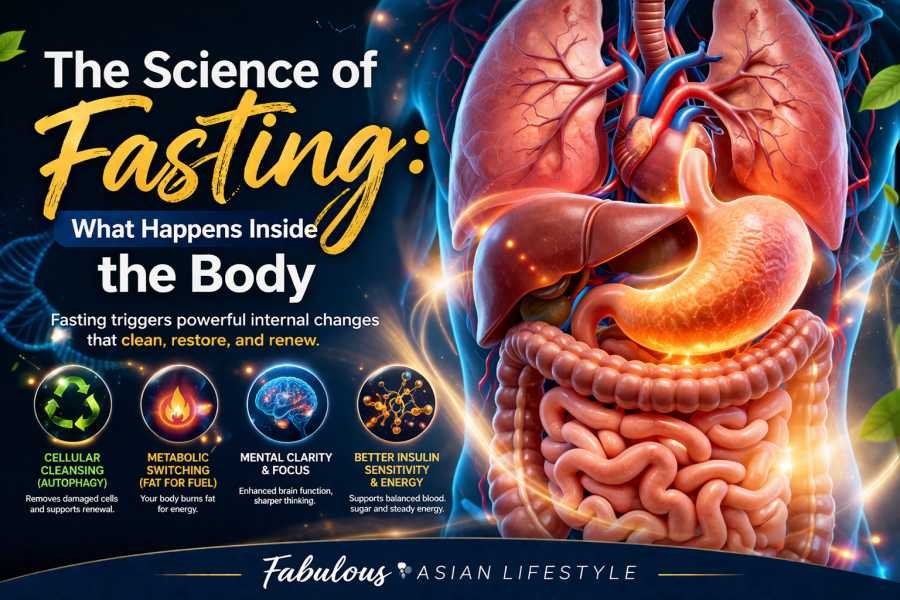
The Science of Fasting: What Happens Inside the Body
Let me begin with what we now understand scientifically—because fasting is not just symbolic. It is physiological.
a. Metabolic Switching: When the Body Changes Its Fuel Source
After about 10 to 12 hours of not eating, the body begins to shift from using glucose (sugar) to using stored fat for energy. This is called metabolic switching.
Instead of relying on frequent food intake, the body:
- taps into fat reserves
- produces ketones
- becomes more efficient in energy use
According to George F. Cahill Jr., a physician and researcher known for his work on fasting metabolism, this process is part of the body’s natural adaptation to periods of food scarcity.
Cahill Fasting Metabolism Study
I’ve experienced this personally. The first few hours can feel uncomfortable, but eventually, something stabilizes. Energy becomes more consistent. Hunger becomes quieter.
b. Autophagy: The Body’s Internal Cleansing System
One of the most fascinating discoveries about fasting is autophagy.
This is the body’s way of:
- removing damaged cells
- recycling dysfunctional components
- maintaining cellular health
This process was identified and studied by Yoshinori Ohsumi, a Nobel Prize-winning cell biologist, whose work showed how fasting activates this cellular cleanup mechanism.
Yoshinori Ohsumi Nobel Prize
Further research by Beth Levine, a biomedical researcher specializing in autophagy, explains how this process helps prevent disease and supports long-term health.
Autophagy Research Overview
From a personal standpoint, I don’t see autophagy happening—but I do feel the effect: lighter, less sluggish, more aware.
c. Brain Function, Focus, and Mental Clarity
Another noticeable effect of fasting is mental clarity.
There are times when I feel more focused while fasting than when I am constantly eating.
Science supports this.
Mark P. Mattson, a neuroscientist studying fasting and brain function, found that fasting increases BDNF (Brain-Derived Neurotrophic Factor), which supports:
- memory
- learning
- cognitive performance
👉 So from a scientific standpoint, fasting:
- resets metabolism
- cleanses cells
- enhances brain function
But here’s what I realized—
Science explains what happens.
It does not fully explain why people have been doing this for centuries.
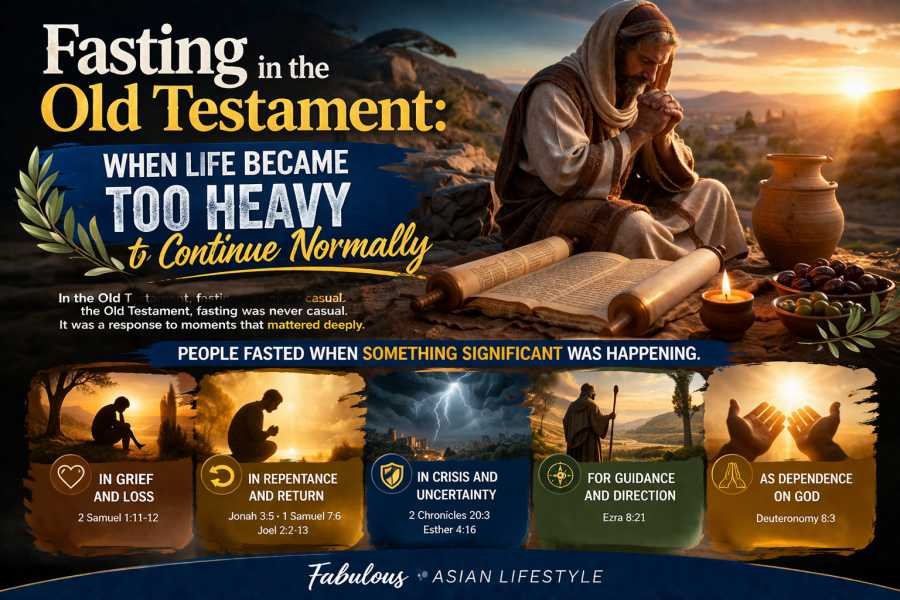
Fasting in the Old Testament: When Life Became Too Heavy to Continue Normally
When I started reading the Old Testament more carefully, I noticed something consistent:
People did not fast randomly.
They fasted when something significant was happening.
a. Fasting in Grief: When Loss Is Too Heavy
📖 2 Samuel 1:11–12
David fasted after the death of Saul and Jonathan.
This wasn’t a religious requirement.
It was emotional.
There are moments in life when grief is so deep that even eating feels irrelevant. I’ve seen this in people. I’ve felt this in quieter ways.
Fasting here is not discipline—it is response to pain.
b. Fasting in Repentance: When People Needed to Change
📖 Jonah 3:5
📖 1 Samuel 7:6
📖 Joel 2:12–13
Entire communities fasted when they realized they were wrong.
Not to perform. Not to impress.
But to turn.
According to Matthew Henry, a classical biblical commentator, fasting in these passages represents an outward act that reflects an inward transformation.
Matthew Henry Commentary
This is something I’ve come to understand—fasting becomes meaningless if nothing changes.
c. Fasting in Crisis: When There Are No Clear Answers
📖 2 Chronicles 20:3
📖 Esther 4:16
When situations were beyond control, people fasted.
Not because it solved the problem instantly—but because it forced a pause.
I’ve had moments like this—when doing more doesn’t help, when thinking more creates more confusion.
Fasting becomes a way of stepping back.
d. Fasting for Direction: Before Making Important Decisions
📖 Ezra 8:21
Before a journey, before movement, before uncertainty—people fasted.
This struck me.
We usually act first, reflect later.
But in Scripture, it was the opposite.
e. Fasting as Dependence: Learning What Truly Sustains
📖 Deuteronomy 8:3
“Man does not live on bread alone…”
This verse gains weight when you actually fast.
Because you feel the hunger—and yet, you continue.
According to D. A. Carson, a New Testament scholar, this passage teaches that dependence is often learned when comfort is removed.
D. A. Carson Profile
👉 In the Old Testament, fasting appears when:
- emotions are overwhelming
- direction is unclear
- people recognize their need to change
- life becomes too significant for routine behavior
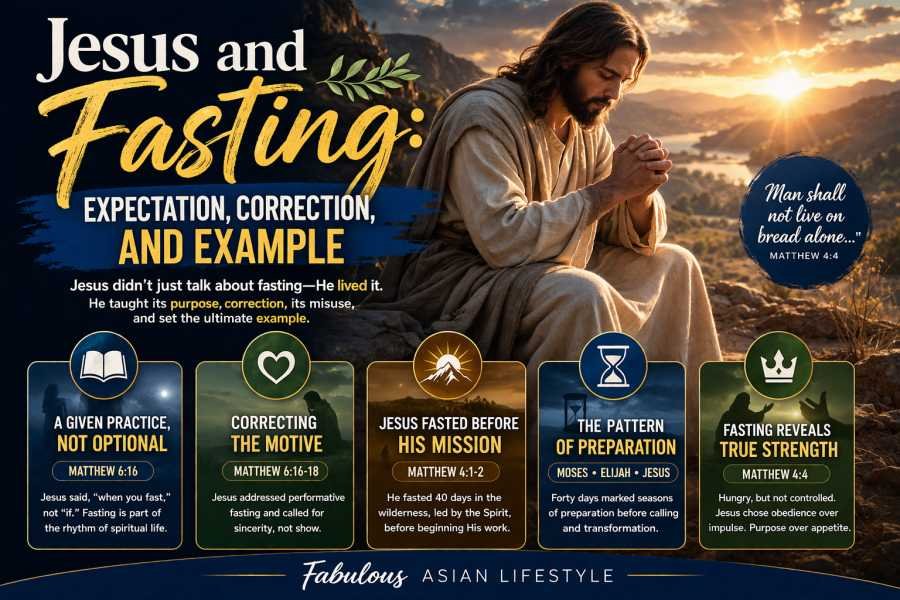
Jesus and Fasting: Expectation, Correction, and Example
When I read the New Testament, I noticed something subtle but important.
Jesus never made fasting optional—but He also never made it performative.
a. “When You Fast”—Not If | 📖 Matthew 6:16
Jesus says “when,” not “if.”
According to John Stott, a British theologian known for his work on the Sermon on the Mount, fasting is treated as a normal part of spiritual life, just like prayer and giving.
John Stott
b. Correcting the Wrong Motivation | 📖 Matthew 6:16–18
People were fasting to be seen.
According to Craig S. Keener, a New Testament scholar, this behavior had become a public display of religious identity.
Craig S. Keener
Jesus shifts the focus:
- not outward
- not visible
- but inward and sincere
c. Why Jesus Fasted Before His Ministry | 📖 Matthew 4:1–2
Jesus fasted for 40 days before beginning His public work.
According to N. T. Wright, a contemporary biblical scholar, this was preparation tied to identity and mission.
N. T. Wright
d. The Pattern of 40 Days: Not Random
Jesus mirrors:
- Moses
- Elijah
According to R. T. France, a New Testament scholar, this connects Jesus to a long-standing pattern of preparation before significant calling.
R. T. France
e. What Fasting Revealed in Jesus | 📖 Matthew 4:4
“Man shall not live on bread alone…”
When you fast, this verse becomes real.
You realize:
- hunger is real
- but it is not controlling
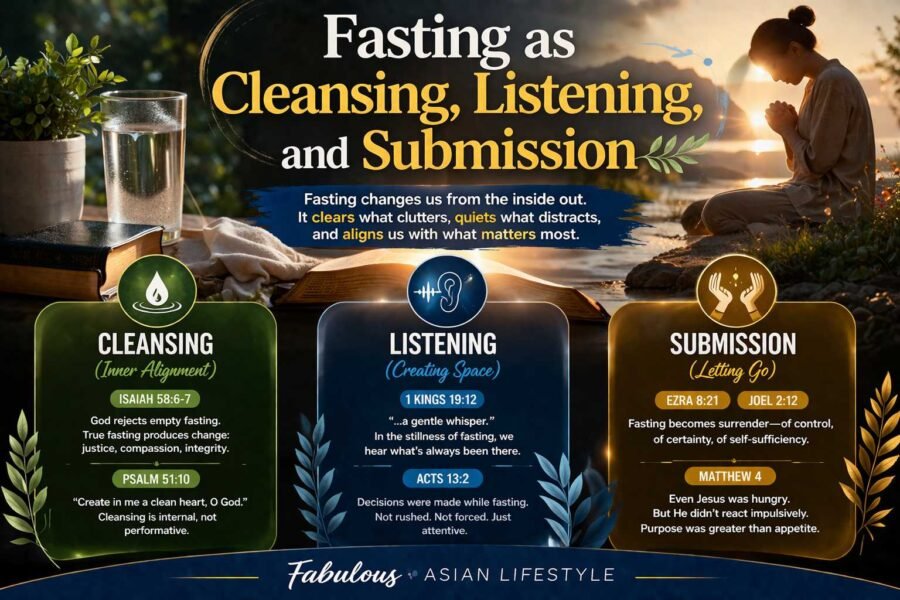
Fasting as Cleansing, Listening, and Submission
This is where fasting becomes deeply personal for me.
Because beyond science and history, this is what I experience repeatedly.
a. Cleansing: Not Just Physical, But Internal | 📖 Isaiah 58:6–7
God rejects fasting that does not produce change.
That challenges me every time.
Because this process without transformation is empty.
b. Listening: Creating Space in a Noisy World
📖 1 Kings 19:12 | “A gentle whisper.”
There is something about fasting that quiets internal noise.
Not silence—but clarity.
📖 Acts 13:2
Even in the early church, decisions were made while fasting.
Not rushed. Not forced.
c. Submission: Letting Go of Control
📖 Ezra 8:21
📖 Joel 2:12
Fasting humbles.
It removes control.
Even Jesus—
📖 Matthew 4
He was hungry—but did not act impulsively.
And I’ve realized this is the hardest part of fasting.
Not the hunger.
But choosing not to respond to it immediately.
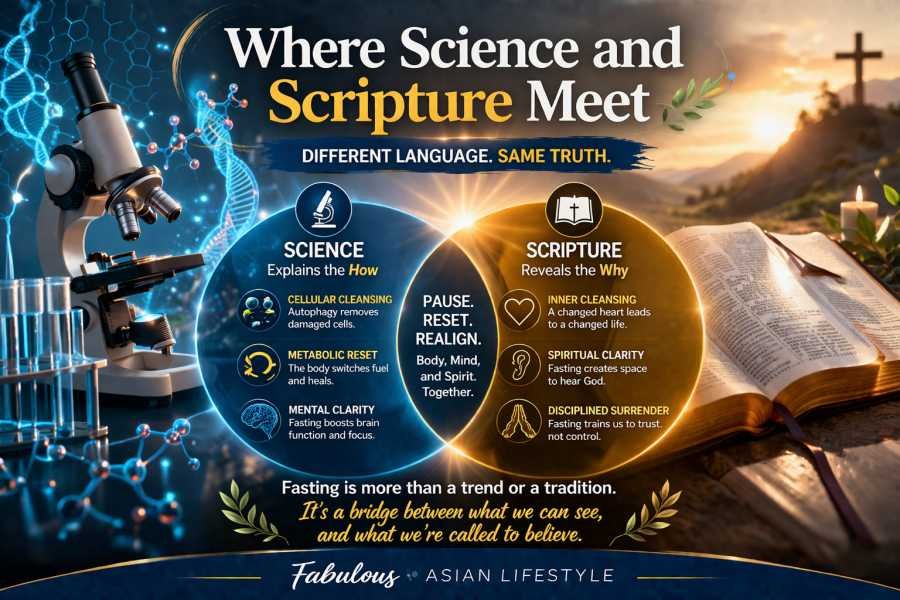
Where Science and Scripture Meet
Science explains:
- cellular cleansing
- metabolic reset
- mental clarity
Scripture reveals:
- inner cleansing
- spiritual clarity
- disciplined surrender
And from experience—I’ve seen both.

Final Reflection: Why I Continue to Fast
I don’t fast because it’s trendy.
I don’t fast because it’s required.
I fast because I’ve experienced what it does—not just to my body, but to how I think, decide, and respond.
In the Old Testament, people fasted when life became too heavy.
In the New Testament, Jesus fasted before stepping into purpose.
And today, even with all the science behind it—
Fasting still feels like what it has always been:
A pause.
A reset.
A quiet decision—
To stop consuming, so something deeper can take place.
More Stories
- Holy Week 2026 Bacolod: Negros Power Completes Full Church Safety Checks
- Power You Can Feel: Negros Power’s Progress in Bacolod
- Laundry Problems: Missing Socks Made Me Do My Own Laundry
- Advanced Marketing Management: Strategy and Value Creation
- E-Commerce Legal and Ethical Issues : Laws, Privacy & Cybercrime
- Travel Blogger Philippines: The Happy Trip Journey and Legacy
- ₱630M Power Boost for Bacolod | Negros Power
- Evolving Trends in E-Commerce: Key Insights
- Casa Blanca SM Branch Bacolod: Dinner with Friends
- Galacia Mask Bacolod: The Story of a MassKara-Inspired Artwork
- E-Commerce Technology, Infrastructure, and Operations
- Global Business Environment and International Success