
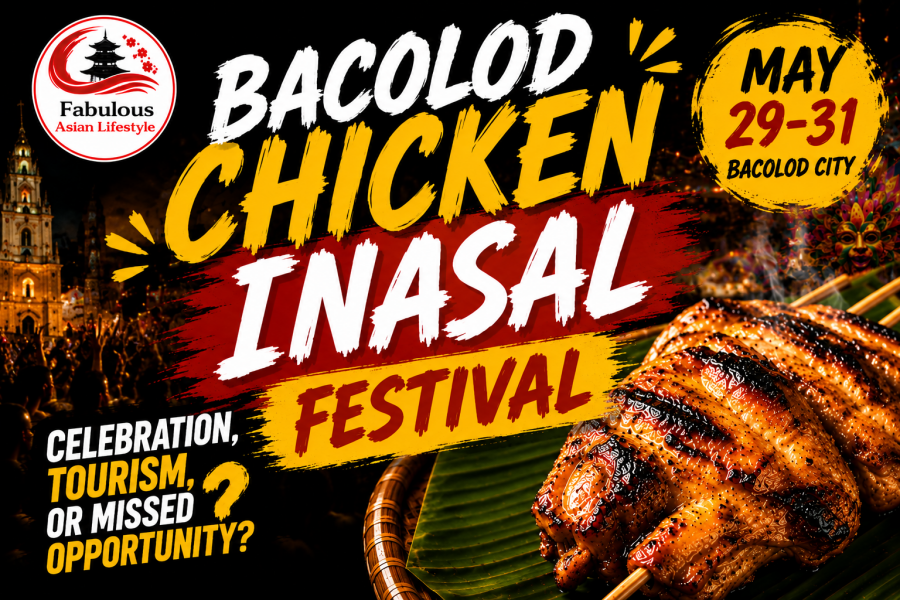
Bacolod Chicken Inasal Festival
Table of Contents
Bacolod Chicken Inasal Festival: Celebration, Tourism, or Missed Opportunity?
What Are Festivals Really For Today?
Every year, cities across the Philippines spend millions organizing festivals — colorful celebrations filled with music, food, performances, lights, pageantry, and endless social media photo opportunities. Almost every province now has a festival proudly attached to its identity.
And honestly, there is nothing wrong with that.
Festivals bring excitement. They create memories. They give communities something to look forward to. They make cities feel alive.
But in today’s highly competitive tourism and economic environment, perhaps it is also fair to ask a slightly uncomfortable — but necessary — question:
What are festivals really for today?
Are they simply cultural celebrations?
Or are they supposed to function as economic and tourism engines capable of bringing visitors, businesses, investments, and long-term opportunities into the community?
Because if public funds, sponsorships, logistics, manpower, road closures, promotions, and city resources are being invested into festivals, then surely it is also reasonable to ask:
Are we fully maximizing their potential?
This question becomes especially interesting in Bacolod City, a place that has become increasingly active in creating festivals and themed celebrations almost year-round.
And now comes the Bacolod Chicken Inasal Festival this May 29–31.
To Be Fair, Chicken Inasal Deserves a Festival
Let us be clear about one thing:
Chicken inasal is one of Bacolod’s strongest brands.
It is probably one of the few things almost every Filipino immediately associates with the city.
Bacolod has built an entire culinary reputation around it.
Visitors look for it.
Tourists crave it.
Content creators feature it.
Travel vloggers talk about it.
Even people who have never been to Bacolod somehow know:
“Ah yes, chicken inasal.”
So creating a festival around it makes perfect sense.
In fact, Bacolod should absolutely celebrate it.
But perhaps this is also why many people quietly wonder:
If chicken inasal is already such a strong identity, why does the festival itself still feel surprisingly quiet?
And maybe that sounds a little bitchy.
But honestly?
It is also a valid concern.
Because if some Bacolodnons themselves barely know the festival is happening…
then how exactly are tourists outside the city expected to know?
Visibility Matters More Than Ever [ Bacolod Chicken Inasal Festival ]
This is not the 1990s anymore where simply hanging tarpaulins around the city is enough.
Today, festivals compete globally for attention.
Tourism is now heavily driven by:
- digital marketing
- content creators
- travel influencers
- destination branding
- media mileage
- online visibility
- viral experiences
Countries like Thailand understand this extremely well.
Songkran is no longer simply a traditional water festival. It has become an international tourism machine.
The same goes for Japan’s seasonal festivals and even Singapore’s event-driven tourism economy.
According to the United Nations World Tourism Organization, cultural events and festivals significantly contribute to destination branding, tourism movement, and local economic activity.
These countries market their festivals aggressively because they understand something important:
Festivals are investments.
Not just celebrations.
So What Is the Real Goal of the Bacolod Chicken Inasal Festival?
And this is where the discussion becomes interesting.
If the goal is mainly for locals to enjoy food, then honestly, Bacolodnons can already eat chicken inasal literally any day of the year.
The city is overflowing with inasal restaurants.
From roadside grills to major establishments, inasal is already deeply embedded into daily life.
Which raises the bigger question:
What transforms ordinary food consumption into a meaningful festival experience?
Because successful modern festivals are not simply about availability.
They are about:
- atmosphere
- immersion
- destination value
- exclusivity
- emotional experience
- tourism motivation
People do not travel just because food exists.
People travel because something feels worth experiencing.
And perhaps this is the part where the festival still has enormous room to grow.
![[ Bacolod Chicken Inasal Festival ]](https://www.fabasianlifestyle.com/wp-content/uploads/2026/05/INASAL-2.jpg)
Maybe Bacolod Is Sitting on Something Bigger [ Bacolod Chicken Inasal Festival ]
This is actually what makes the situation frustrating in a good way.
Because the potential is clearly there.
Bacolod already possesses:
- a recognizable culinary identity
- a strong tourism image
- warm hospitality
- a deeply rooted food culture
- highly marketable local products
Many cities would love to have even one of those.
Bacolod already has all of them.
Which is why some people cannot help but ask:
Could the Chicken Inasal Festival become much bigger than what it currently is?
Imagine if it evolved into:
- a national culinary tourism event
- an international grilling competition
- a food creators convention
- a tourism-driven restaurant week
- a regional barbecue showcase
- a platform for MSMEs and local food innovation
- a culinary destination people intentionally fly in for
Now that creates movement.
Now hotels benefit.
Transport operators benefit.
Restaurants benefit.
Local producers benefit.
Artists benefit.
Content creators benefit.
Now the festival becomes more than a three-day activity.
Now it becomes an economic ecosystem.
Because Festivals Should Leave Something Behind
And maybe this is ultimately the heart of the conversation.
Festivals are wonderful.
But after the lights are turned off, the stages dismantled, and the fireworks disappear, what remains?
Does the city gain stronger tourism recall?
Do businesses gain long-term customers?
Do tourists leave wanting to return?
Does the festival strengthen Bacolod’s national identity?
Does it create measurable economic movement?
Or does it simply become another event people attend locally before returning to normal life the next day?
Again, these are not questions rooted in negativity.
In fact, they come from wanting more for Bacolod.
Because if public resources, energy, and branding are already being invested into festivals, then perhaps communities also have the right to ask:
How can these festivals create bigger, longer-lasting benefits for the city?
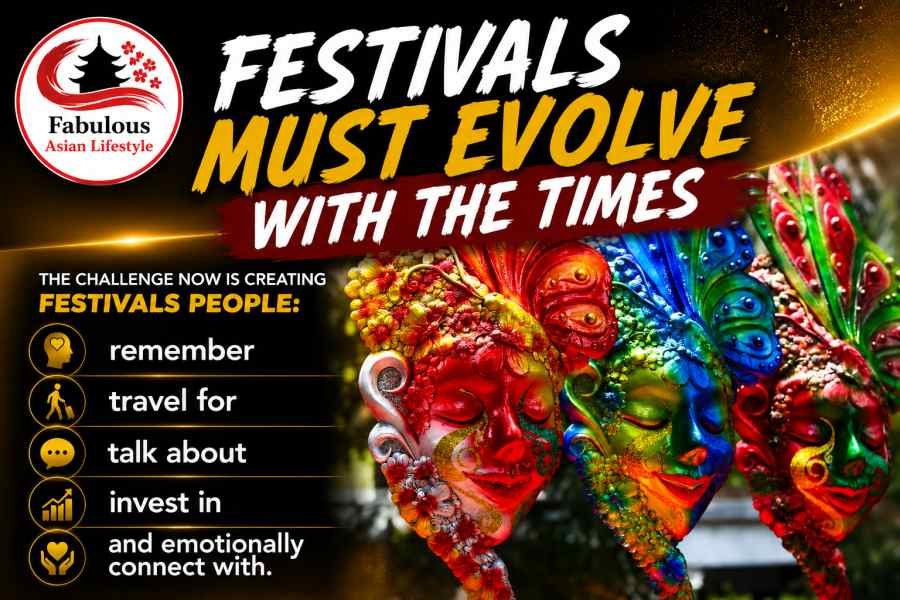
Festivals Must Evolve With the Times
According to UNESCO, festivals remain important in preserving culture and identity.
And that remains true.
But modern festivals now exist in a different environment — one shaped by tourism competition, digital visibility, destination branding, and economic expectations.
Communities can no longer rely solely on tradition and repetition.
The challenge now is creating festivals people:
- remember
- travel for
- talk about
- invest in
- and emotionally connect with
And Bacolod honestly has all the ingredients to do exactly that.
Which is why perhaps the bigger conversation is no longer:
“Should Bacolod hold festivals?”
Maybe the more important question now is:
“How can Bacolod transform its festivals into stronger tourism and economic engines that truly maximize the city’s incredible potential?”
![[ Bacolod Chicken Inasal Festival ]](https://www.fabasianlifestyle.com/wp-content/uploads/2026/05/INASAL-5.jpg)
MORE STORIES
- Negros Power Reaches 57 Energized Sitios in Negros
- Negros Power Pushes Sustainable Energy Goals at 35th VABC
- Power Disconnection-Free Community Rewarded by Negros Power
- Miss World 1993: The Year Filipinos Believed the Crown Was Ours
- Mother’s Day : Beyond Flowers and Facebook Posts
- STIWNU CBMA Boosts MSMEs with Tycoon Talk Series
- DOE Celebrates MORE Power and Negros Power | Outstanding Compliance Excellence
- ISNAP of Negros Power Expands Access to Legal Electricity
- Negros Power PaKAPE Program: Community Partnership
- Walking Spaces in Bacolod: The Walking City We Deserve











As someone working in the corporate sector and with our company sponsoring many major and secondary festivals, we always focus on the overall tourist experience and how it can be sustained in the years ahead. The key questions are: Will tourists keep coming back? Will they encourage others to visit and experience the festival?
I believe Bacolod still has a lot to do if we truly want to position the city as a tourism hub. One important step is pursuing a UNESCO Creative City status for Gastronomy to strengthen our claim as one of the Philippines’ top culinary destinations.
Bacolod and Negros Occidental should also always be promoted together as they complement each other. Bacolod is Negros Occidental, and Negros Occidental is Bacolod. Their tourism identity should be interconnected and consistently introduced as one destination.
Moreover, the Bacolod Chicken Festival should become more experiential rather than just a
3-day event. Beyond highlighting Chicken Inasal, we should introduce initiatives such as curated food crawls and a Bacolod–Negros Occidental itinerary map to encourage tourists to explore the province more deeply.
The Chicken Inasal Festival can become more than a local food celebration if Bacolod positions it as a global culinary and cultural beand similar to food-centered festivals in Bangkok or Seoul. Instead of focusing only on eating events, the festival should highlight Negrense heritage, culinary innovation, music, arts, sustainability and international tourism experiences. Strategic branding, digital marketing, partnerships with airlines and travel platforms, chef collaborations and international food competitions can attract foreign visitors and investors.
From a global enterprise management perspective, success required strong collaboration among stakeholders.
Government helps improve infrastructure, tourism policies, funding, international promotion and event security. Private sector like hotels, restaurants, airlines and sponsors can create tourism packages and global marketing campaigns. Entrepreneurs and MSMEs can innovate products, souvenirs, food exports and digital businesses linked to chicken inasal culture. Tourism organizations can connect the festival to global tourism networks, travel fairs, and cultural exchanges. Local communities can as well preserve authenticity, cultural identity, provides grassroots participation that makes the festival unique.
Through coordinated stakeholder management and global branding, the festival can transform from a simple local food event into an internationally recognized cultural tourism asset for Bacolod and the Philippines.
To elevate the Chicken Inasal Festival into a globally competitive cultural brand, Bacolod must integrate the festival permanently into the city’s annual tourism plan. Local government must also allocate government budgets matching other major festivals in the city. It must also launch on targeted social media campaigns to reach global food tourists rooting not only for merely festivities and fun but also a campaign for highlighting the cultural values and identity of Bacolodnon people .
In order to maximize the full potential of the Bacolod Chicken Inasal Festival. Entrepreneurs must standardize food quality and drive culinary innovation. Private sectors can fund corporate sponsorships, international marketing expertise, and large-scale logistics. Local government will also work on the development of infrastructure and partnerships with tourism groups and travel agencies, manage hospitality services, and attract international visitors.
1. Based on the article, how can Bacolod strategically position the Chicken Inasal Festival as a globally competitive tourism and cultural brand rather than simply a local food event?
Answer: Bacolod can strategically position the Chicken Inasal Festival as a globally competitive tourism and cultural brand by transforming it from a food-centered celebration into a complete tourism experience. This can be achieved through stronger cultural storytelling, international culinary collaborations, digital marketing campaigns, and festival activities that showcase the city’s heritage, creativity, and local identity. By creating a unique and memorable brand experience rather than focusing only on food consumption, Bacolod can attract both local and international visitors while strengthening its position in culinary tourism.
2. From a Global Enterprise Management perspective, what key stakeholders should work together to maximize the festival’s economic and international potential? Explain briefly.
Answer: From a Global Enterprise Management perspective, maximizing the festival’s international potential requires collaboration among the government, private sector, entrepreneurs, tourism organizations, and local communities. The government should focus on infrastructure, policy support, and tourism promotion, while private businesses and entrepreneurs can contribute investments, innovation, and business opportunities that enhance the festival experience. Tourism groups can strengthen marketing efforts, while local communities play a critical role in preserving Bacolod’s culture and authenticity, ensuring that economic growth remains sustainable and beneficial to the community.
1. Bacolod can position the Chicken Inasal Festival as a global tourism brand through strong marketing strategies such as digital promotion, influencer partnerships, destination branding, and unique customer experiences. Instead of focusing only on food, the festival should market Bacolod as a cultural and culinary destination that attracts both local and international tourists.
2. From a Global Enterprise Management perspective, the government, private sector, entrepreneurs, tourism groups, and local communities should work together using strong marketing strategies to maximize the festival’s economic and international potential. The government can lead destination branding and global promotion, businesses and entrepreneurs can create attractive tourism packages and food products, tourism groups can use digital marketing and influencer partnerships to increase visibility, while local communities help promote Bacolod’s unique culture and authentic festival experience.
Bacolod can elevate the Chicken Inasal Festival into a globally competitive tourism and cultural brand by positioning it as more than just a food event. The city should promote the festival as a showcase of Bacolod’s cultural heritage, culinary identity and creative tourism potential. Through international marketing, cultural storytelling, culinary innovation, and partnerships with tourism and hospitality sectors, the festival can attract both local and foreign visitors. Integrating music, arts, business events, and cultural exhibitions can further strengthen its identity as a world-class culinary and cultural destination.
From a Global Enterprise Management perspective, the festival’s success depends on collaboration among key stakeholders. The government should provide leadership in policy-making, infrastructure development, and international promotion. The private sector can contribute investments, sponsorships, and business opportunities. Entrepreneurs and local restaurant owners play a vital role in maintaining authenticity and driving innovation in Bacolod’s food industry. Tourism organizations are responsible for global marketing and tourism linkages, while local communities help preserve the city’s cultural identity and ensure authentic visitor experiences. Coordinated stakeholder efforts can enhance the festival’s economic impact and global competitiveness. Every stakeholder should do their part in order to maximize the festival’s potential.
The article presents a timely challenge: Bacolod has a world-class culinary identity but has yet to fully monetize it on the global stage. Strategic positioning starts with rebranding the festival not as a local food celebration, but as a global culinary tourism destination event, think Bacolod as the “Inasal Capital of the World.” This means registering the festival under international food tourism platforms such as the World Food Travel Association, pitching to global food and travel media (CNN Travel, Taste Atlas, Michelin Guide Asia), and creating festival packages attractive to foreign visitors. The experience must be elevated from street food to a curated cultural immersion with storytelling, heritage tours, and chef collaborations. Visibility drives interest; interest drives arrivals; arrivals drive economic returns.
From a Global Enterprise Management perspective, the festival’s international potential will only be realized through deliberate stakeholder alignment. The national government (DOT, DTI, DFA) must open global promotion channels and trade connections. The private sectors particularly hospitality, aviation, and food industry players should invest in packaging Bacolod as a must-visit culinary destination. Entrepreneurs must be supported in scaling inasal-based products for export and global food markets. Tourism organizations should forge partnerships with international food festivals and travel influencers. And local communities must be positioned as cultural ambassadors, their authenticity is Bacolod’s strongest competitive advantage globally. Cohesive stakeholder governance transforms a local festival into a globally relevant brand.
Bacolod can make the Chicken Inasal Festival more than just a food event by showing it as a story of culture, pride, and community. To be known worldwide, the festival should highlight the friendly spirit of Bacolod’s people, the skill in its cooking, and the joy of sharing meals together. It’s not only about grilled chicken it’s about music, dance, stories, and cooking activities that visitors can join and truly feel.
From a Global Enterprise Management view, the festival will grow if everyone works together. The government can give support and promotion, the private sector can help with hotels, restaurants, and marketing, entrepreneurs can add creative food ideas and products, tourism groups can connect Bacolod to international visitors, and the local communities can bring the heart and authenticity. When these groups join hands, the festival becomes a cultural brand that attracts tourists, creates business, and proudly shows Bacolod to the world.
Bacolod should position the Chicken Inasal Festival not just as a celebration of food, but as a unique cultural tourism experience. Chicken inasal, like adobo, can be replicated anywhere since there is no strict universal standard in its preparation. What gives Bacolod a competitive advantage is not just the dish itself, but the authentic festival experience, local culture, hospitality, and heritage that cannot be copied. According to the Department of Tourism (2024), experiential tourism and destination branding are key strategies in attracting visitors.
To maximize its global potential, stakeholders must collaborate like government agencies (LGU, DOT, DOTr), hotels, airline companies, restaurants, event organizers, tourism groups, private sector investors, entrepreneurs, and local communities. Together, they can improve accessibility, create tourism packages, strengthen promotion, and deliver memorable visitor experiences. The goal is to market not just Chicken Inasal, but the complete Bacolod experience.
1. Bacolod can strategically position the Chicken Inasal Festival as a global tourism and cultural brand by promoting it not only as a food event but as a reflection of Negrense identity, creativity, and hospitality. The city should integrate cultural performances, culinary innovation, digital marketing, and international tourism partnerships to create a unique festival experience that can compete with other food festivals in Asia. Consistent branding and stronger tourism infrastructure can also help attract foreign visitors and investors.
2. From a Global Enterprise Management perspective, the success of the festival requires collaboration among the local government, tourism offices, private businesses, entrepreneurs, transport and hotel sectors, media groups, and local communities. The government should focus on policy support and infrastructure, while private businesses and entrepreneurs can drive innovation, sponsorships, and international promotion. Local communities also play an important role in preserving authenticity and creating a sustainable tourism experience that benefits the local economy.
To elevate the Chicken Inasal Festival into a globally competitive brand, Bacolod must transform it from a simple local event into a strategic tourism driver using aggressive digital marketing, influencer partnerships, and immersive experiences that attract international visitors—similar to Thailand’s Songkran or Japan’s seasonal festivals. The festival should expand beyond three days into formats like international grilling competitions or culinary conventions that generate year-round economic impact.
From a Global Enterprise Management perspective, success requires coordinated stakeholder collaboration: local government must provide policy support, infrastructure, and funding; the private sector should develop tourism packages and quality services; entrepreneurs need platforms for food innovation; tourism organizations must lead international marketing campaigns; and local communities should preserve authentic culinary traditions while adapting commercially. This integrated ecosystem generates measurable economic benefits across industries, strengthens destination recognition, cultivates repeat visitors, and positions Bacolod’s chicken inasal as an internationally recognized culinary experience rather than just locally available food.
As someone who has traveled and experienced the food cultures of different countries. I believe Bacolod should definitely continue holding festivals like the Chicken Inasal Festival. Food festivals today are not only cultural celebrations but also powerful tourism and economic drivers. Thailand understood this years ago. Thai food is not simply delicious — it became part of the country’s global image. People travel to Bangkok because of the experience surrounding the food culture. Bacolod already has a strong culinary identity, and by creating more immersive festival experiences, attracting tourists and content creators, the city can transform its festivals into major attractions that would strengthen tourism and showcase Bacolod’s unique culture to a wider audience.
1. Based on the article, how can Bacolod strategically position the Chicken Inasal Festival as a globally competitive tourism and cultural brand rather than simply a local food event?
Answer: Bacolod must reposition the Chicken Inasal Festival as a differentiated global culinary brand by leveraging place-based identity, scalable tourism products, and integrated destination marketing. This requires moving beyond an event-centric model toward a platform strategy anchored in cultural storytelling, chef-driven innovation, and exportable food IP, supported by data-driven promotion and world-class visitor infrastructure. The goal is to establish Bacolod as the definitive global hub for Chicken Inasal and Filipino grill culture.
2. From a Global Enterprise Management perspective, what key stakeholders (government, private sector, entrepreneurs, tourism groups, and local communities) should work together to maximize the festival’s economic and international potential? Explain briefly.
Answer: From a Global Enterprise Management lens, value creation depends on coordinated multi-stakeholder governance: government enables policy, infrastructure, and incentives; the private sector and entrepreneurs drive commercialization, brand extensions, and service quality; tourism bodies execute global positioning and partnerships; and local communities safeguard cultural authenticity and supply chains. Strategic alignment among these actors ensures competitive advantage, sustainable growth, and international market penetration.
From a global enterprise management perspective, Chicken Inasal Festival should be promoted as a cultural and tourism brand that represents the heritage and hospitality of Bacolod, not just a food event.
The government, private sector, entrepreneurs, tourism groups, and local communities must work together through promotion, investment, innovation, and cultural preservation to strengthen its economic impact and global recognition.
Bacolod can make the Chicken Inasal Festival a globally known tourism and cultural brand by turning it from a simple local food event into a full cultural experience that showcases its heritage, improves international promotion and online visibility, and offers activities like cooking demonstrations, cultural shows, and big signature events that can attract visitors from different countries. From a Global Enterprise Management point of view, its success depends on cooperation among different groups: the government should provide support, infrastructure, and promotion; private businesses should invest in events, tourism services, and marketing; entrepreneurs and small businesses should create and sell authentic local products; tourism organizations should promote and package the festival for both local and foreign tourists; and local communities should keep the tradition alive, take part in activities, and help ensure the festival remains authentic and sustainable.
Bacolod City can become a global experiential tourism destination with the support of the government sector. The city boasts multiple festivals highlighting the Bacolod and Negrosanon gastronomy as the heart of each trip. With this niche, the city can globally offer Bacolod -Negros as experiential tourism with the assistance of the government in maintaining the primary access points “to” and “from” the City as well the overall public facilities, transportation, signages and security to make each safe and memorable.
On Strategic Positioning
Strategic Value-Drivers for Global Brand Equity
To transition the Bacolod Chicken Inasal Festival from a localized consumption event to a globally competitive destination brand, the city must shift from product-centric marketing to experiential ecosystem design.
1. Institutionalize a Culinary Anchor: Emulate Japan’s regional tourism models by converting the event into an International Culinary & Grilling Summit. Introducing cross-border B2B components, such as regional barbecue competitions and food innovation expos for micro, small, and medium enterprises (MSMEs), elevates the festival’s economic value.
2. Aggressive Destination Branding via Digital Assets: Leverage “agentic AI” and global travel influencer syndicates to run targeted, multi-language digital campaigns six months in advance—mirroring Thailand’s Songkran strategy.
3. Scarcity and Exclusivity Mechanics: Shift consumer perception from an “any day of the year” meal to an exclusive, immersive experience. Introduce a curated “Bacolod Restaurant Week” featuring limited-edition culinary collaborations, masterclasses, and high-margin gastronomic tours that incentivize domestic and international flight bookings.
On Stakeholder Integration
Cross-Sector Governance & The Triple Bottom Line
From a Global Enterprise Management perspective, maximizing the festival’s macroeconomic multiplier effect requires a highly coordinated, multi-stakeholder governance framework rather than siloed government spending:
• Public Sector (LGU & DOT): Acts as the Enabler. The local government must provide fiscal incentives, streamline regulatory frameworks, and invest public funds into sustainable infrastructure (e.g., efficient waste management and traffic logistics) to lower operational friction.
• Private Sector & Tourism Groups (Hotels, Airlines, MICE Organizers): Act as the Value Amplifiers. They must co-invest in joint-marketing bundles (e.g., “Flight + Hotel + Festival Pass” packages) to extend tourist stay-length and maximize average spend per visitor.
• Entrepreneurs & Local MSMEs: Act as the Engine. Local restaurateurs and poultry suppliers must standardize supply chain quality and drive product innovation, transforming local poultry assets into scalable export brands.
• Local Communities: Act as the Brand Stewards. Ensuring community-wide engagement guarantees cultural authenticity and hospitality, creating a sustainable, inclusive economic ecosystem where wealth distribution extends beyond major commercial establishments.
Bacolod should position the Chicken Inasal Festival as a global culinary tourism brand by shifting from a simple food event to an experience-driven, market-oriented festival. This means: a.) Treating it as a tourism and economic investment b.)Leveraging digital marketing and global visibility c.)Creating unique, immersive experiences (e.g., international competitions, food conventions) and d.) Building an ecosystem that benefits multiple industries
Key stakeholders includes:
a.) Government: Provides policy, funding, infrastructure, and global promotion
b.) Private Sector: Invests in services (hotels, airlines, events) and enhances tourist experience
c.) Entrepreneurs/MSMEs: Drive innovation and authentic food offerings
d.) Tourism & Marketing Groups: Handle branding, international positioning, and promotion
e.) Local Communities: Preserve culture and deliver authentic experiences
Overall: Success requires multi-stakeholder collaboration to transform the festival into a globally competitive tourism product.