Oxalic Compounds and Low-Carbohydrate Eating
Table of Contents
Oxalic Compounds and Low-Carbohydrate Eating
A calm, science-based guide for low-carbers who want clarity—not fear
Low-carbohydrate and ketogenic eating patterns are often praised for their simplicity: focus on protein, fats, and vegetables while limiting sugars and starches. Over time, however, many people following this way of eating notice that the same vegetables and nuts appear on their plate day after day. Leafy greens, almond products, cocoa, and seeds become staples.
This is where oxalic compounds—more commonly called oxalates—enter the conversation.
This article is written to inform, not alarm. Oxalates are not toxins, and most people tolerate them without difficulty. However, because low-carbohydrate eaters often rely on a narrow group of plant foods, awareness of oxalate content becomes useful—especially for those with a history of kidney stones, mineral imbalances, or digestive issues.
What follows is a balanced, evidence-based discussion that explains:
- what oxalic compounds are,
- how much intake is generally considered high,
- which foods commonly eaten by low-carbers contain the highest and lowest amounts,
- and how to manage exposure without abandoning a low-carb lifestyle.
What are oxalic compounds, in plain terms?
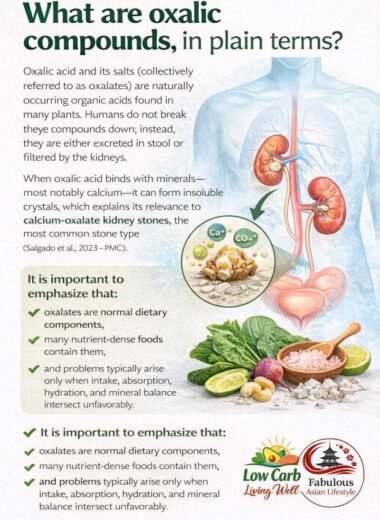
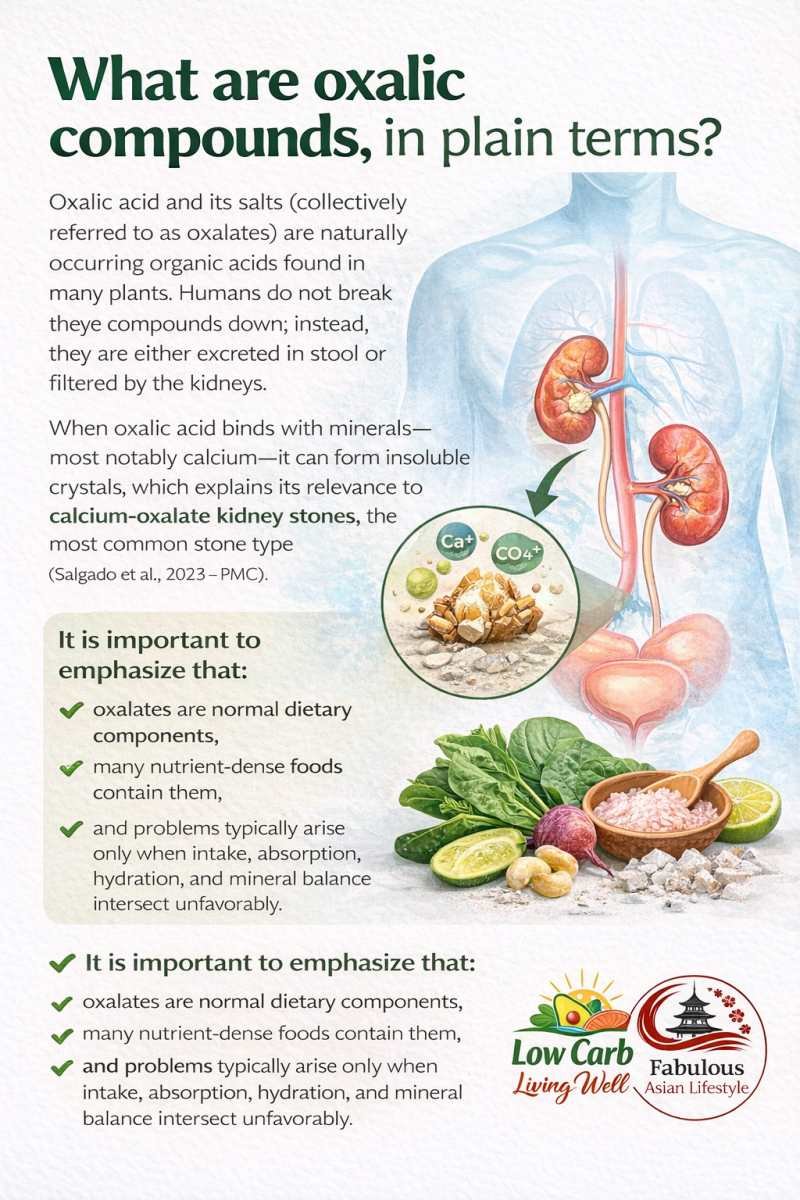
Oxalic acid and its salts (collectively referred to as oxalates) are naturally occurring organic acids found in many plants. Humans do not break these compounds down; instead, they are either excreted in stool or filtered by the kidneys. When oxalic acid binds with minerals—most notably calcium—it can form insoluble crystals, which explains its relevance to calcium-oxalate kidney stones, the most common stone type (Salgado et al., 2023 – PMC).
It is important to emphasize that:
- oxalates are normal dietary components,
- many nutrient-dense foods contain them,
- and problems typically arise only when intake, absorption, hydration, and mineral balance intersect unfavorably.
Oxalic Compounds and Low-Carbohydrate Eating
Why low-carbohydrate eaters deserve special consideration
People following carbohydrate-restricted diets often consume:
- larger quantities of leafy greens,
- frequent servings of nuts and nut flours,
- cocoa or dark chocolate as low-sugar treats,
- fewer calcium-rich foods due to dairy avoidance.
At the same time, ketogenic and very-low-carbohydrate diets increase water and electrolyte loss because glycogen depletion reduces water retention. Lower urine volume can concentrate urinary solutes, including oxalate, if hydration is inadequate
(National Kidney Foundation).
None of this means low-carb eating is harmful. It simply means that food selection and preparation matter more when the same ingredients are consumed repeatedly.
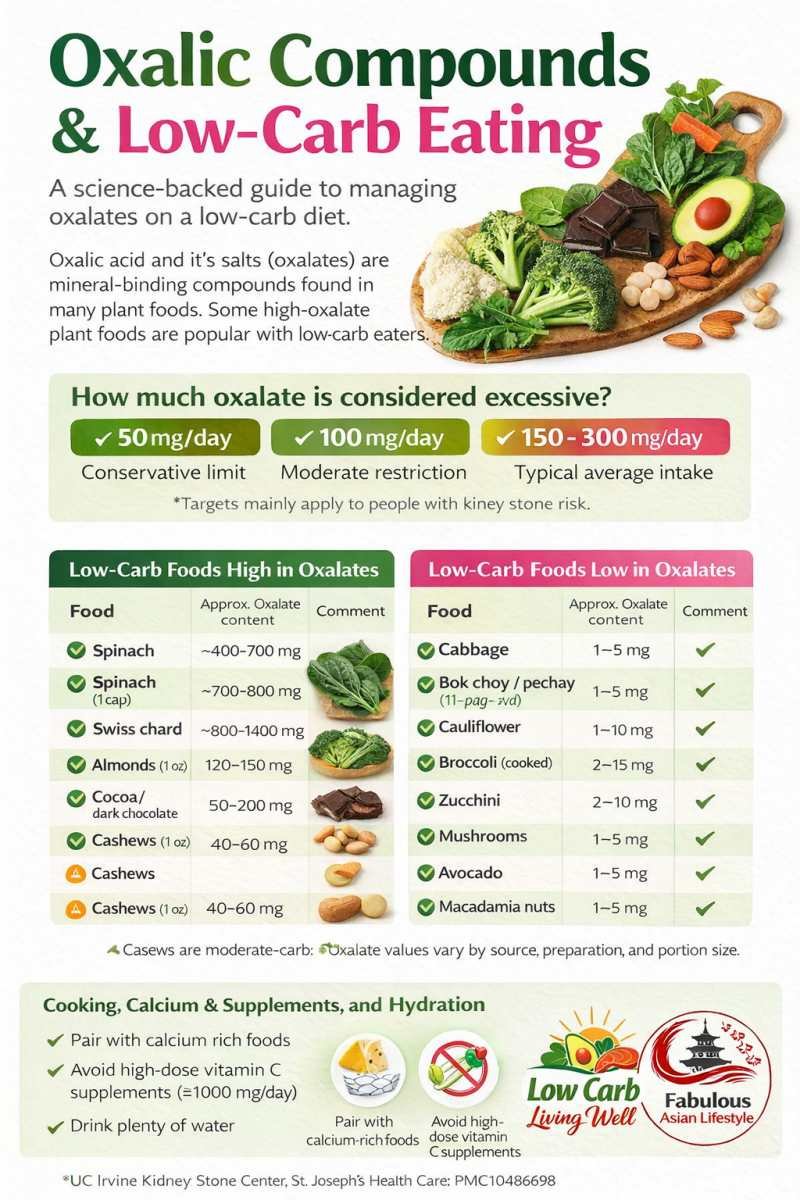
Context matters: Many people exceed 100 mg/day without any symptoms. These targets are most relevant for individuals with kidney stones, malabsorption, or known oxalate sensitivity.
How much oxalate is considered “too much”?
There is no official recommended daily allowance for oxalic compounds. However, clinical guidance provides practical reference ranges.
- Typical mixed diets: ~150–300 mg/day
- Suggested intake for people with calcium-oxalate stone risk:
-
-
Below 100 mg/day (moderate restriction)
-
Below 50 mg/day (more conservative therapeutic target)
-
These thresholds are commonly referenced in nephrology and clinical nutrition literature
(WebMD, Oxalate Nephropathy Review – PMC).
Table 1: Foods commonly eaten by low-carbers that are high in oxalic compounds
These foods are frequently recommended in low-carb circles because they are carbohydrate-light, not because of their oxalate profile. Values are approximate and represent commonly cited averages.
| Food (typical serving) | Approx. oxalate content | Low-carb status | Notes |
|---|---|---|---|
| Spinach, raw (1 cup) | ~600–700 mg | ✅ Low-carb | Among the highest oxalate foods known; raw intake delivers the most |
| Spinach, cooked (½ cup) | ~700–800 mg | ✅ Low-carb | Cooking reduces soluble oxalate, but total load remains high |
| Swiss chard (100 g) | ~800–1,400 mg | ✅ Low-carb | Similar risk profile to spinach |
| Almonds (1 oz / 28 g) | ~120–150 mg | ✅ Low-carb | Almond flour and almond milk can raise daily intake quickly |
| Cocoa powder / dark chocolate (1 oz) | ~50–200 mg | ✅ Low-carb (small portions) | Varies widely by cocoa percentage |
| Cashews (1 oz) | ~40–60 mg | ⚠️ Moderate-carb | Case reports link excessive intake to oxalate nephropathy |
| Beet greens (½ cup cooked) | ~300–600 mg | ❌ Not low-carb | Included for oxalate context only |
| Sweet potato (½ cup) | ~30–60 mg | ❌ Not low-carb | Frequently cited in oxalate lists but not keto-compatible |
Sources: UCI Kidney Stone Center food tables; Salgado et al., 2023 (UCI PDF, PMC)
Why this table matters
Many low-carbers unknowingly exceed conservative oxalate targets by combining several of these foods in one day—for example, a spinach salad, almond-flour bread, and dark chocolate dessert. None of these foods are problematic on their own; frequency and stacking are what matter.
Table 2: Low-carbohydrate foods that are low in oxalic compounds
These foods are generally considered safer staples for oxalate-aware low-carb eating.
| Food (typical serving) | Approx. oxalate content | Low-carb status | Notes |
|---|---|---|---|
| Cabbage (1 cup) | ~1–5 mg | ✅ Low-carb | Excellent substitute for spinach |
| Bok choy / pechay (1 cup) | ~1–5 mg | ✅ Low-carb | Very low oxalate and versatile |
| Cauliflower (1 cup) | ~1–10 mg | ✅ Low-carb | Suitable for daily use |
| Broccoli (1 cup, cooked) | ~2–15 mg | ✅ Low-carb | Moderate but manageable |
| Zucchini (1 cup) | ~2–10 mg | ✅ Low-carb | Best when cooked |
| Mushrooms (1 cup) | ~1–5 mg | ✅ Low-carb | Minimal oxalate contribution |
| Avocado (½ fruit) | ~1–5 mg | ✅ Low-carb | Low oxalate despite common myths |
| Macadamia nuts (1 oz) | ~1–5 mg | ✅ Low-carb | One of the lowest-oxalate nuts |
Source: St. Joseph’s Health Care dietary oxalate tables (St. Joseph’s PDF)
Cooking and preparation: what research consistently shows
Oxalic compounds are partly water-soluble. Controlled studies demonstrate that boiling vegetables and discarding the cooking water can reduce soluble oxalate by approximately 30–87%, depending on the vegetable and cooking time. Steaming and sautéing result in far smaller reductions
(Chai et al., 2005 – PubMed).
For low-carb eaters who wish to occasionally include spinach or chard, preparation method significantly alters exposure.
Calcium intake: an evidence-based protective factor
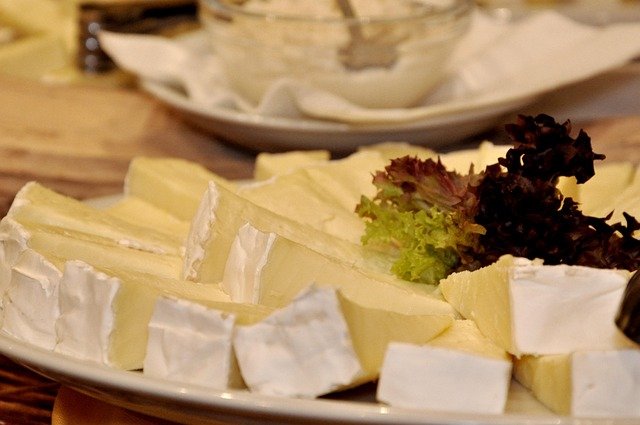
Dietary calcium binds oxalic acid in the gut, forming insoluble complexes that are excreted rather than absorbed. Low calcium intake is associated with higher, not lower, urinary oxalate (National Kidney Foundation).
This is particularly relevant for low-carbers who limit dairy.
Low-carb calcium sources include:
- cheese and full-fat yogurt,
- sardines or dilis with bones,
- calcium-set tofu (⚠️ moderate-carb, context-dependent).
Calcium is most effective when consumed with meals that contain oxalate, not separately.
Vitamin C, supplements, and oxalate formation
Ascorbic acid (vitamin C) can be metabolized into oxalate. Clinical studies show that high-dose supplementation (≥1,000 mg/day) can increase urinary oxalate in some individuals. Vitamin C obtained from food does not appear to carry the same risk (Knight et al., 2016 – PMC).
For low-carbers who supplement aggressively, this is a relevant but manageable consideration.
Gut health and oxalate handling
Certain gut bacteria, particularly Oxalobacter formigenes, can degrade oxalate in the intestine. Reduced colonization—often after antibiotic use—is associated with higher urinary oxalate levels (Stewart et al., PubMed).
While probiotic therapies are still under investigation, maintaining overall gut health remains a sensible strategy.
Oxalic Compounds and Low-Carbohydrate Eating
Hydration and electrolytes: especially important on keto
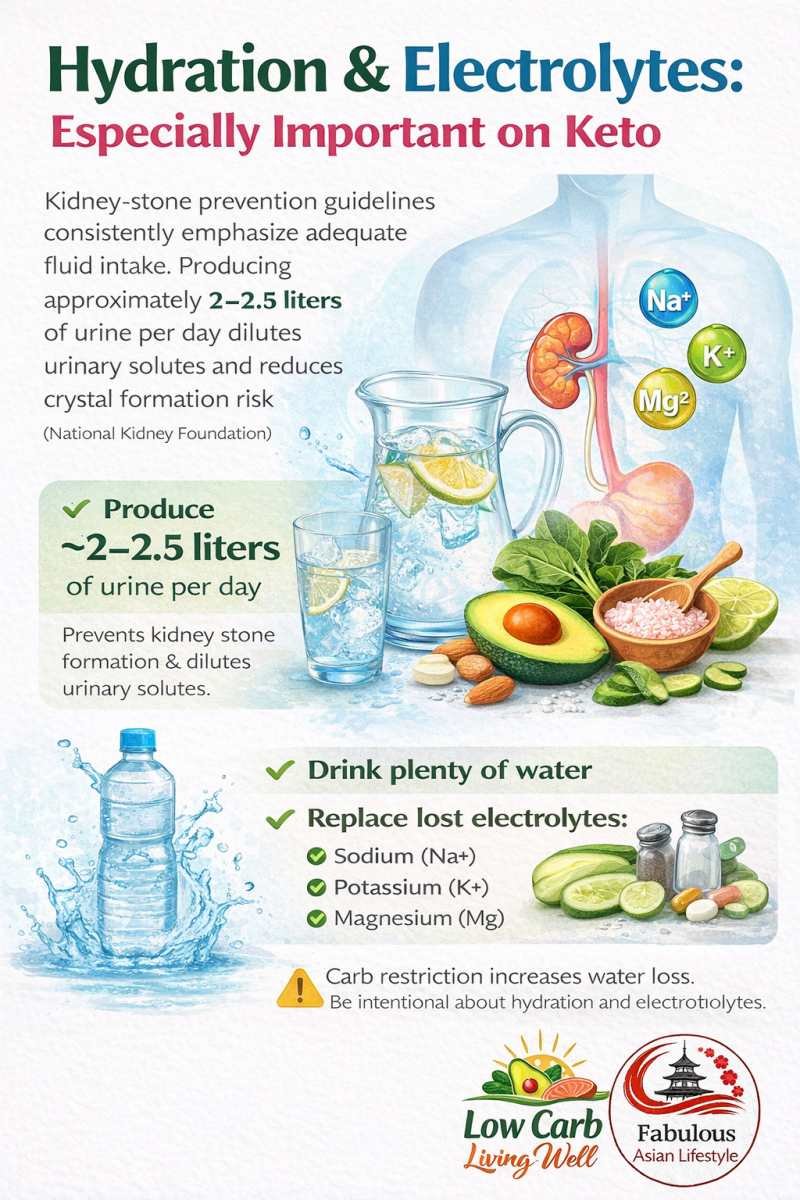
Kidney-stone prevention guidelines consistently emphasize adequate fluid intake. Producing approximately 2–2.5 liters of urine per day dilutes urinary solutes and reduces crystal formation risk (National Kidney Foundation).
Because carbohydrate restriction increases water loss, low-carbers often need to be more intentional about hydration and electrolyte balance.
A balanced conclusion
Oxalic compounds are a normal part of many nutritious foods. They are not poisons, and most people process them without difficulty. For individuals following low-carbohydrate eating patterns—especially those with kidney stone history—variety, preparation, hydration, and mineral balance are usually sufficient to manage intake responsibly.
The goal is informed choice, not elimination.
Oxalic Compounds and Low-Carbohydrate Eating References
- Salgado N. et al. Oxalate in Foods: Occurrence and Analytical Methods
https://pmc.ncbi.nlm.nih.gov/articles/PMC10486698/ - UC Irvine Kidney Stone Center – Oxalate content of foods (PDF)
https://ucikidneystonecenter.com/wp-content/uploads/2020/06/Oxalate-Content-of-Foods.pdf - National Kidney Foundation – Kidney stone prevention
https://www.kidney.org/kidney-topics/kidney-stone-diet-plan-and-prevention - Chai W. et al. (2005). Effect of cooking on vegetable oxalate content
https://pubmed.ncbi.nlm.nih.gov/15826055/ - Knight J. et al. (2016). Vitamin C and oxalate metabolism
https://pmc.ncbi.nlm.nih.gov/articles/PMC4946963/ - Oxalate nephropathy review (case-based clinical guidance)
https://pmc.ncbi.nlm.nih.gov/articles/PMC5359106/ - St. Joseph’s Health Care – Dietary oxalate table (PDF)
https://www.stjoes.ca/patients-visitors/patient-education/patient-education-k-o/pd-9447-oxalate-in-food.pdf
More Stories
- LIST OF POPULAR FILIPINO FOOD / DISHES
- SIQUIJOR TOURIST SPOTS | THINGS TO DO
- Positive Self-Affirmation | 8 Great Tips to Improving Life
- LA PAZ BATCHOY RECIPE
- CAMPUESTOHAN HIGHLAND RESORT TRAVEL GUIDE
- BICOL EXPRESS : CREAMY,SPICY AND FLAVORFUL | Quan Delicacies
- LIST OF POPULAR FILIPINO FOOD / DISHES
- SIQUIJOR TOURIST SPOTS | THINGS TO DO
- Positive Self-Affirmation | 8 Great Tips to Improving Life
- LA PAZ BATCHOY RECIPE
- CAMPUESTOHAN HIGHLAND RESORT TRAVEL GUIDE
- BICOL EXPRESS : CREAMY,SPICY AND FLAVORFUL | Quan Delicacies